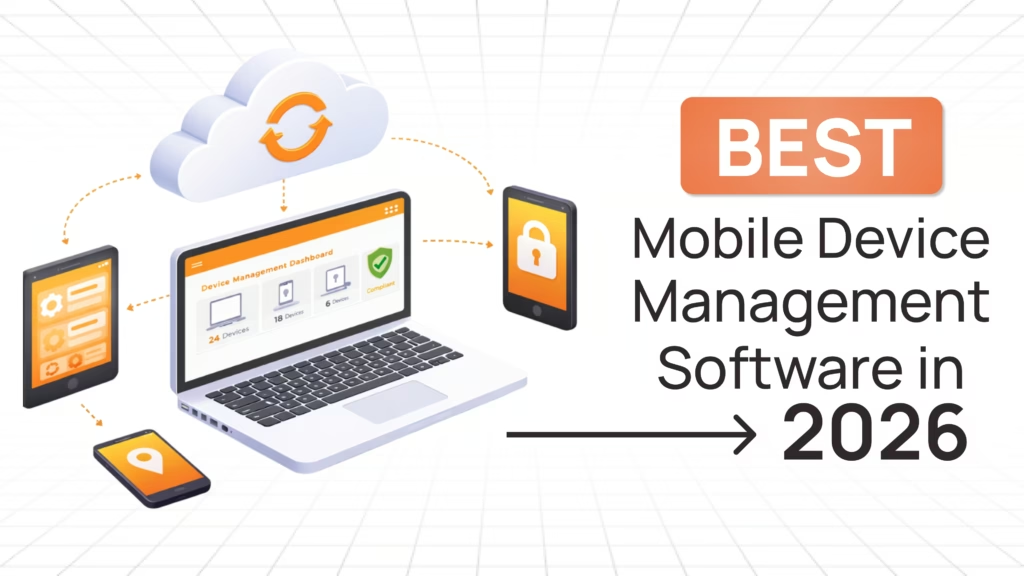
Device fleets are growing faster than most IT teams can manage. Laptops, smartphones, tablets, and employee-owned devices now access company systems daily, often from multiple locations and networks. As a result, the best mobile device management software is no longer a “nice to have.” It is a core security and operations requirement.
For IT leaders, the challenge is not understanding what MDM is. The challenge is choosing the right MDM tool from a crowded market where many vendors claim similar capabilities. Security risks are rising, compliance expectations are tighter, and remote and hybrid teams demand faster onboarding with less IT friction.
This guide compares the best mobile device management software in 2026. It explains what MDM tools do, the business benefits they deliver, must-have features, and how leading platforms compare. It also shows why RemoAsset stands out for distributed teams that need centralized MDM combined with global device operations.
What Is Mobile Device Management (MDM) Software?
Mobile Device Management software provides centralized control to secure, configure, monitor, and manage devices used for work across distributed teams.
Devices typically managed by MDM
- Laptops (Windows, macOS, ChromeOS)
- Mobile phones (iOS, Android)
- Tablets and rugged devices
- BYOD and corporate-owned endpoints
Core problems MDM solves
- Lack of visibility into who has which device
- Inconsistent security and encryption policies
- Manual onboarding and offboarding delays
- Risk of data exposure from lost or stolen devices
- Compliance gaps across regions and device types
MDM acts as the control plane for endpoint security and lifecycle enforcement, especially in remote and hybrid environments.
Benefits of Mobile Device Management Software
Enhanced security
MDM enforces encryption, endpoint protection, remote lock, and wipe policies to reduce data breach risk.
Centralized visibility and monitoring
IT teams gain real-time insight into device status, ownership, location, and compliance posture.
Automated provisioning and updates
Zero-touch enrollment and automated updates reduce manual configuration and human error.
Cost savings
By tracking devices accurately and enforcing refresh cycles, MDM reduces unnecessary replacements and license waste.
Boosted productivity and compliance
Employees receive work-ready devices faster, while IT maintains consistent security standards across the organization.
9 Best Mobile Device Management Software in 2026
Below is a curated list of leading MDM platforms in 2026. The comparison starts with a high-level table, followed by deeper evaluations of each tool. RemoAsset is covered in greater detail as the hero product.
Top 9 Mobile Device Management Software: Comparison Table
| Platform | Primary Strength | Best For |
|---|---|---|
| RemoAsset | MDM plus end-to-end hardware lifecycle and global operations | Distributed and remote-first companies |
| Zluri | SaaS visibility with device governance | SaaS-heavy organizations |
| GroWrk | Device recovery and ITAD focus | Teams prioritizing retrieval and offboarding |
| ManageEngine | Cost-effective traditional MDM | SMB and mid-market |
| Jamf Pro | Apple-first device management | Mac and iOS environments |
| Scalefusion | Multi-OS support with kiosk use cases | Mixed device fleets |
| NinjaOne | IT operations with endpoint management | MSPs and IT ops teams |
| Kandji | Apple automation and compliance | Security-focused Apple shops |
| Hexnode | Unified endpoint management | Companies managing diverse endpoints |
RemoAsset
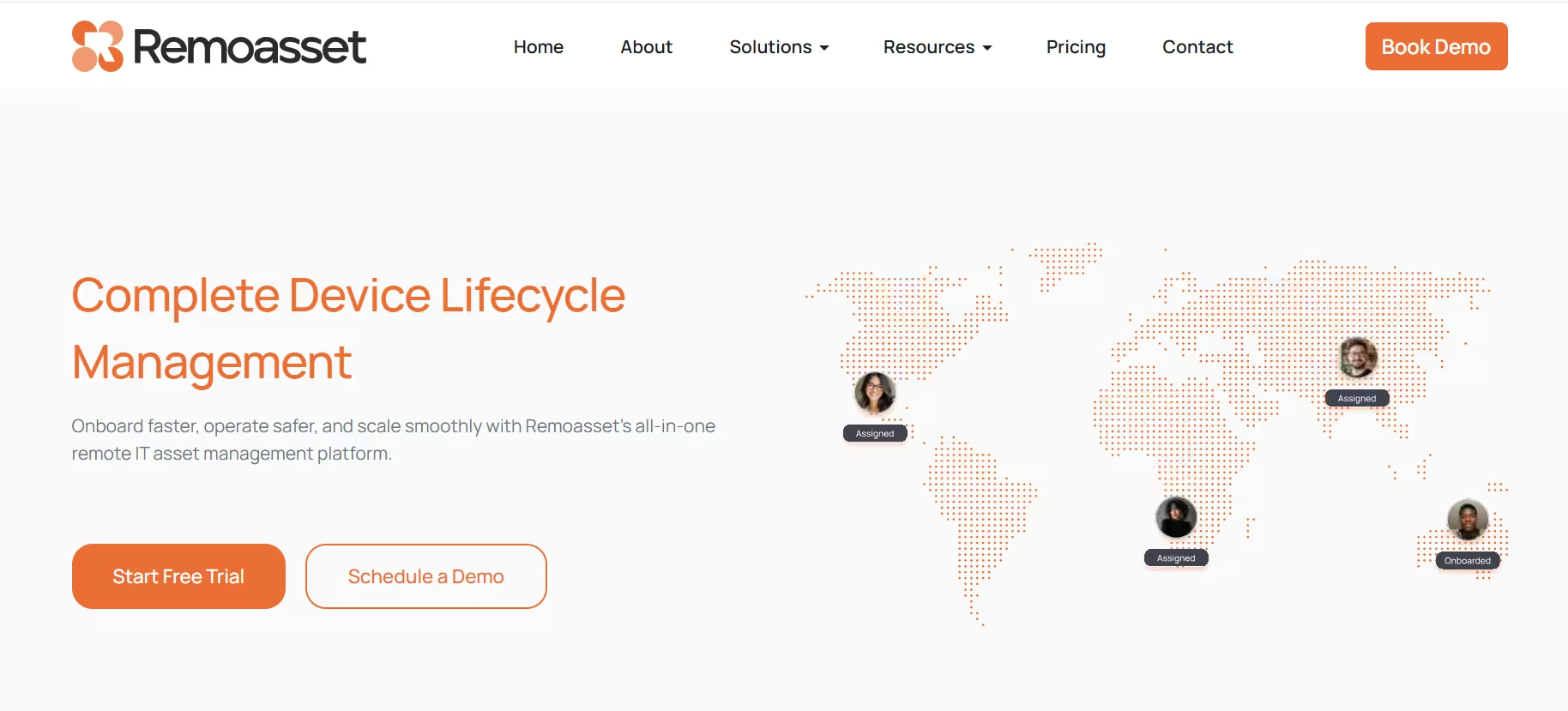 RemoAsset is not just an MDM tool. It is a modern device operations platform that combines mobile device management with procurement, deployment, tracking, and secure recovery. Designed for distributed teams, RemoAsset addresses the operational gaps that traditional MDM tools leave behind.
Key Features
- Centralized MDM for laptops and mobile devices
- Zero-touch enrollment with security policies applied on first login
- Global device sourcing and delivery across multiple countries
- Real-time asset tracking and lifecycle visibility
- Automated offboarding with device pickup and secure data wiping
- Unified dashboard covering procurement, MDM, and recovery
Pros & Cons
Pros
- End-to-end hardware lifecycle management, not just software control
- Strong fit for remote and hybrid teams
- Reduces IT workload through automation
- Combines security, logistics, and asset recovery
Cons
- Less focused on niche mobile-only scenarios compared to pure-play MDM vendors
- Best value realized when used across the full lifecycle
Pricing
Transparent, usage-based pricing that avoids hidden MDM fees. Pricing varies based on device volume and services enabled.
Best For
Companies with distributed teams that need MDM tightly integrated with global device operations, onboarding, and offboarding.
Zluri
Zluri focuses primarily on SaaS management but includes device governance capabilities to support compliance and access control. It works well for organizations where software sprawl is the main challenge, though its hardware-focused MDM capabilities are more limited.
Best for: SaaS-heavy companies needing license optimization alongside device oversight.
GroWrk
GroWrk emphasizes device recovery, IT asset disposition, and lifecycle services. Its MDM features support basic management, with strength in retrieval and offboarding workflows.
Best for: Teams that prioritize device recovery and global offboarding logistics.
ManageEngine
ManageEngine offers a traditional MDM solution with broad OS support and competitive pricing. It is widely adopted by SMBs due to its flexibility and deployment options.
Best for: Cost-conscious teams seeking core MDM functionality.
Jamf Pro
Jamf Pro is a leading choice for Apple-first environments. It offers deep macOS and iOS management, automation, and compliance controls.
Best for: Organizations standardized on Apple devices.
Scalefusion
Scalefusion supports multiple operating systems and includes kiosk and rugged device management features, making it useful for frontline or retail scenarios.
Best for: Mixed device fleets and kiosk use cases.
NinjaOne
NinjaOne blends endpoint management with IT operations tooling. While not a pure-play MDM, it appeals to IT teams managing devices alongside monitoring and support workflows.
Best for: IT operations teams and managed service providers.
Kandji
Kandji focuses on Apple device automation and compliance enforcement. It is known for strong security controls and streamlined macOS management.
Best for: Security-focused Apple environments.
Hexnode
Hexnode provides unified endpoint management across mobile, desktop, and IoT devices. It balances flexibility with centralized control.
Best for: Organizations managing diverse endpoint types.
Must-Have Features in a Modern MDM Platform
- Zero-touch setup to eliminate manual configuration
- Real-time tracking and geo visibility for asset awareness
- Automated policy enforcement for security and compliance
- Role-based provisioning aligned with job functions
- Secure offboarding with remote wipe
- Software compliance and encryption management
- Integrations with HRIS, SSO, and SCIM to trigger lifecycle events
MDM platforms lacking these capabilities often fail to scale with remote teams.
How to Choose the Right MDM Tool for Your Business
Workforce model
- Office-centric teams can prioritize traditional MDM
- Remote-first teams need global delivery, tracking, and recovery
Operating system mix
- Apple-heavy environments benefit from Jamf or Kandji
- Mixed fleets require broader OS support
Scale
- SMBs may value cost and simplicity
- Enterprises need automation, audit trails, and integrations
Budget and refresh cycles
- Consider total cost, including hidden licensing and support fees
Compliance requirements
- Regulated industries require strong audit and policy enforcement
Choosing an MDM tool without considering operational realities often leads to tool sprawl and inefficiency.
Why Enterprises Choose RemoAsset as Their Mobile Device Management Software
By 2026, leading organizations are moving beyond standalone MDM tools toward integrated device operations platforms.
RemoAsset stands out because it delivers:
- End-to-end hardware lifecycle management, not just device control
- Local sourcing and delivery in 130+ countries, reducing delays and taxes
- Zero-touch onboarding that cuts IT workload and onboarding time
- Automated retrieval during offboarding, reducing device loss
- Transparent pricing with no hidden MDM fees
- Stronger security outcomes through enforced lifecycle controls
Instead of managing devices in silos, enterprises use RemoAsset to connect MDM, logistics, and recovery into a single, automated system.
Final Thoughts
The best mobile device management software in 2026 is not defined by feature lists alone. It is defined by how well it supports modern work. As device fleets become global and distributed, MDM must extend beyond policy enforcement into full lifecycle operations.
For teams managing remote and hybrid workforces, RemoAsset offers a clear advantage by combining MDM with global device provisioning, tracking, and secure recovery. It reduces IT overhead, improves security posture, and prevents costly device loss.
Book a demo of RemoAsset to see how centralized MDM plus global device operations can simplify endpoint management and scale with your workforce.