A laptop might cost $1,200 to purchase, but that $1,200 is not necessarily what the business spends on it.
Before that device reaches an employee, someone may need to configure it, enroll it into device management, ship it, and prepare it for onboarding. During its working life, the company may incur support, repair, warranty, replacement and downtime costs. When the employee leaves, there may be another set of costs for retrieval, data wiping, storage, refurbishment, redeployment or disposal. That is the difference between laptop price and laptop total cost of ownership (TCO).
For IT and finance teams, this distinction matters because hardware decisions are rarely just about which laptop has the lowest purchase price. TCO can influence whether a company should buy or lease equipment, whether a three-year or five-year refresh cycle makes sense, whether a device should be repaired or replaced, and whether a returned laptop should be redeployed rather than written off.
Why Purchase Price Is the Least Interesting Number
The purchase price is the easiest number to find. It appears on the quote, it goes into the purchase order, and finance can compare it directly against another vendor’s price. That visibility can also make it misleading.
Imagine two laptops that cost $1,200 each. Laptop A arrives ready for the employee, is enrolled into the company’s management system, requires very little IT intervention, remains reliable throughout its useful life, is retrieved when the employee leaves, and is then redeployed to another employee. Laptop B also costs $1,200. However, it requires several hours of manual setup, generates more support tickets, needs an out-of-warranty repair, sits in storage after the employee leaves, and eventually gets replaced because nobody evaluates it for reuse. The purchase price is identical. The cost to the business is not.
This is why TCO should be treated as a decision-making framework, rather than an accounting exercise. The more useful question is not ‘How much does this laptop cost?’ It is ‘How much will this laptop cost us from acquisition to retirement?’
The Real Cost Categories Behind a Company Laptop
A practical laptop TCO model should include both direct costs, which are relatively easy to identify, and indirect costs, which are often buried inside IT operations. For a company laptop, the major cost categories look like this.
1. Acquisition costs
The laptop itself, but also accessories, operating system or software requirements, docking stations, monitors, warranties, and other equipment purchased alongside the device. A company might budget $1,300 for a laptop but actually spend considerably more once the employee’s complete equipment bundle is included. A finance team should therefore define what ‘device cost’ actually means before comparing suppliers: laptop only, or laptop plus accessories, software, configuration, and delivery?
2. Provisioning and deployment costs
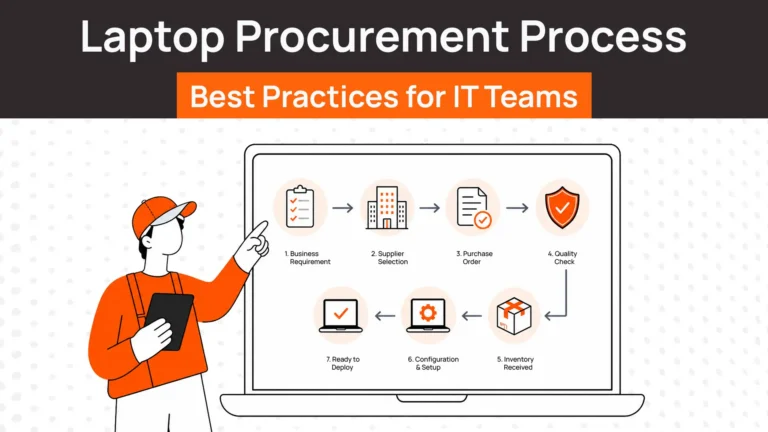
A laptop purchased from a supplier is not necessarily ready for work. IT may need to configure the operating system, install required applications, enroll the device into MDM, apply security policies, configure user accounts, test connectivity, and coordinate delivery. Even when much of this is automated, there is still an operational cost. For companies with hundreds of employees, even a relatively small amount of manual work per device can become a substantial operational expense — which is why automating the provisioning sequence before devices ship can meaningfully affect the total cost, not by making the laptop cheaper, but by reducing the human effort required to make it productive.
3. Support and maintenance costs
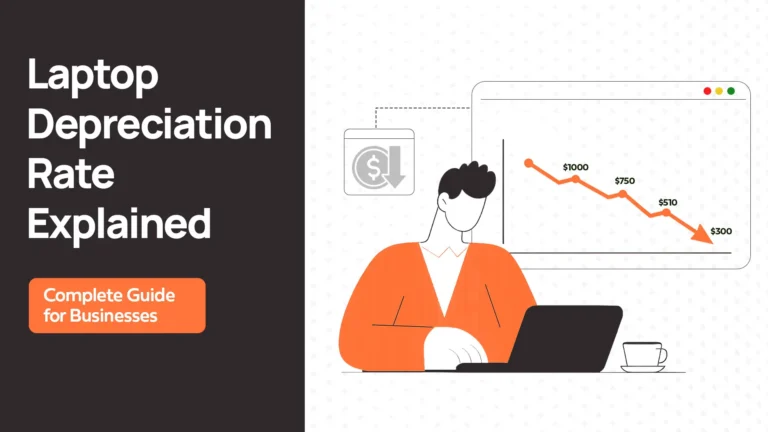
Hardware troubleshooting, software issues, warranty claims, battery replacement, screen repairs, replacement devices, and IT helpdesk time — these accumulate throughout a device’s working life. Older devices can also create an indirect cost: if performance problems create repeated support tickets or slow down an employee’s work, the organization is paying for the hardware through lost productivity. This is where TCO becomes more useful than depreciation alone. Depreciation tells finance how an asset’s value is being recognized. TCO asks what that asset is actually costing the business to operate. See our guide on how laptop value declines over time for the depreciation side of this calculation.
4. Downtime and lost productivity
When a laptop fails, the device needs to be diagnosed, a replacement may need to be sourced, the replacement has to be configured, and then it has to be delivered. If the employee cannot work effectively during that period, the company incurs an opportunity cost. The exact value depends on the employee’s role, but the principle is straightforward: a laptop that costs less but creates more downtime may be more expensive overall. A strong TCO calculation should therefore consider not only the cost of fixing a device but also the business impact of the time during which the employee cannot work normally.
5. Storage and idle inventory
A laptop returned after an employee leaves may sit in storage because no one needs it immediately. One laptop may not matter. A fleet of 500 is different. The organization needs to consider where devices are stored, who manages the inventory, how devices are tracked, whether they remain insured, and how long they sit unused while their value declines. Idle hardware creates the illusion of available inventory without actually being ready for deployment — someone still needs to locate it, verify its condition, wipe it, configure it, and determine whether it is suitable for the next employee.
A Simple Laptop TCO Calculation You Can Actually Use
A practical model can begin with five major components: TCO = Acquisition + Deployment + Operating Costs + Lifecycle Costs − Recovered Value. Lifecycle costs include retrieval, return shipping, storage, data wiping, refurbishment, disposal, and administrative coordination. Recovered value — the most commonly missed component — is the amount the organization gains through resale, or the cost of a new purchase avoided through redeployment.
For example:
| Cost / Value | Amount |
| Laptop + accessories | $1,400 |
| Initial deployment | $100 |
| Support & maintenance | $250 |
| Retrieval & lifecycle costs | $100 |
| Gross lifecycle cost | $1,850 |
| Recovered value / avoided replacement | −$400 |
| Effective lifecycle cost | $1,450 |
This is a simplified example, not a benchmark. The purpose is to show how a device that initially costs $1,400 can have a materially different effective cost once its full lifecycle is considered.
The 3-Year vs. 5-Year Laptop Refresh Question
Should we replace laptops every three years or keep them for five? There is no universal answer. A shorter refresh cycle usually means higher annual hardware expenditure, but it can reduce exposure to aging hardware, out-of-warranty repairs, and performance problems. A longer cycle reduces the annualized acquisition cost, but that saving can be offset if older devices require more repairs, create more downtime, or become unsuitable for the software employees need.
The decision should be based on the organization’s actual experience: average repair cost by device age, support ticket volume by age, battery failure rates, downtime after hardware failures, warranty expiration dates, resale value, and security-support requirements.
A $1,500 laptop productive for three years has an acquisition cost of $500 per productive year. The same laptop kept for five years has an acquisition cost of $300 per productive year. On the surface, five years looks better. But if years four and five bring significantly higher repair costs and downtime, the real TCO difference narrows. Refresh planning should be based on cost per productive year, not simply the age of the device.
How Buy vs. Lease Changes Laptop TCO
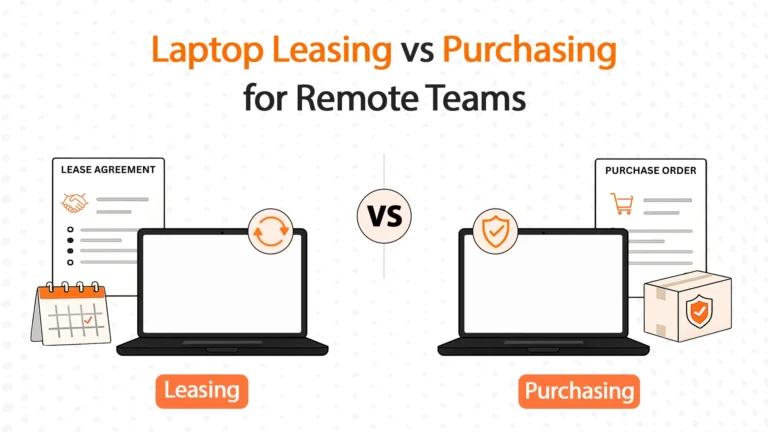
The financing model changes how costs appear, but it does not automatically make one option cheaper. With a traditional purchase, the organization pays upfront and owns the hardware, carrying the responsibility for maintenance, retrieval, resale, and eventual disposal. With leasing or a Device-as-a-Service model, costs are distributed over the agreement and may include additional services. That can improve predictability but the full contractual cost and end-of-term conditions need to be included in the comparison. Buy vs. lease should be evaluated through TCO rather than monthly payment alone. Our full breakdown of CapEx versus OpEx for IT hardware covers how financing model changes this calculation.
Related Reads
This post covers the TCO framework. Each line item below has its own deep dive:
- How Laptop Value Erodes Over Time: Depreciation Cost and Rate — the maths behind the ‘recovered value’ line in the TCO formula.
- CapEx vs. OpEx in Remote IT Asset Management — how the financing model reshapes the same underlying costs.
- Laptop Retrieval Cost: What Businesses Really Pay — why the retrieval line item is often broader than the courier invoice.
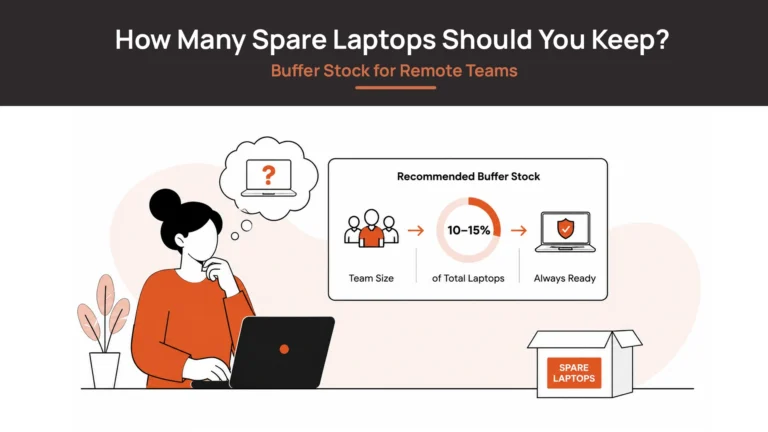
- How Many Spare Laptops Should You Keep? — the carrying cost of buffer inventory as a TCO line item.
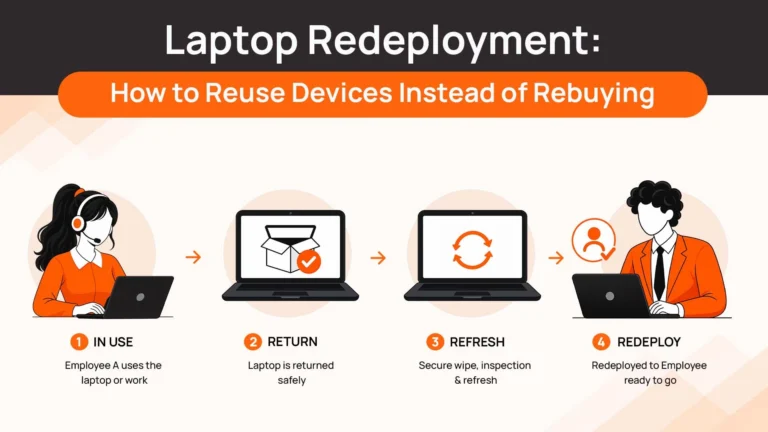
- Laptop Redeployment: How to Reuse Devices Instead of Rebuying — the biggest lever on the recovered-value side of the formula.
- Corporate Laptop Disposal: A Complete Guide — the end-of-life costs and what each disposition path recovers.
The Line Items Most Companies Forget
The most useful part of a TCO model is often the section nobody thought to include.
Buffer and spare inventory
Companies need some level of spare hardware to handle unexpected failures, new hires, and urgent replacements. But spare devices have a carrying cost — they represent capital already spent but not currently producing employee value. The goal is not to eliminate spare inventory but to understand how much you actually need and prevent the buffer from becoming a warehouse of forgotten devices.
Retrieval costs
When an employee leaves, someone has to get the laptop back. That may involve employee communication, shipping labels, courier coordination, local pickup, international logistics, and IT follow-up. The cost is not limited to the courier invoice — there is also the internal time required to make the retrieval happen. The retrieval cost guide in Related Reads above goes deeper into why the true number is often considerably broader than return shipping.
Data wiping and disposal
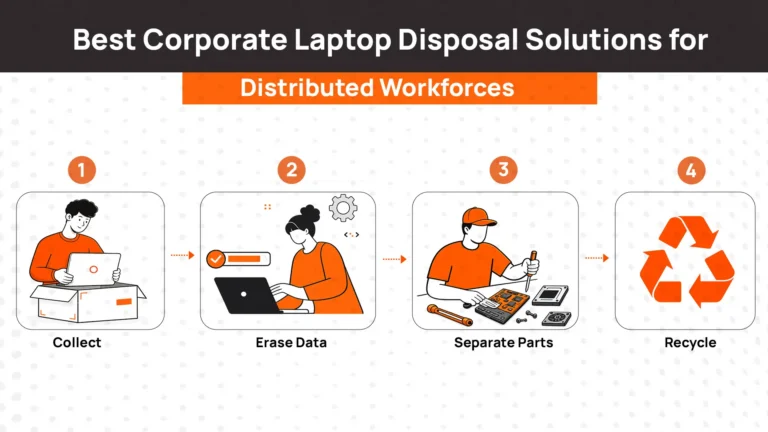
A returned device cannot simply be handed to another employee. It needs to go through an appropriate data sanitization process before reassignment, resale, or disposal. If the device cannot be reused, there may also be costs associated with certified recycling, ITAD services, documentation, and secure destruction. Understanding what each disposition path actually costs or recovers is part of the full lifecycle calculation.
Redeployment value
This may be the most important number missing from traditional TCO calculations. A returned laptop that can be redeployed is effectively inventory the organization already owns — if the company can use it for another employee instead of purchasing another device, that avoided purchase should be reflected in the economic model. Most organizations skip this because they lack visibility into what is actually recoverable in their existing fleet.
Why Lifecycle Management Changes the TCO Equation
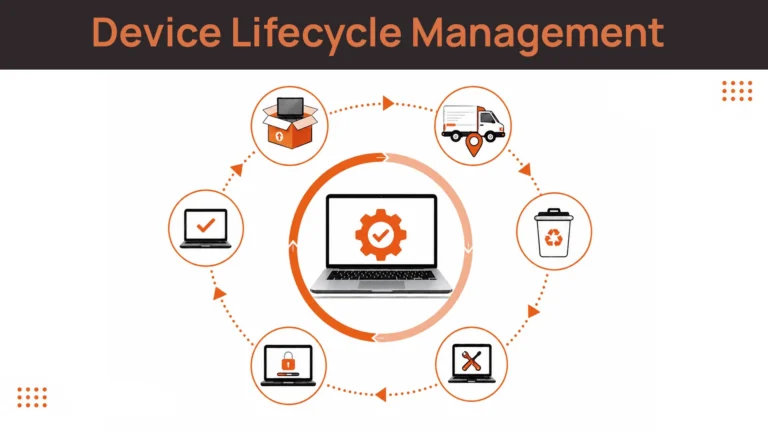
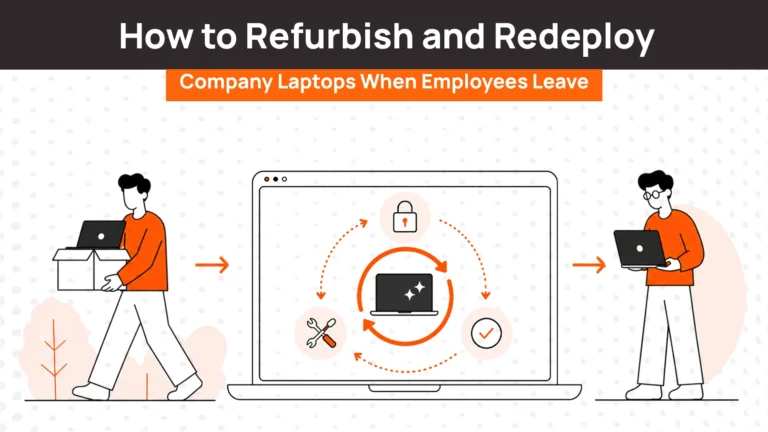
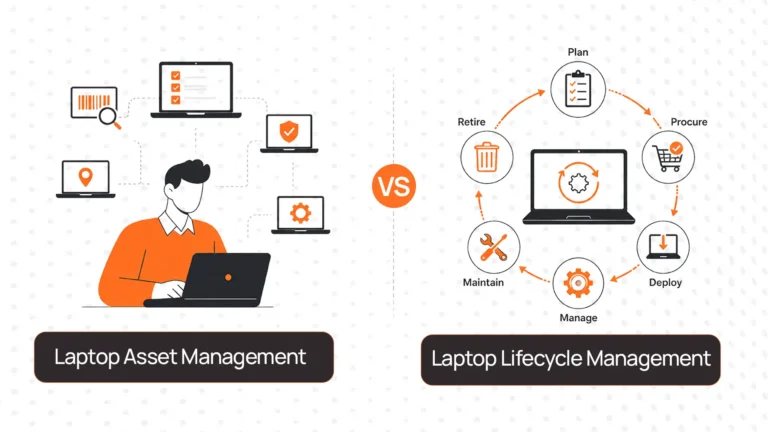
The biggest TCO opportunity is not always negotiating another $50 off the purchase price. Sometimes it is preventing a device from becoming an unnecessary new purchase. A device can be purchased at an excellent price and still become expensive if it is delivered late, requires excessive manual setup, generates repeated support costs, is not retrieved after offboarding, sits unused in storage, is replaced even though another employee could use it, or is disposed of without recovering residual value. This is why TCO is closely connected to managing the complete hardware lifecycle. The objective is not to reduce the initial price of every laptop. It is to increase the amount of productive value the company gets from every laptop it owns.
How Remoasset Helps Reduce Lifecycle TCO
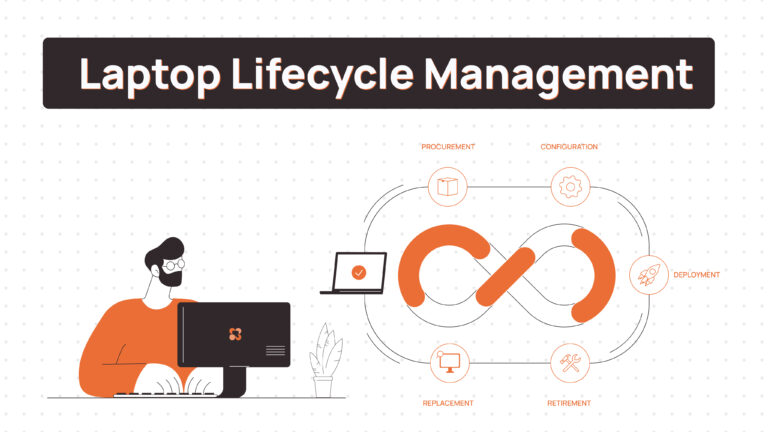
Remoasset connects the operational stages that are often managed separately — procurement, deployment, retrieval, asset visibility, redeployment, and retirement. That matters for TCO because every disconnected workflow introduces another administrative cost. Instead of maintaining one system for procurement, another spreadsheet for returned laptops, separate coordination for retrieval, and another process for redeployment, organizations can manage the device journey through one connected lifecycle workflow.
The financial benefit is that better visibility helps the organization make better decisions about the hardware it already owns: a returned laptop can be identified, assessed, and considered for redeployment before another purchase is approved. The goal is not to make the TCO calculation look smaller — it is to reduce the costs that the calculation exposes. Book a demo to see how bundled lifecycle pricing already accounts for the cost categories this post walked through.
Frequently Asked Questions
What is the total cost of ownership for IT hardware?
Total cost of ownership is the full cost of owning and operating an IT asset over its useful life. For a laptop, that includes acquisition, software, accessories, deployment, support, maintenance, repairs, downtime, retrieval, storage, data wiping, and disposal — while also accounting for recovered value through resale or redeployment.
How do you calculate the TCO of a laptop?
Start with the acquisition cost and add deployment, operating, support, maintenance, and end-of-life costs. Subtract the value recovered through resale or the cost of a new purchase avoided through redeployment. Divide by the expected useful life to get an annualized cost per device.
What hidden costs are involved in owning a company laptop?
Commonly overlooked costs include IT setup time, support labour, repairs, employee downtime, spare inventory, storage, retrieval, secure data wiping, disposal, and the administrative work involved in managing the asset. These costs may not appear on the purchase invoice, but they still affect the organization’s total cost.
Is it cheaper to buy or lease laptops long-term?
There is no universal answer. Buying can make sense when an organization has stable headcount, expects to keep devices for several years, and has strong redeployment and resale processes. Leasing or Device-as-a-Service can provide more predictable payments and flexibility, but the full contract cost and end-of-term conditions need to be included in the comparison. A proper TCO model should evaluate both approaches rather than comparing only purchase price with monthly lease cost.
Does redeployment reduce laptop TCO?
Yes, when the returned device is suitable for another employee. Redeployment can reduce the number of new devices the company needs to purchase, which lowers the effective lifecycle cost of the existing fleet. The savings depend on the condition and remaining useful life of the device, the cost of preparing it for reassignment, and the role for which it is redeployed.
Should companies replace laptops every three years?
Not necessarily. A three-year refresh cycle may make sense for demanding roles or organizations that prioritize warranty coverage. Other devices may remain productive for longer. The better approach is to compare repair costs, support burden, performance, security requirements, downtime, and residual value before establishing a refresh policy.
Why should retrieval be included in laptop TCO?
Because the laptop has no redeployment or resale value if the organization cannot recover it. Retrieval involves more than shipping: employee communication, pickup coordination, tracking, return logistics, and internal administration can all create costs. Treating retrieval as part of the lifecycle provides a more realistic picture of what the device actually costs.