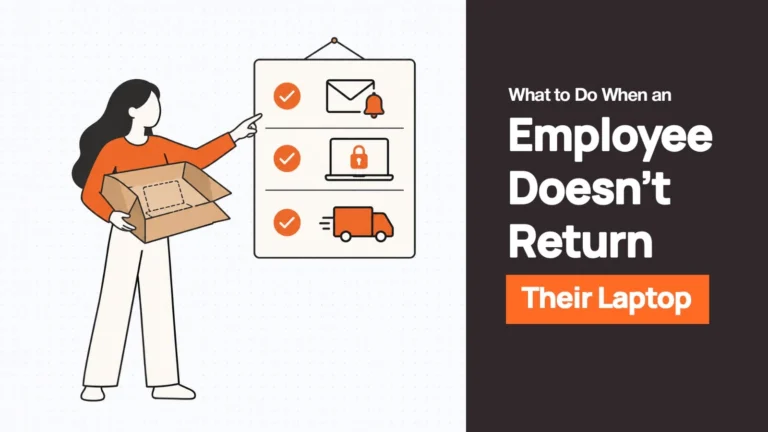
If you’ve recently left a job and still have a company laptop at home, you probably want to know what could realistically happen next. If you’re managing IT or HR and a device hasn’t been returned after an employee left, you’re facing a different but equally urgent problem.
The good news is that most situations are resolved without lawsuits, legal disputes, or dramatic consequences. The reality is usually much more practical: emails, retrieval requests, device lockouts, shipping arrangements, and follow-ups.
This guide explains what actually happens if you don’t return a company laptop, from both the employee and employer perspective, and why unreturned laptops have become such a common challenge in remote and distributed work environments.
Important: This article provides practical guidance based on common employer practices and publicly available employment resources. Employment laws, equipment agreements, and payroll regulations vary by country and jurisdiction. Always review your employment agreement and seek professional advice for situation-specific questions.
Jump Navigation
→ I’m an employee — what could happen to me?
→ I manage IT/HR — what are my options?
→ How can companies prevent laptop recovery problems?
Employee vs Employer Reality
Before diving into specifics, it’s important to understand that employees and employers typically view the same situation very differently.
| Situation | Employee Concern | Employer Concern |
| Laptop not returned | “Am I in trouble?” | Asset recovery and accountability |
| Device lost | Personal liability | Data security exposure |
| International employee | Shipping complexity | Cross-border retrieval logistics |
| Company-managed laptop | Whether it will still work | Protecting company data |
| Delayed return | Consequences of waiting | Compliance and inventory accuracy |
| Offboarding confusion | Lack of instructions | Maintaining chain of custody |
Understanding both perspectives helps explain why most companies prioritize recovery and cooperation before considering legal action.
Related Read:
- Laptop Asset Management Software
- Best Laptop Deployment Software for Remote Teams
- Laptop Inventory Management Software
- Best Laptop Retrieval Services
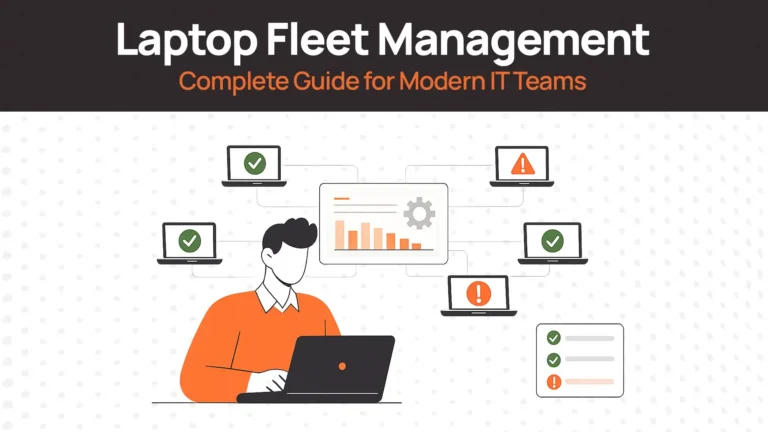
- Laptop Fleet Management: Complete Guide for Modern Remote Teams
Quick Answer: What Usually Happens If You Don’t Return a Company Laptop?
| Scenario | What Usually Happens |
| Device return is delayed | Reminder emails or HR follow-up |
| Device is lost | Investigation and repayment discussion |
| Device is intentionally retained | Formal recovery requests |
| Device is company-managed | Remote lock or wipe may occur |
| Employee ignores repeated requests | Escalation to legal or recovery processes |
| International employee | Company may arrange return shipping or local pickup |
Key Takeaway
In most cases, employers start with reminders and recovery efforts—not lawsuits.
The exact outcome depends on:
- Company policy
- Employment agreements
- Local labor laws
- Device value
- Whether sensitive data is involved
- How cooperative the employee is during the return process
Most organizations would rather recover the laptop than spend time and money pursuing legal action.
For Employees: What Actually Happens If You Don’t Return a Company Laptop?
It Depends on Your Company (and Your Contract)
There’s no universal answer.
A startup with 20 employees may handle an unreturned laptop very differently than a multinational enterprise with thousands of devices distributed globally.
Several factors influence what happens next:
- Company size
- Employment agreements
- Device value
- Industry regulations
- Data sensitivity
- Country-specific labor laws
- Circumstances surrounding your departure
Important Callout
Before assuming anything, review your:
- Employment agreement
- Equipment acknowledgment form
- Remote work agreement
- Company property policy
These documents typically outline your obligations far more accurately than generic internet advice.
The Realistic Range of Consequences
Most Common: Nothing Happens Immediately
One misconception is that companies immediately begin legal proceedings when a laptop isn’t returned.
In reality, many organizations don’t realize a device is missing right away.
Large companies often have hundreds or thousands of laptops spread across multiple locations. In organizations with weak asset tracking processes, missing devices may not be identified for days or even weeks.
However, lack of immediate follow-up should not be interpreted as ownership transfer. The device still belongs to the company.
Very Common: Reminder Emails and Return Requests
This is where most situations end.
Once HR, IT, or Operations identifies that a laptop has not been returned, employees typically receive:
- Reminder emails
- Return instructions
- Shipping labels
- Pickup scheduling requests
- Follow-up phone calls
Many companies actively try to make the process easy because recovery is usually cheaper than replacement.
Organizations that use structured laptop return processes often achieve significantly higher recovery rates simply by reducing friction for former employees.
Common: Device Lock or Remote Wipe
For many employees, this is actually more likely than any financial or legal consequence.
If the laptop is managed through systems such as:
- Microsoft Intune
- Jamf
- Kandji
- VMware Workspace ONE
IT administrators may be able to:
- Lock the device
- Disable access
- Remove corporate accounts
- Revoke authentication credentials
- Wipe company data remotely
Many former employees discover that a company laptop becomes unusable shortly after connecting to the internet.
This is one reason why organizations increasingly invest in structured Remote Device Management and endpoint security programs.
Sometimes: Impact on Final Payments
Depending on:
- Employment agreements
- Jurisdiction
- Local labor laws
- Company policy
Organizations may attempt to recover device costs through formal invoicing or other permitted methods.
The important point is that assumptions rarely help. The employment agreement usually matters far more than generalized online advice.
Less Common: Formal Legal Action
For a single laptop, legal action is possible but relatively uncommon.
Organizations are more likely to pursue formal recovery when:
- The device is particularly valuable
- Sensitive data is involved
- Multiple recovery attempts were ignored
- Other company assets are also missing
Litigation is expensive. Most employers prefer cooperation, retrieval services, and documented recovery efforts before escalating.
Rare: Criminal Complaints
This is generally uncommon for a standard laptop return issue. It becomes more plausible only when there is evidence of:
- Fraudulent intent
- Deliberate concealment
- Refusal despite repeated documented requests
- Associated data misuse
Most situations never reach this stage.
The Often-Ignored Professional Consequence
Ironically, the professional consequences can sometimes matter more than the financial ones.
Disputes involving company property can affect:
- References
- Professional relationships
- Future collaborations
- Internal records
- Reputation within smaller industries
Keeping a laptop is rarely worth the long-term professional risk.
What Happens to the Laptop Itself?
Many employees are actually asking a different question: “Can the company still do anything to the laptop?”
If the Device Is Managed
The company may:
- Lock the device
- Remove corporate access
- Disable accounts
- Wipe company information
- Track device status
The exact capabilities depend on how the laptop was configured.
If the Device Isn’t Managed
The laptop may continue functioning normally.
However:
- Corporate data may still exist on the device
- Security risks increase significantly
- Recovery efforts may continue
- Ownership remains unchanged
From an employer perspective, unmanaged devices often represent a bigger security concern than the hardware cost itself.
What If You Live in Another Country?
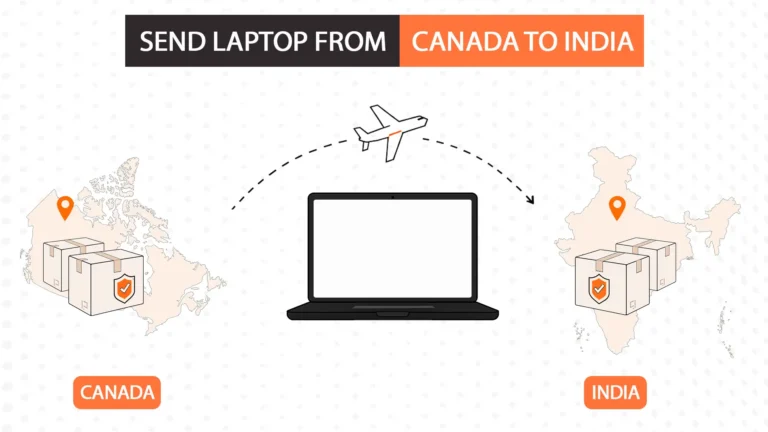
Cross-border retrieval is one of the most common reasons laptops remain unreturned.
International employees often face:
- Customs issues
- Shipping confusion
- High courier costs
- Lack of return instructions
In practice, most companies prefer retrieval over confrontation.
Many organizations:
- Provide prepaid labels
- Arrange local pickup
- Coordinate regional collection partners
The safest approach is simple: Document your willingness to return the device and request instructions in writing.
What If the Company Never Followed Up?
This happens more often than people think.
Companies occasionally:
- Lose track of devices
- Miss offboarding steps
- Change personnel
- Fail to coordinate between HR and IT
If you still have company equipment, send a short email: “I still have the company-issued laptop and would like instructions for returning it.”
Keep a copy of that communication. It creates a clear record that you acted in good faith.
Why So Many Company Laptops Never Get Returned
Contrary to popular belief, most missing laptops are not the result of theft.
They are usually the result of broken processes. The rise of remote work has fundamentally changed device logistics.
A decade ago, most employees left an office and handed their laptop to IT before walking out the door.
Today, devices may be located:
- In another city
- In another state
- In another country
That introduces challenges many organizations were never designed to handle.
Common causes include:
Poor Offboarding Processes
- HR completes the exit process but forgets to notify IT.
- No retrieval request is created.
- No return instructions are sent.
- The laptop remains with the former employee.
Missing Return Logistics
Employees are willing to return devices but never receive:
- Return labels
- Packaging
- Pickup instructions
The process stalls indefinitely.
International Complexity
Cross-border retrieval introduces:
- Customs paperwork
- Import duties
- Courier restrictions
- Regional vendor coordination
Many organizations underestimate this complexity.
Weak Asset Tracking
Companies that lack strong inventory management systems often struggle to identify:
- Who has which device
- Device location
- Ownership history
- Retrieval status
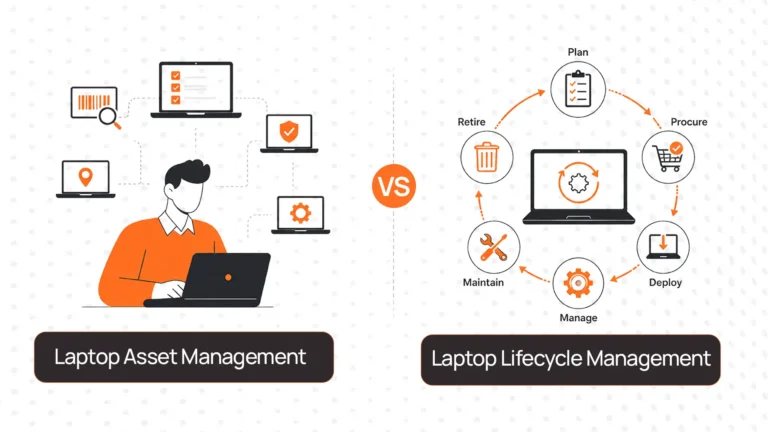
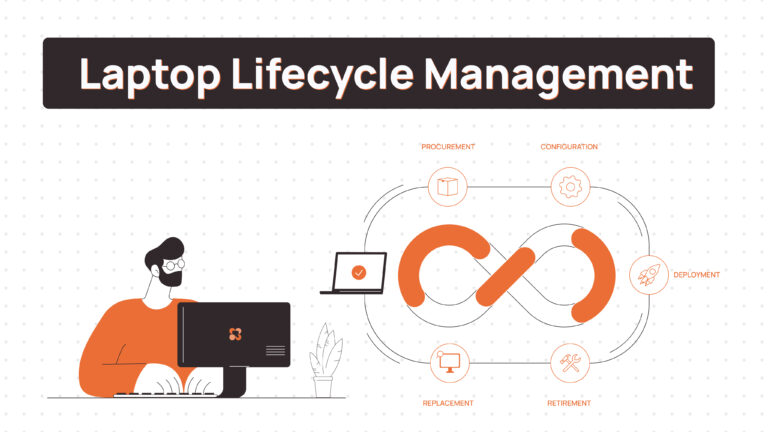
This is why many businesses are investing in dedicated Laptop Asset Management Software and Laptop Lifecycle Management programs.
The reality is simple: Most laptop recovery problems are operational problems and not employee behavior problems.
For IT & HR Teams: What Are Your Actual Options?
Start With the Most Common Cause (It’s Usually Not Theft)
Many organizations immediately assume bad intent.
In reality, common causes include:
- Missing shipping labels
- Lack of communication
- International logistics issues
- Employee confusion
- Administrative delays
Treat retrieval as an operational challenge first.
The Practical Recovery Process
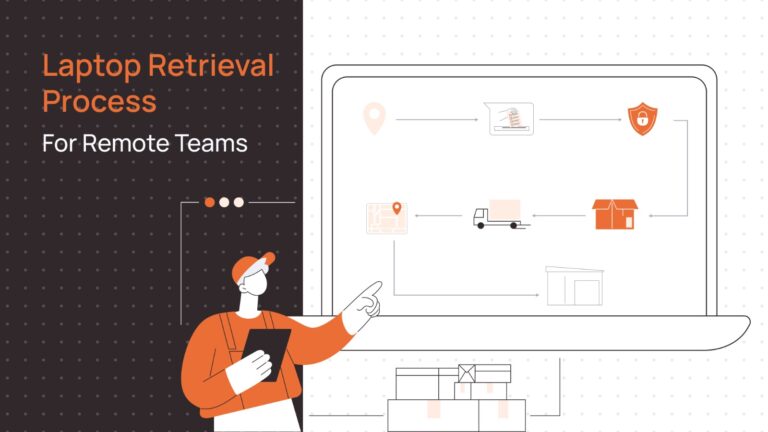
Step 1 — Send a Formal Return Request
Document communication clearly.
Include:
- Device details
- Return instructions
- Timeline expectations
Step 2 — Provide a Prepaid Return Option
The easier the process becomes, the higher recovery rates tend to be. Reduce effort wherever possible.
Step 3 — Use MDM Controls
If devices are enrolled:
- Lock access
- Remove credentials
- Protect company data
Step 4 — Escalate Formally
Formal correspondence often resolves situations without legal action.
Step 5 — Assess Actual Exposure
Evaluate:
- Hardware replacement cost
- Residual asset value
- Data exposure
- Compliance implications
Step 6 — Consider Formal Recovery
This should typically be the final step and not the first.
Common Recovery Mistakes Employers Make
Many organizations accidentally create their own retrieval problems.
Common mistakes include:
Waiting Too Long
Recovery rates decline significantly when retrieval starts weeks after departure.
Treating Retrieval as HR’s Responsibility Alone
Successful recovery usually requires coordination between:
- HR
- IT
- Operations
- Security
Using Manual Spreadsheets
Without visibility, teams lose track of device status quickly.
Forgetting International Logistics
What works domestically may fail completely for remote global teams.
Focusing Only on Hardware Value
The security risk often exceeds the laptop’s replacement cost.
The Data Risk Is Bigger Than the Hardware Cost
A missing laptop might be worth $1,500.
The information stored on it could be worth much more.
Potential exposure includes:
- Customer records
- Financial information
- Employee data
- Internal documents
- Intellectual property
Important Callout
Remote wipe only works if:
- The device is enrolled in MDM
- It connects to the internet
- Policies are configured correctly
Many organizations discover security gaps only after an employee leaves.
How to Prevent This: What a Successful Retrieval Process Looks Like
1. Create Equipment Agreements at Device Issuance
Clearly document:
- Ownership
- Return obligations
- Timelines
- Recovery procedures
2. Enroll Every Device in MDM on Day One
Ensure organizations maintain:
- Remote lock capability
- Remote wipe capability
- Asset visibility
- Security controls
3. Automate Offboarding Workflows
Retrieval should begin automatically when:
- Resignations occur
- Terminations occur
- Contracts expire
Organizations using automated onboarding and offboarding processes typically experience fewer recovery issues.
4. Make Returns Easy
Provide:
- Return kits
- Prepaid labels
- Clear instructions
- Pickup scheduling options
Reducing friction often improves recovery rates more than stricter policies.
5. Coordinate Local Retrieval for International Employees
Global retrieval presents unique challenges. Cross-border shipping frequently introduces:
- Customs delays
- Higher costs
- Lost packages
- Employee frustration
For distributed teams, many organizations now use specialized laptop retrieval providers that coordinate local pickups rather than relying entirely on international shipping.
Platforms such as RemoAsset support retrieval operations across 80+ countries, helping organizations recover devices locally and maintain chain-of-custody visibility throughout the process.
Frequently Asked Questions
Can my employer sue me for not returning a company laptop?
Yes, employers can pursue civil action to recover company property or its value. In practice, most organizations attempt recovery through communication, shipping arrangements, and retrieval services before considering litigation.
Can a company deduct the laptop cost from my final paycheck?
This depends on your employment agreement, local labor laws, and company policies. Review your contract and seek jurisdiction-specific guidance if necessary.
Can a company remotely wipe a laptop I haven’t returned?
Yes, if the laptop is enrolled in an MDM platform and connects to the internet. Organizations may remotely lock devices, remove access, or wipe company data.
What should I do if the company never sent me a return label?
Send a written request asking for return instructions and keep a copy of the communication. This demonstrates good-faith efforts to return company property.
Will not returning a company laptop affect a future job?
Potentially. Formal disputes involving company property may impact references, professional relationships, and reputation within certain industries.
Can I keep a company laptop if nobody contacts me?
No. Lack of follow-up does not transfer ownership. The device generally remains company property unless explicitly transferred or sold to you.
What happens if I accidentally lose a company laptop?
Most companies investigate the circumstances, assess security exposure, and determine next steps based on policies, device management controls, and employment agreements.
How do remote companies recover laptops from former employees?
Organizations typically use prepaid shipping labels, courier pickups, retrieval partners, or specialized laptop recovery services that coordinate returns across multiple regions.
The Real Issue Isn’t the Laptop, it’s the Process
For employees, the answer to “what happens if you don’t return a company laptop” is usually much less dramatic than many expect. Most companies start with reminders, shipping arrangements, and recovery efforts and not lawsuits.
For employers, however, every unreturned laptop highlights a larger operational challenge.
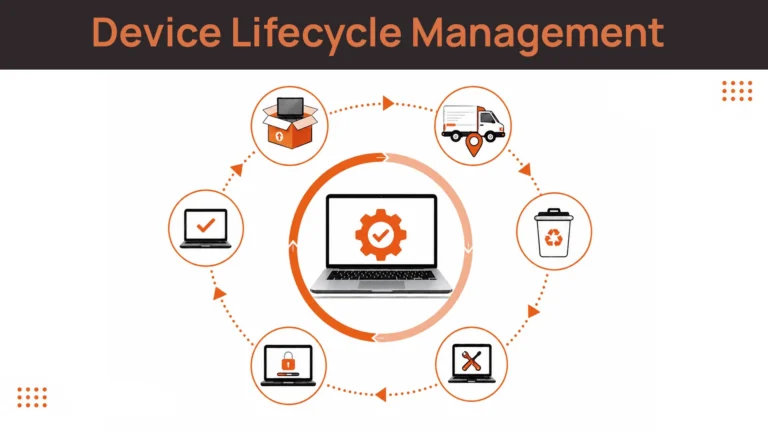
The organizations achieving the highest recovery rates today aren’t simply sending more emails. They’re building structured lifecycle processes that connect device procurement, assignment, tracking, retrieval, and disposal into a single system.
As remote and global hiring continues to grow, successful laptop recovery will increasingly depend on process design rather than enforcement alone. Companies that invest in lifecycle visibility, automated offboarding, and retrieval workflows are often able to reduce losses, improve security, and create a smoother experience for everyone involved.