
Remote hiring scaled faster than procurement did. Most IT teams managing devices across a dozen countries — from remote and hybrid teams to distributed enterprise workforces — built the process one country at a time: a local supplier here, a freight workaround there, a spreadsheet to track who has what. The result is a set of vendor relationships that do not talk to each other, asset records reconstructed after the fact, and a retrieval problem that only surfaces when someone leaves.
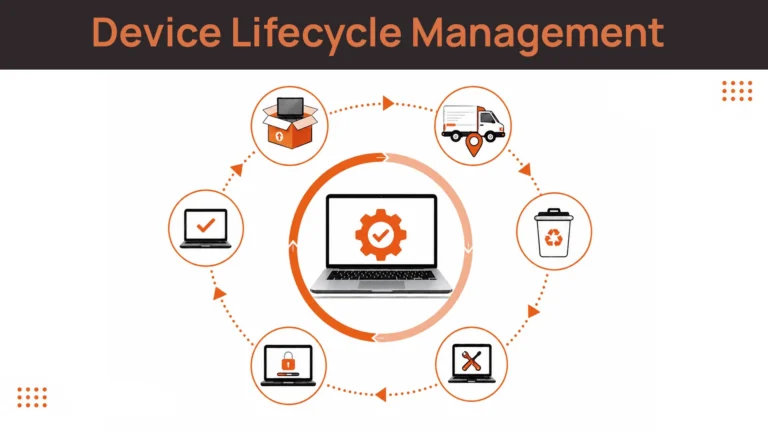
This guide is built around the complete device lifecycle management picture — but focused specifically on the procurement end of that chain. It covers what IT hardware procurement means, what the process looks like stage by stage, what services exist, what equipment categories each handles differently, how global and multi-country procurement works, how to evaluate a platform, what it costs, and how sustainable procurement fits into the purchase decision rather than the disposal one.
Teams preparing for a new hire’s remote employee onboarding often encounter the gap between what procurement promised and what arrived on day one. This guide explains why that gap exists and how to close it structurally, not just for the next hire but for every hire.
What Is IT Hardware Procurement?
IT hardware procurement is the end-to-end process of identifying, sourcing, purchasing, configuring and delivering physical IT equipment — laptops, desktops, monitors, servers and peripherals — to the people who need it, then tracking those assets through their working life until retrieval and retirement.
That definition matters because procurement is often used as a synonym for purchasing. They are not the same. Purchasing is the transaction: raise the order, pay the invoice, receive the goods. Procurement is the surrounding process — define what is needed, evaluate who can supply it, negotiate terms, ensure the device arrives configured and compliant, and record it as a tracked asset. Remoasset’s laptop procurement service covers this full process, not just the purchase step.
Teams that treat the two as the same thing usually discover the gap at offboarding, when nobody can say who holds which device, or at audit, when the asset register bears no relationship to what is physically deployed.
What does hardware procurement mean in practice?
In everyday IT usage, hardware procurement meaning is the difference between a reactive purchase and a managed process. A reactive purchase ends when the invoice is paid. A managed process continues through configuration, deployment, tracking and eventual recovery. The same term covers a single laptop order and a thousand-device global rollout — what changes is the level of process, not the underlying activity.
Is IT asset procurement the same thing?
IT asset procurement is used interchangeably with hardware procurement in most organisations, with one difference in emphasis: the asset framing assumes the device is entered into an inventory record at the point of purchase, with an owner, a location and a lifecycle stage attached. That is the better default. A device that is bought but never recorded becomes a ghost asset within a quarter or two — present in the building, absent from the register, and invisible to every downstream process.
Hardware procurement vs IT purchasing vs IT hardware purchasing
Three terms, one activity, meaningfully different scope:
- IT purchasing — the transaction layer. Raising orders, paying invoices, receiving devices.
- Hardware purchasing / hardware & software purchasing — used more broadly; often means the transaction across hardware and software spend combined.
- IT hardware procurement / IT hardware purchasing — the full process: requirements, sourcing, approval, configuration, delivery and lifecycle tracking. Purchasing is a step inside this, not a synonym.
Why IT Hardware Procurement Matters
- Productivity: Employees without correctly configured devices on day one lose productive hours. In distributed teams, the problem compounds across time zones and IT support capacity.
- Cost control: Untracked hardware spend, idle devices and unrecovered assets are where device budget disappears. Structured procurement saves money not by buying cheaper — but by buying less and recovering more.
- Security and compliance: Devices procured without MDM enrolment, or recovered but not wiped to a certified standard, are the most common source of data exposure at employee offboarding.
- Scalability: A procurement process that relies on individual vendor relationships and manual approvals breaks at around 50 devices and falls apart at 500. The process must be built before the scale arrives.
- Audit readiness: A clean chain of custody — device purchased, assigned, tracked, retrieved, wiped — makes a device audit or compliance review completable in hours, not weeks.
IT Hardware Procurement vs IT Software Procurement
Most IT teams run hardware and software procurement as one budget line and two completely different workflows. That is the right approach — the skills, suppliers, criteria and failure modes are different enough that conflating them produces poor decisions in both directions.
| Aspect | IT Hardware Procurement | IT Software Procurement |
|---|---|---|
| Nature of assets | Physical — laptops, desktops, servers, peripherals. Requires shipping, customs, storage and recovery. | Digital licences or cloud subscriptions. Delivered instantly, no logistics. |
| Procurement complexity | High. Cross-border logistics, import duties, warranty geography, physical tracking and retrieval. | Lower. Contracts, seat counts, renewals and access controls. |
| Deployment | Devices must be shipped, configured and enrolled in MDM before the employee can work. | Instant provisioning via download or cloud login. |
| Lifecycle management | Procurement → delivery → tracking → retrieval → certified data wiping → redeployment or disposal. | Contract → licence renewal → compliance check → deactivation. |
| Scalability challenge | Scaling across countries requires in-country entities, local suppliers and customs expertise. | Scaling means adding seats or upgrading a tier. |
| Compliance & security | MDM enrolment, NIST 800-88 certified data wiping, chain-of-custody documentation, physical recovery. | Licence compliance, access control, privacy policy alignment. |
| Cost structure | Hardware spend + logistics + configuration + replacement + disposal. CapEx or OpEx depending on model. | Recurring subscription or licence fee. Primarily OpEx. |
| Combined procurement | One platform for reporting is possible; physical fulfilment and digital fulfilment need separate operational capabilities. | Same platform can handle both — where physical logistics is not involved. |
Sourcing of hardware and software together — can one platform handle both?
Partly. Several platforms combine software licence management and device inventory in one interface, which is useful for reporting. What almost none of them cover is the physical side of hardware and software procurement services: in-country sourcing, import entities, customs documentation, pre-shipment configuration and retrieval. The best IT asset management software options cover the record layer; a device lifecycle platform covers the logistics layer.
If your organisation is buying software in one country and hardware in fifteen, the realistic setup is a SaaS management tool alongside a device lifecycle platform. Sourcing of hardware and software through a single supplier works well only where the hardware footprint is domestic and volumes are low. For distributed teams, hardware and software procurement services are best treated as complementary, not combined.
Remoasset covers the hardware side of that split — sourcing, provisioning, delivery, tracking, retrieval and certified data wiping — and integrates with the MDM layer rather than replacing it. See best mobile device management software for the software layer, and the MDM platform for how MDM sits alongside procurement.
The IT Hardware Procurement Process: 7 Stages
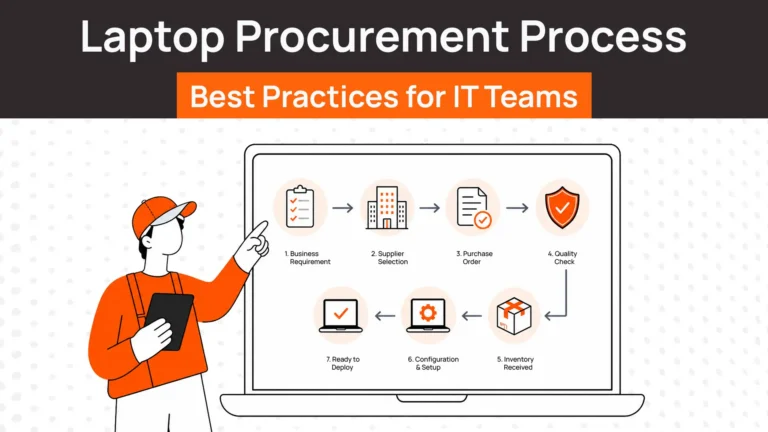
A hardware procurement process is the repeatable workflow that turns a device request into a configured machine in someone’s hands, with an asset record attached from day one. Most organisations have six of these seven stages informally. The one most often missing is sourcing — the explicit decision about where the device is bought from — which is what determines lead time, landed cost and whether the warranty is valid in the country the employee actually lives in.
- Requirement definition. Map device specifications to roles rather than to individuals — a developer tier, a sales tier, a design tier. Role-based specifications make the rest of the workflow repeatable, remove per-request negotiation and create the standardised catalogue that makes redeployment viable later.
- Sourcing. Decide where each device is bought: in-country from a local supplier, from a regional distributor, or shipped cross-border from central stock. This is the highest-leverage decision in the whole procurement workflow for IT devices. Cross-border shipping introduces customs delays, import duty and warranty gaps that in-country hardware sourcing avoids entirely. IT hardware sourcing should be an explicit decision, not a residual. See laptop sourcing: ship, source locally, or use a stipend for the full framework.
- Vendor evaluation. Compare suppliers on total cost of ownership rather than unit price — landed cost, warranty terms in the destination country, replacement SLA, configuration capability before shipment. A cheaper unit that arrives unconfigured in three weeks is not cheaper when you factor in IT time and the delay to the new hire.
- Quotation and approval. Route the request through a defined approval chain with documented spend thresholds. The failure mode here is not a missing approval step — it is an approval step that lives in email and stalls for four days while someone waits to start work.
- Purchase and order tracking. Raise the order, record the expected delivery against the employee start date rather than the order date, and track the shipment. The date that matters is the one the person needs the machine, not the date procurement placed the order.
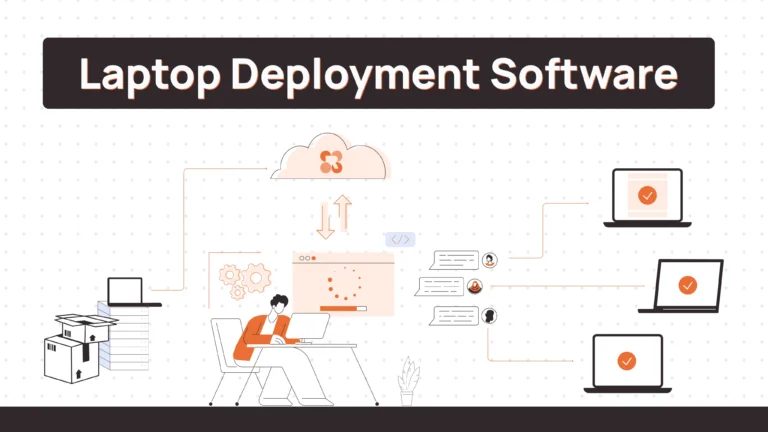
- Configuration, setup and delivery. Enrol the device in MDM, apply the security baseline and the standard application set, then ship it to the employee ready to use. Hardware setup and procurement handled as separate steps produces the day-one experience where a new hire receives a sealed box and no login. Zero-touch deployment collapses the two into a single step — see best laptop deployment software and the zero-touch deployment readiness checklist before buying devices for a rollout.
- Lifecycle tracking. Record the device against the person, location and lifecycle stage from the moment it ships. Everything downstream — refresh planning, retrieval, redeployment, disposal — depends on that record existing from day one. Remoasset’s automated asset tracking creates the record at purchase and updates it at each lifecycle transition. For standalone tracking tools, see laptop inventory management software.
For the laptop-specific version of this workflow applied stage by stage, see the laptop procurement process best practices guide.
What Do IT Hardware Procurement Services Include?
IT hardware procurement services are managed offerings that take some or all of the procurement workflow off the internal IT team. The category label is broad, so the practical question is not “do they do procurement” but “which of these capabilities do they actually operate, and in which countries”.
A full-scope IT device procurement service covers:
- Catalogue management — a curated, role-based device list with agreed specifications, so requests do not become individual negotiations each time.
- Sourcing and vendor management — supplier relationships in each country of operation, including the local entity required to purchase and import legally.
- Quotation and approval workflow — request routing, spend thresholds and an audit trail of who approved what, without living in email.
- Configuration and MDM provisioning — MDM enrolment, security baseline, application set and asset tagging applied before the device ships. See Remoasset MDM platform for how provisioning integrates with Intune, Jamf, Kandji, Hexnode and Miradore.
- Delivery and logistics — last-mile delivery to a home or office address, customs handling where the shipment crosses a border, and delivery confirmation at asset record level.
- Asset tracking — a live record of every device, its holder, its location and its lifecycle stage, updated at each transition. See automated asset tracking for how Remoasset handles this.
- Maintenance and repairs — in-warranty and out-of-warranty repair coordination plus a replacement path when a device fails. See maintenance and repairs service for the written SLA and replacement process.
- Retrieval and offboarding — recovering the device when someone leaves, including in countries where the provider has no physical office. See laptop retrieval services for coverage and process detail. Understand what retrieval actually costs before selecting a provider.
- Data sanitisation — certified wiping to a recognised standard (NIST 800-88), with a per-device certificate and chain-of-custody documentation. See data wiping service for Remoasset’s certified process.
- Storage and redeployment — holding recovered devices in a managed warehouse and reissuing them to the next hire instead of rebuying. See device storage service for how Remoasset manages in-country warehousing.
The last four items are where most providers stop short. Hardware procurement services that end at delivery leave the harder half of the lifecycle — retrieval, wiping, storage, redeployment — with the internal team. Understanding which capabilities a provider actually operates versus subcontracts is the most useful single evaluation exercise.
The features of hardware and software procurement services that most often separate providers: retrieval coverage (does it match delivery coverage?), data sanitisation standard (certified or informal?), and storage capability (managed warehouse or “customer arranged”). See the full laptop lifecycle management platform overview for how these services connect end to end.
What Hardware Does IT Procurement Cover?
The term IT equipment procurement covers several hardware categories, and the operational difficulty varies enormously between them. For a broader view of what providing equipment to distributed teams involves operationally, see how to provide equipment for remote workers.
Laptops and desktops — computer hardware procurement
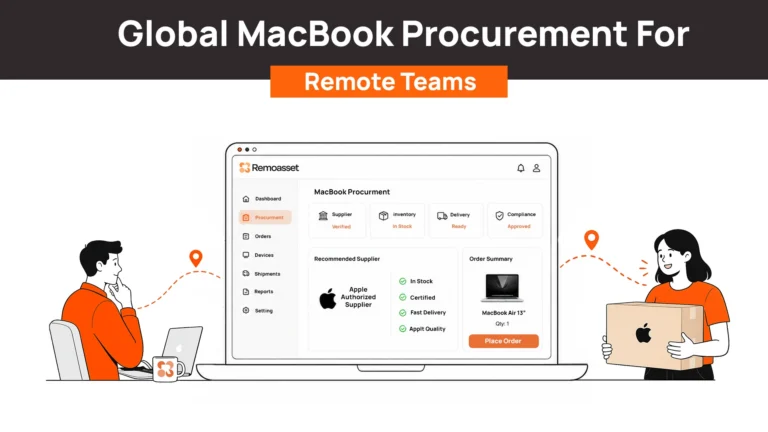
The highest-volume category and the one most directly tied to hiring cycles. Computer hardware procurement for distributed teams is also where cross-border shipping causes the most trouble — lithium-ion battery restrictions, customs declarations and country-specific keyboard layouts all create friction that in-country sourcing avoids. See business laptop procurement for how businesses actually buy laptops for employees, and global MacBook procurement for remote teams for Apple-specific considerations. For device-tier selection guidance, see best laptops for remote work and the device procurement best practices guide.
Monitors, docks and IT peripherals procurement
IT peripherals procurement is usually treated as an afterthought and is where most untracked hardware spend lives. Keyboards, mice, headsets, docking stations, monitors and security keys are individually cheap, rarely asset-tagged, and almost never recovered at offboarding.
Two fixes: include peripherals in the role-based catalogue rather than handling them as one-off requests, and track them on the same asset record as the laptop they were issued with. A peripherals line-item that is invisible to asset management is a peripherals budget that grows unchecked.
Mobile devices
Phones and tablets bring a carrier and plan dimension that laptops do not, and MDM enrolment requirements differ by platform and OS. Treat them as their own catalogue line with their own provisioning path. See mobile device management for how the enrolment and security layer works, and the MDM platform for Remoasset’s solution.
Lease vs buy — procurement model decision
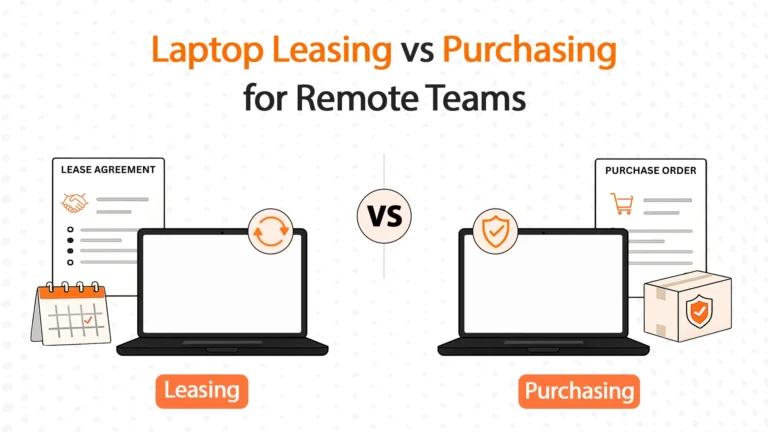
Before deciding what to procure, decide how. Laptop leasing vs purchasing for remote teams covers when each model makes sense. The CapEx vs OpEx guide for IT asset management covers the financial structure decision. For teams considering a subscription hardware model, see best Laptop as a Service providers.
Server procurement
Server procurement follows a different model from endpoint procurement: longer evaluation cycles, capacity planning, rack and datacentre constraints, vendor-direct or reseller purchase, and installation and commissioning as a distinct project phase. The right supplier for server and network infrastructure is a value-added reseller with datacentre capability.
Remoasset covers the endpoint fleet — laptops, desktops, mobile devices and peripherals — across 80+ countries via the laptop procurement service. Server and datacentre infrastructure is outside scope.
📚 Related Reads
- Business Laptop Procurement: How Businesses Actually Buy Laptops for Employees
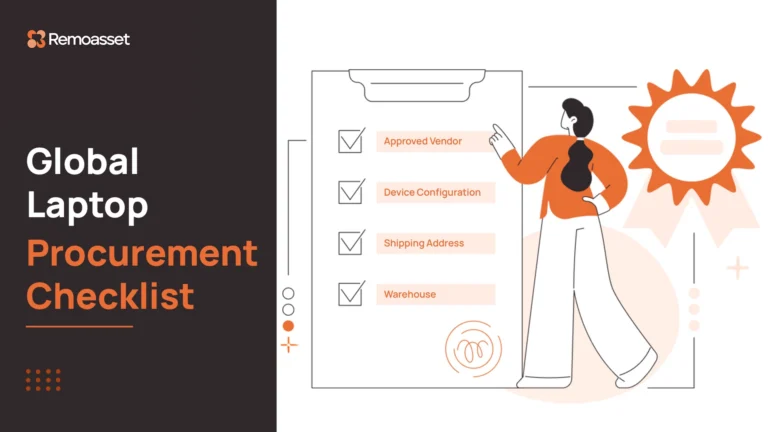
- Global Laptop Procurement Checklist: 12 Steps for Enterprise IT Teams (2026)
- Device Procurement Best Practices for Modern Global Teams
- Laptop Total Cost of Ownership: The Full Lifecycle Math
- Laptop Sourcing: Should You Ship, Source Locally, or Use a Stipend?
- Laptop Fleet Management: Complete Guide for Modern Remote Teams
Global and Multi-Country IT Hardware Procurement
Global device procurement is a different problem from domestic procurement. The moment a company hires in a second country, three things break at once: the supplier that served the first country cannot invoice in the second, cross-border shipments hit customs, and warranty coverage stops being portable. Most teams discover this one country at a time and patch each individually — how you end up with fifteen suppliers, fifteen spreadsheets and no consistent asset record.
Ship centrally or source in-country?
This is the highest-leverage decision in global hardware procurement. Shipping from central stock keeps the catalogue consistent, but each shipment carries duty, brokerage fees and a customs risk that scales with distance. In-country sourcing removes the border — the device is bought and delivered domestically, arrives faster, is under a valid local warranty, and carries no import liability. Why international laptop shipping hurts remote teams explains the compounding cost and risk of the central-ship default.
The cost of in-country sourcing is catalogue variance: exact models differ by market, so specifications should be defined by performance tier rather than by SKU. A standardised tier that arrives on time beats a specific model that clears customs in three weeks.
Multi-location laptop procurement
Companies operating across several sites usually end up with one procurement process per location — each with its own supplier, approval habits and tracking method. Multi-location laptop procurement works when the catalogue and the approval workflow are centralised while the sourcing and delivery stay local. That split — central policy, local execution — is the only structure that holds up past a handful of countries. For the full step-by-step version, see the global laptop procurement checklist.
Sourcing in Greater China and APAC
Coverage depth varies more between providers than headline country counts suggest. The regions where in-country capability is hardest to find — and matters most — are the Middle East, Southeast Asia and Greater China. Sourcing of hardware and software in Greater China carries requirements that most Western providers subcontract: mainland China, Hong Kong and Taiwan each operate as distinct procurement markets with their own import rules, invoicing requirements and supplier networks. A provider that treats them as one region generally has not operated in all three.
Remoasset operates across 80+ countries with in-country sourcing and retrieval, including depth in the Middle East and APAC. Coverage by country is listed at laptop procurement and retrieval by country.
How to Evaluate a Global IT Hardware Procurement Platform
Most global IT hardware procurement tools present a similar feature list. The useful evaluation questions are the ones that separate operational capability from a coverage map. Ten criteria, in the order they most often determine the outcome:
- In-country sourcing versus cross-border shipping. Ask per country: is the device bought locally, or shipped in? A country listed as “covered” because a courier delivers there is not the same as one with a local supplier and import entity.
- Retrieval capability. Procurement is the easy half. Ask whether the provider recovers devices in the same countries it delivers to, and what the process is in countries where it has no local presence. See remote device retrieval for IT teams for what a structured retrieval process looks like.
- Data sanitisation standard. Certified wiping to NIST 800-88 with a per-device certificate and chain-of-custody documentation — not a statement that devices are “securely wiped”. See Remoasset data wiping for the certified process.
- MDM integration. Native integration with the MDM you already run — Intune, Jamf, Kandji, Hexnode, Miradore — so devices enrol automatically. See remote device management for how MDM and procurement connect in a distributed fleet.
- Replacement and repair SLA in writing. Best providers for global hardware procurement installation and maintenance put the replacement commitment in a contract with a stated timeframe. See maintenance and repairs for Remoasset’s written SLA.
- Warranty handling across borders. Who owns the warranty claim when a device bought in one country fails in another? Does the provider handle it, or does it revert to you?
- Asset record fidelity. Serial-level tracking, holder, location and lifecycle stage — and whether the record is created at purchase or reconstructed later. See automated asset tracking.
- Storage and redeployment. Whether recovered devices can be warehoused and reissued, which turns retrieval from a cost into a saving. See device storage service for Remoasset’s in-country warehousing.
- Enterprise controls. SSO, role-based permissions, approval thresholds, multi-entity billing and per-cost-centre reporting — what separates a tool that works for a 40-person team from one that works for enterprise hardware procurement at 4,000+.
- Pricing transparency. Published subscription pricing rather than quote-only. Quote-only pricing on a device platform usually means the margin is somewhere you cannot see.
Practical test: pick the three hardest countries in your footprint and ask each provider for the specific local process in each — supplier name, import entity, retrieval method. Providers that operate there answer in specifics. Providers that subcontract answer in coverage maps.
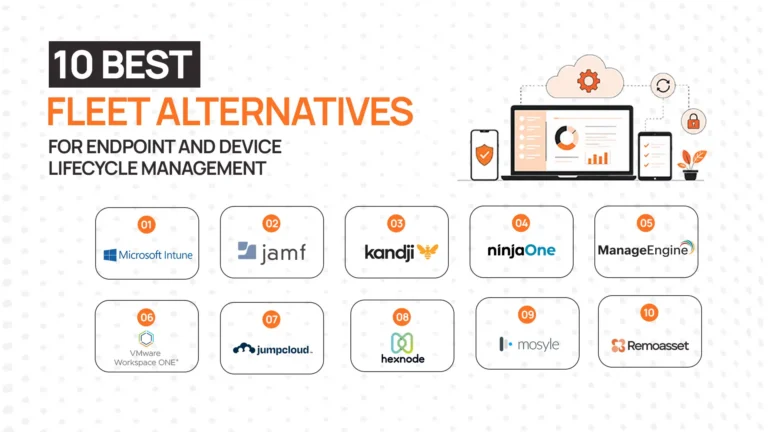
Comparisons between specific providers are at Remoasset vs Esevel, Remoasset vs Fleet and Remoasset vs Workwize. For the full platform comparison index, see the compare page.
How the IT Hardware Procurement Services Market Is Structured
The hardware procurement services market is not one category. Providers cluster into five types, and most procurement frustration comes from buying from one type while needing another.
- Resellers and value-added resellers (VARs). Traditional hardware distribution with installation and maintenance services for on-premise environments. Strong on unit pricing and datacentre work. Weak on distributed-workforce logistics and retrieval.
- Device-as-a-Service and leasing providers. Convert hardware from a capital purchase to a monthly per-device fee, usually bundling support and refresh cycles. See laptop leasing vs purchasing for when the leasing model makes sense.
- IT asset management software. Tracks and reports on devices you already own. Does not source, ship or recover anything — a record layer, not a logistics one. See laptop asset management software guide for the evaluation criteria.
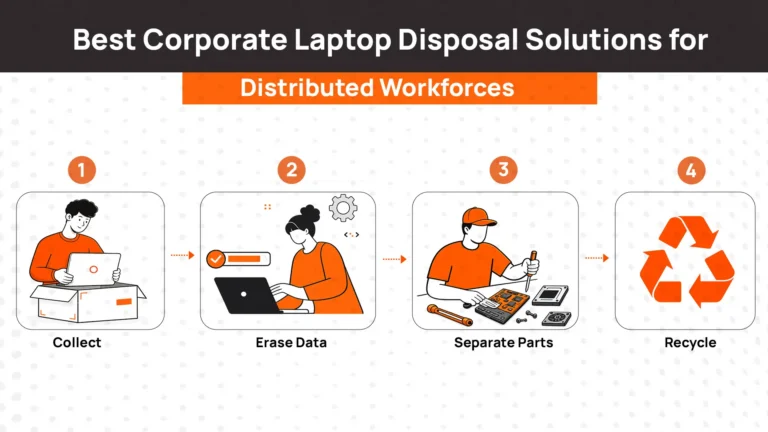
- Global device lifecycle platforms. Cover procurement, provisioning, delivery, retrieval, storage and disposal as one workflow across multiple countries — built for distributed teams. For end-of-lifecycle handling, see IT asset disposal and best corporate laptop disposal solutions.
- Freight and logistics providers. Move devices but do not source, configure or track them. Often used to patch a coverage gap in one of the other four types.
Knowing which type a provider belongs to is more useful than reading feature comparison tables, because features are described in the same language by providers with very different operational realities.
What Does IT Hardware Procurement Cost?
There are two costs that are frequently conflated. The first is the hardware itself, which varies by specification, country and supplier — see laptop total cost of ownership and laptop depreciation rates for the full lifecycle math. The second is the cost of the procurement capability — the platform, sourcing relationships, logistics infrastructure and tracking layer. Platform cost is the one to evaluate; hardware is a pass-through.
Platform pricing in this category follows three models:
- Per-device transaction fees. Predictable at low volume; expensive once hiring is continuous.
- Per-device monthly subscription. Common in Device-as-a-Service, where hardware and service are bundled. Simple, but obscures what you pay for service versus hardware.
- Flat platform subscription with hardware billed separately. The most transparent model — platform cost is visible and hardware is a direct pass-through at market rates.
What about procuring in multiple countries on a limited budget?
If the requirement is a handful of devices across a few countries per year, pay-as-you-go is the right structure. The economics shift when hiring is monthly or when retrieval and redeployment enter the picture. A single unrecovered laptop typically costs more than a year of platform access. The CapEx vs OpEx guide walks through the financial model for each approach. The saving in IT hardware procurement comes from redeployment and recovery rates, not from the subscription line.
Remoasset offers pay-as-you-go and an annual subscription. Current pricing is published at Remoasset pricing.
Sustainable IT Hardware Procurement
Sustainable procurement of IT hardware is usually treated as a disposal question, which is why it rarely produces much. By the time a device reaches end of life, the decisions that determined its environmental cost were all made at procurement stage.
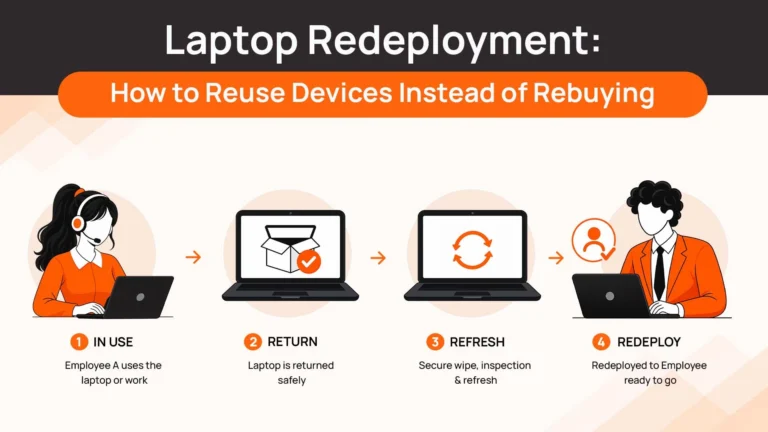
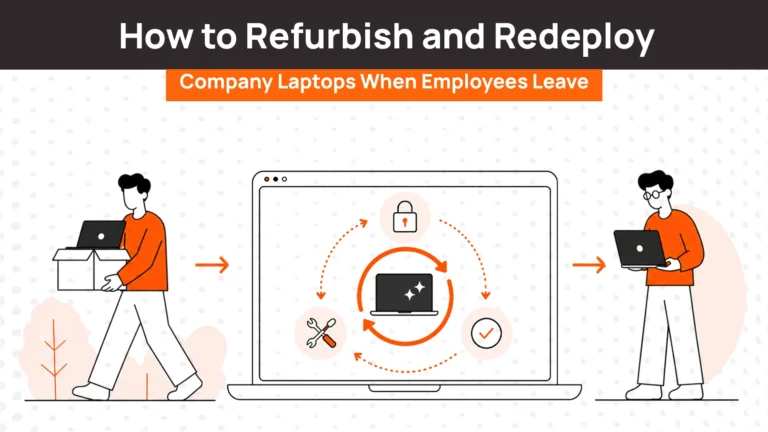
- Redeployment before repurchase. A recovered device that is wiped, refurbished and reissued removes one manufactured unit from the cycle entirely. See how to refurbish and redeploy company laptops for the operational process, and laptop redeployment: reuse devices instead of rebuying for the economics.
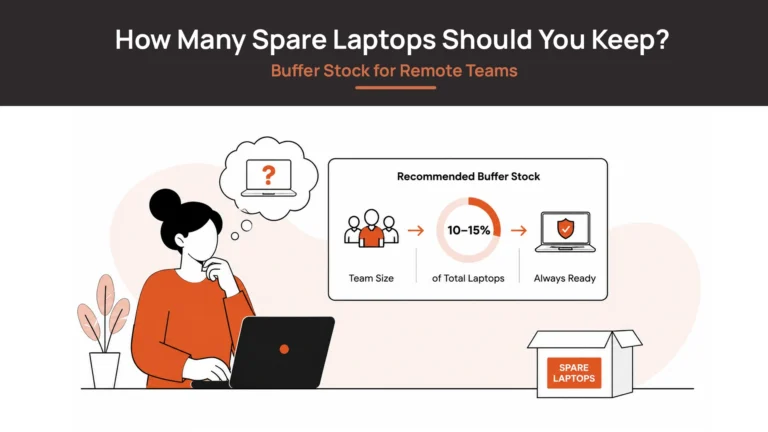
- Extending the refresh cycle. Refresh policies are often set by habit rather than device condition. See how many spare laptops should you keep for buffer-stock sizing, which determines whether extending cycles is operationally safe.
- Catalogue standardisation. A narrow, standardised catalogue makes redeployment viable because a returned device matches the next hire’s tier. A sprawling catalogue produces devices nobody can reissue.
- In-country sourcing. Buying locally removes the freight leg. The environmental case is secondary to the operational one, but it is real and worth including in a procurement policy.
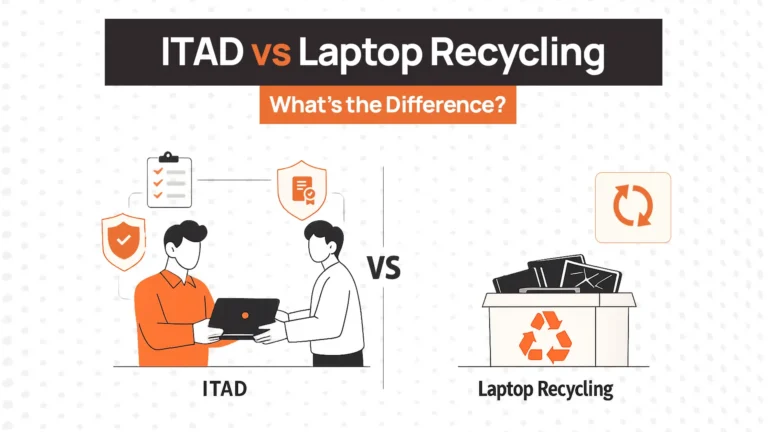
Certified data sanitisation is what makes redeployment safe. NIST 800-88 certified wiping with a per-device certificate — via Remoasset’s data wiping service — is the difference between a device that can be reissued with confidence and one that gets shredded because nobody can prove it is clean. For the full disposal decision framework, see ITAD vs recycling and best corporate laptop disposal solutions.
Best Practices and Strategies for Smarter IT Hardware Procurement
Centralise policy, keep sourcing local
A centralised catalogue and approval workflow gives consistency and an audit trail. Local sourcing in each country gives speed, valid warranties and no customs risk. The two are not in tension — run them in parallel. See laptop fleet management guide for how centralised visibility works across a distributed fleet.
Build the asset record at purchase, not at audit
Every downstream process depends on knowing what exists, where it is and who holds it. That record is cheap to create at procurement and expensive to reconstruct six months later. Remoasset’s automated tracking creates it at the point of purchase.
Standardise device tiers rather than individual SKUs
A developer tier, a sales tier, a design tier. Tiers make the catalogue manageable, make redeployment possible and let sourcing flex by market without losing specification control.
Treat retrieval as part of procurement planning
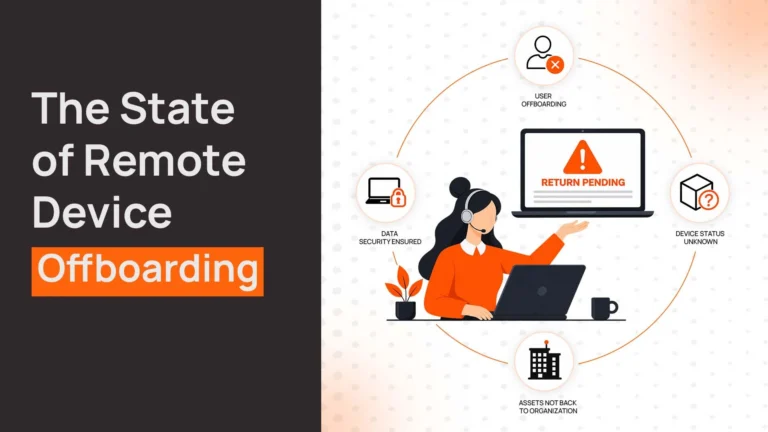
How a device comes back should be part of the procurement decision, not a problem discovered at offboarding. See the laptop retrieval process for remote teams for a structured recovery workflow, and the remote device offboarding checklist for the full sequence.
Automate the approval and request workflow
An approval chain that lives in email is not a process — it is a delay. Automating the request-to-order workflow removes the bottleneck without removing the control. See best tools to automate laptop onboarding and offboarding for the workflow layer.
Include peripherals in the catalogue and asset record
Peripherals are where untracked hardware spend accumulates. Including them in the same catalogue and the same asset record as the laptop costs almost nothing and closes the largest gap in most hardware spend visibility.
Use redeployment as a budget lever, not a fallback
A structured redeployment workflow — retrieve, inspect, wipe, certify, reissue — reduces new hardware spend in direct proportion to retrieval reliability. See laptop redeployment: how to reuse devices instead of rebuying for the operational detail and the cost-per-redeployment math.
How Remoasset Handles IT Hardware Procurement
Remoasset is a global device lifecycle platform that covers the full procurement-to-retirement chain across 80+ countries. The laptop lifecycle management platform connects procurement, provisioning, tracking, maintenance, retrieval, certified data wiping and storage or redeployment in one workflow.
On the procurement and delivery side:
- Role-based device catalogues with pre-approved specifications via the laptop procurement service — requests are standardised from the first interaction.
- In-country sourcing across 80+ countries — devices are bought and fulfilled locally, removing customs delays, import duty and cross-border warranty gaps.
- Automated approval routing with spend thresholds and a full audit trail.
- Zero-touch provisioning through native MDM integrations — devices arrive configured, enrolled and ready to use. The full configuration and laptop management workflow sits in one dashboard.
- Automated asset tracking from the point of purchase, with lifecycle stage updated at each transition.
On the offboarding and recovery side:
- Laptop retrieval in the same countries as delivery, including markets where most providers stop.
- NIST 800-88 certified data wiping with per-device certificates and chain-of-custody documentation.
- Device storage and redeployment — recovered devices held in-warehouse and reissued to the next hire.
- Maintenance and repairs with a written replacement guarantee and 24/7 Total Care+ support.
Country coverage is listed at laptop procurement and retrieval by country. For how teams like yours have used the platform, see Remoasset case studies.
Frequently Asked Questions
What is IT hardware procurement?
IT hardware procurement is the end-to-end process of identifying, sourcing, purchasing, configuring and delivering physical IT equipment — laptops, desktops, monitors, servers and peripherals — and then tracking those assets until retrieval and retirement. It is managed in full by the laptop procurement service and broader laptop lifecycle management platform.
What is hardware procurement meaning in practice?
Hardware procurement meaning in practice is the difference between a reactive purchase and a managed process. A purchase ends when the invoice is paid. A managed process continues through configuration, delivery, lifecycle tracking and recovery. The term covers a single device order and a thousand-unit global rollout.
What do IT hardware procurement services include?
A full-scope service covers catalogue management, in-country sourcing, approval workflow, MDM provisioning and configuration, delivery and customs handling, asset tracking, maintenance and repairs, retrieval, certified data wiping and storage or redeployment. Many providers cover only the delivery side.
What are the features of hardware and software procurement services?
The features that most differentiate providers: in-country sourcing depth versus cross-border shipping, retrieval coverage matching delivery coverage, certified data sanitisation standard, native MDM integration, written replacement SLA, cross-border warranty handling, storage and redeployment capability, enterprise controls and pricing transparency.
What is the hardware procurement process?
Seven stages: requirement definition → sourcing → vendor evaluation → quotation and approval → purchase and order tracking → configuration, setup and delivery → lifecycle tracking. The stage most often skipped is sourcing — the explicit decision about where the device is bought rather than defaulting to cross-border shipment.
How does global device procurement differ from domestic?
Three things change: you need a local entity able to invoice in each country, cross-border shipments incur customs duty and delay, and warranty coverage stops being portable. In-country sourcing removes all three. Coverage depth by region is listed at laptop procurement and retrieval by country.
How do you evaluate a global IT hardware procurement platform?
Test in-country sourcing depth and retrieval capability first. Then: certified data sanitisation standard, native MDM integration, written replacement SLA, cross-border warranty handling, serial-level asset records, storage and redeployment, enterprise controls and published pricing. Ask for specifics on the three hardest countries in your footprint.
Can one platform handle hardware and software procurement?
Some cover both in one interface for reporting. Very few operate the physical side — in-country sourcing, customs, pre-shipment configuration and retrieval. Distributed hardware footprints generally work better with a device lifecycle platform for hardware and a SaaS management tool for software, integrated rather than combined.
What does IT hardware procurement cost?
Platform pricing follows three models: per-device transaction fees, per-device monthly subscription (bundled with hardware in DaaS), and a flat platform subscription with hardware billed separately. The last is the most transparent. The saving in procurement comes from redeployment and recovery rates. See Remoasset pricing for published rates.
Is there a platform for procuring IT hardware in multiple countries?
Yes. Global device lifecycle platforms source in-country across multiple markets with a single dashboard, catalogue and approval workflow. Remoasset covers 80+ countries. See laptop procurement and retrieval by country for coverage. Pay-as-you-go and annual subscription pricing are published at pricing.
What is sustainable IT hardware procurement?
Sustainable procurement treats the device’s environmental cost as a procurement-stage decision. The highest-impact levers are redeployment before repurchase, extending the refresh cycle, catalogue standardisation and in-country sourcing. NIST 800-88 certified data wiping is what makes redeployment safe rather than aspirational.
How does hardware procurement relate to device lifecycle management?
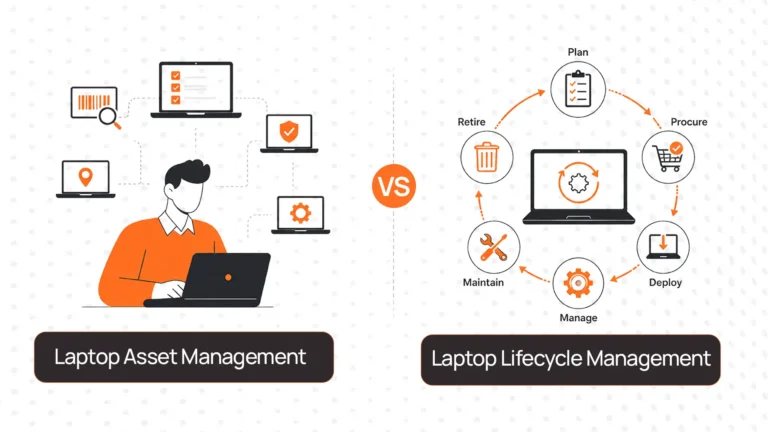
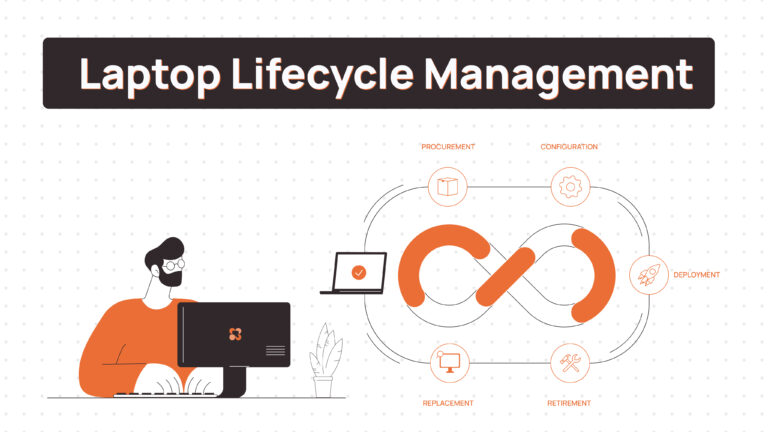
Procurement is the opening stage of device lifecycle management — the full chain being procurement, provisioning, deployment, tracking, maintenance, retrieval, data wiping and redeployment or disposal. Treating procurement in isolation without planning for retrieval and redeployment at the point of purchase is the most common source of lifecycle cost overruns. See the end-to-end device lifecycle management guide and the device lifecycle management guide for distributed IT teams.
What to Do Next
- Book a demo — see the Remoasset procurement workflow for your specific countries.
- View country coverage — 80+ countries, filterable by region.
- See pricing — pay-as-you-go and annual subscription, published.