
A laptop issued to a bank employee does not automatically fall under every financial-services regulation simply because it belongs to a financial institution. That is what makes financial-services device procurement more complicated than it first appears.
A loan officer’s laptop may primarily handle customer information covered by the organization’s information-security program. A workstation used by a payments team may interact with cardholder data and therefore fall within the scope of PCI DSS. A finance employee’s device may support systems and records relevant to internal controls over financial reporting. Another device may handle information derived from consumer reports and therefore carry disposal obligations under the Fair Credit Reporting Act’s Disposal Rule.
The result is that there is rarely one universal financial-services laptop compliance checklist. Instead, procurement has to answer a more practical question: what kind of information will this device access, and what controls need to be in place before it reaches the employee? This is the same operating principle as for healthcare laptop procurement under HIPAA — but financial services usually means several overlapping frameworks applying differently to different devices, not one dominant standard.
A better approach is to make the expected compliance context part of procurement itself, rather than discovering it after the device is already in the employee’s hands.
The Frameworks, and What Each One Actually Covers
Financial-services organizations can be subject to several different regulatory and industry frameworks, and those frameworks do not all govern the same thing. Understanding that difference is the first step toward building a sensible procurement process.
GLBA: A Broad Information-Security Obligation
The Gramm-Leach-Bliley Act is concerned with protecting customer information held by financial institutions. Under the FTC’s Safeguards Rule, covered financial institutions must develop, implement, and maintain a written information-security program containing administrative, technical, and physical safeguards appropriate to the organization’s size, complexity, activities, and the sensitivity of the information involved. For laptop procurement, the important point is that GLBA does not prescribe a particular laptop model or universal configuration. Instead, the organization’s security program needs to translate into technical and operational controls on the devices that handle customer information — making encryption, endpoint management, authentication, access controls, and asset management procurement requirements rather than post-delivery tasks.
PCI DSS: More Specific, and Driven by Payment-Data Scope
PCI DSS is intended for entities that store, process, or transmit cardholder data or sensitive authentication data, as well as entities that can impact the security of the cardholder-data environment. Whether a particular laptop is in scope depends on its role and its relationship to that environment. A financial institution cannot simply say ‘all employee laptops are PCI compliant’ and consider the question resolved — it needs to understand which devices can access or affect the cardholder-data environment, whether segmentation limits that scope, and what controls apply to those components.
PCI DSS also contains specific requirements around physical media containing cardholder data. Under Requirement 9, applicable media must be securely stored, accessed, distributed, and destroyed, while electronic media containing cardholder data must be destroyed or have the data rendered unrecoverable when it is no longer needed. This makes the procurement record relevant at the other end of the lifecycle as well.
SOX: Financial Reporting and Internal Controls
For public companies subject to Sarbanes-Oxley’s internal-control provisions, the focus is on the reliability of financial reporting and the controls supporting financial records and reporting processes. SOX’s relevance to procurement depends on what systems, applications, records, and business processes a device supports. A laptop used by an employee working with financial reporting systems may therefore require stronger governance around access, configuration, change management, and asset records than a device with no connection to those processes.
FACTA and the Disposal of Consumer-Report Information
FACTA is particularly relevant when the organization handles information derived from consumer reports. The FTC’s Disposal Rule requires businesses that maintain consumer reports for a business purpose to take reasonable measures to prevent unauthorized access to or use of that information during disposal — including destroying or erasing electronic files so information cannot be read or reconstructed. For procurement teams, this creates another reason to maintain an accurate lifecycle record: the organization should not have to guess years later whether a retired laptop was used to handle consumer-report information.
Why the Same Laptop Can Answer to Different Rules
Imagine a bank issues three employees the same laptop model. The first is a loan officer who accesses customer financial information. The second works in payment operations and accesses systems connected to the cardholder-data environment. The third works on financial reporting. The hardware may be identical, but the compliance context is not.
The first device needs to operate within the organization’s GLBA information-security program. The second may be subject to PCI DSS requirements depending on how it connects to and can affect the cardholder-data environment. The third may support systems and processes relevant to the organization’s financial-reporting controls.
The organization should therefore know the intended role of the device before it is deployed. This does not mean creating an entirely different laptop build for every employee — in many cases a common security baseline can be established and then supplemented based on the device’s role and data-access requirements. The important thing is that the distinction is documented. PCI DSS itself reinforces this: ‘this laptop is not in scope’ should be an established fact, not an assumption.
Building Compliance Into Laptop Procurement
Once the organization understands which data categories and systems each device is expected to touch, procurement can turn those requirements into repeatable controls.
Start with data classification
The procurement request should identify the employee’s role and the systems the laptop is expected to access. This does not require procurement teams to become compliance specialists — the security or compliance team can define the categories, while procurement applies them consistently. For example, an organization might distinguish between: general corporate devices, devices accessing customer non-public personal information, devices with access to the cardholder-data environment, devices supporting financial reporting systems, and devices handling consumer-report information. Know what the device is expected to touch before deciding how it should be configured.
Establish a documented configuration baseline
Once the device category is known, the required controls should become part of the standard build rather than a manual post-purchase checklist. Encryption and MDM enrollment are the clearest examples. The organization can establish a baseline that defines required encryption, endpoint protection, authentication settings, application controls, security policies, and update requirements — then attach the appropriate configuration standard to the procurement workflow so no administrator has to remember which controls belong on each new laptop.
Enroll devices into MDM before deployment
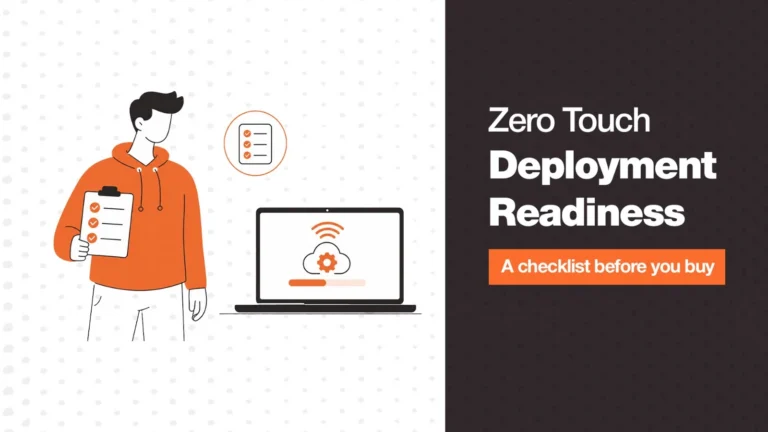
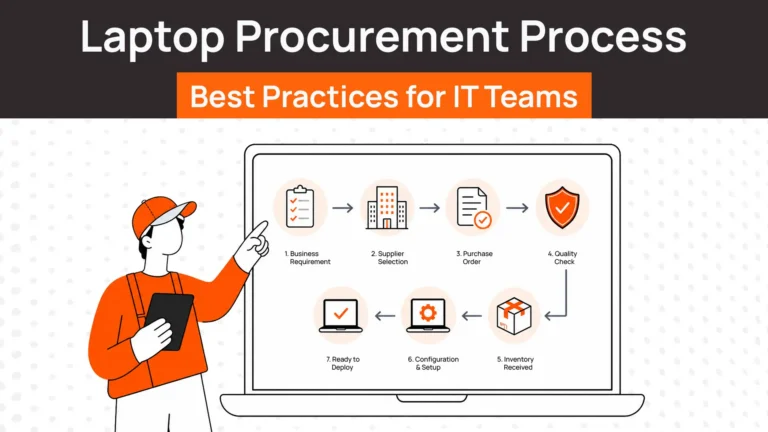
MDM is particularly valuable for distributed financial-services teams because employees may receive laptops without ever visiting a central IT location. Pre-enrollment or automated zero-touch enrollment allows the organization to establish management as part of deployment rather than relying on the employee to complete configuration correctly after delivery. The operational principle is simple: the laptop should become manageable when it becomes usable.
Create the asset record at purchase
The asset record should do more than identify a laptop’s serial number. Where appropriate, it should capture the device’s assigned user, business role, expected data category, configuration status, MDM status, procurement date, and relevant lifecycle events. This is what lets compliance teams answer questions such as ‘which devices can access the cardholder-data environment?’ or ‘was the required security baseline applied before deployment?’ without turning the answer into a manual investigation. Our guide to tracking devices throughout the procurement and deployment lifecycle covers how that record should be structured.
What Compliance Adds at the End of the Device’s Life
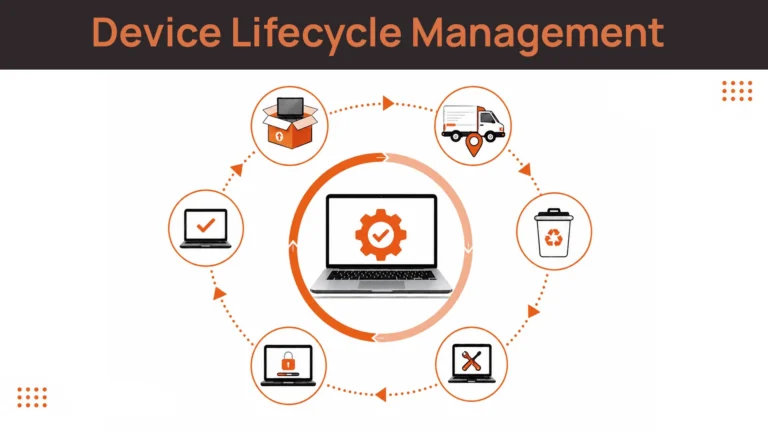
The procurement decision does not end when the laptop reaches the employee. The same classification that determined how the laptop was configured should eventually help determine how it is retired.
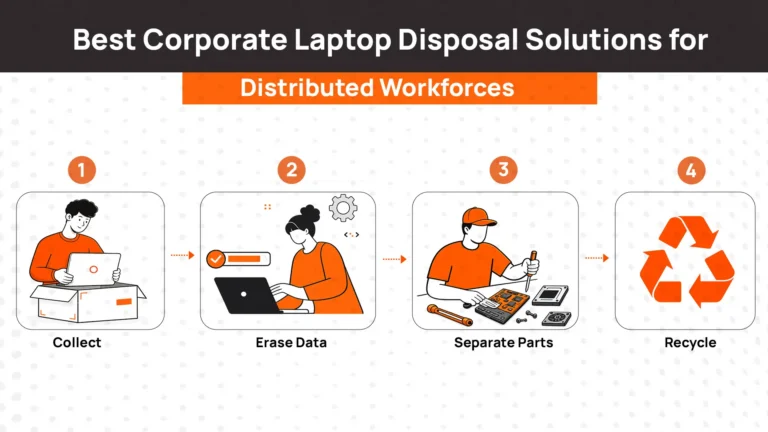
PCI DSS provides one of the clearest examples. Requirement 9 addresses the secure storage, access, distribution, and destruction of media containing cardholder data, while electronic media must be destroyed or have cardholder data rendered unrecoverable when it is no longer needed. FACTA’s Disposal Rule similarly requires reasonable measures to prevent unauthorized access to consumer-report information during disposal.
That does not mean every laptop should automatically receive the same disposal treatment — it means the organization needs enough lifecycle information to determine which process applies. For the technical details of media sanitization including NIST 800-88-based destruction workflows, see the secure data wiping and device disposal guide rather than treating those procedures as part of the procurement checklist.
A Laptop Procurement Checklist for Financial Services Teams
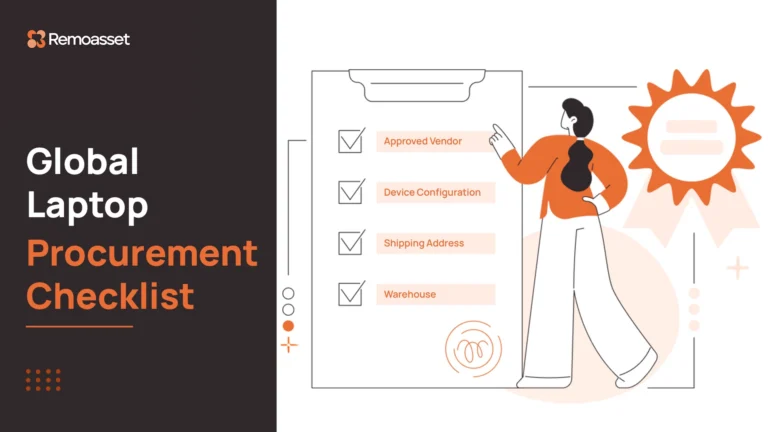
Before a laptop is shipped to a financial-services employee, procurement and IT teams should be able to answer the following:
☐ What data is this device expected to access? Define the relevant data category and systems before purchase or deployment.
☐ Which compliance frameworks are potentially relevant? Map the device to GLBA, PCI DSS, SOX, FACTA, contractual, and internal requirements.
☐ Is encryption part of the standard build? Apply the organization’s encryption requirement before the device reaches the employee.
☐ Is MDM enrollment completed? Establish centralized management as part of deployment, not after delivery.
☐ Is the security baseline documented? Define the required configuration for the device category and apply it consistently.
☐ Is the device properly recorded? Capture serial number, user assignment, device category, and configuration information.
☐ Is PCI DSS scope understood where applicable? Determine whether the device stores, processes, transmits, or can impact the security of payment account data.
☐ Can the organization demonstrate why a device is outside a particular scope? Where scope exclusions are used, maintain the evidence supporting them.
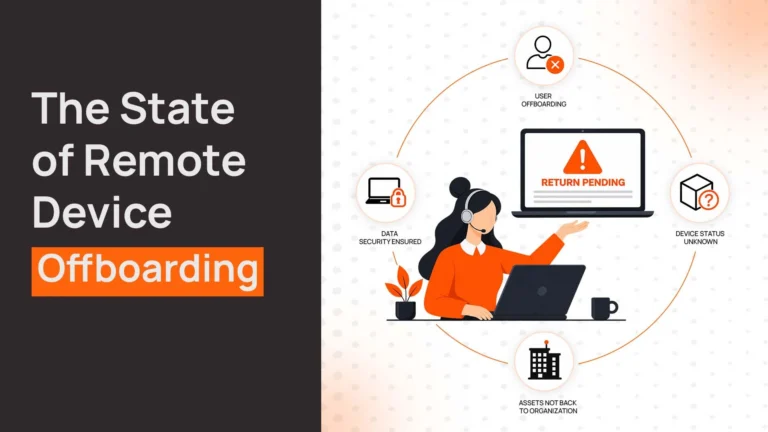
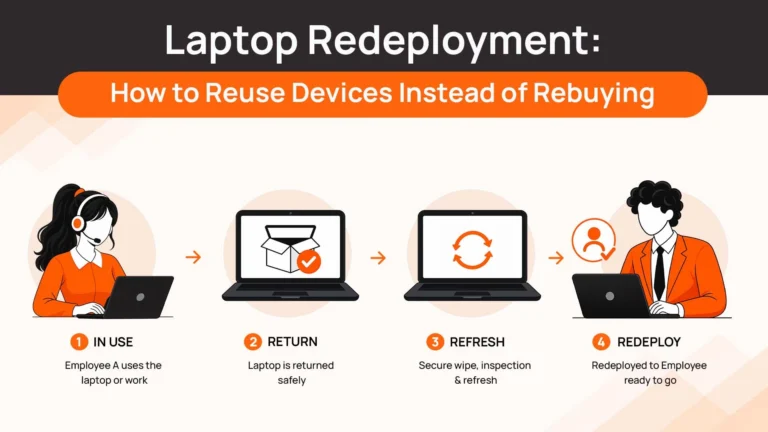
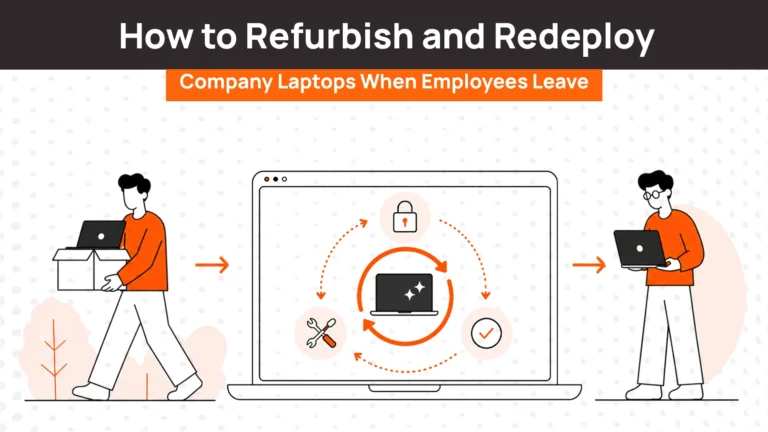
☐ Is there a defined offboarding process? Retrieval, access revocation, device reassignment, and data sanitization should be part of the lifecycle plan.
☐ Is the eventual disposal process documented? The device’s data history should inform the appropriate reuse, sanitization, or destruction workflow.
Related Reads
Each stage of this compliance workflow has a deeper operational guide:
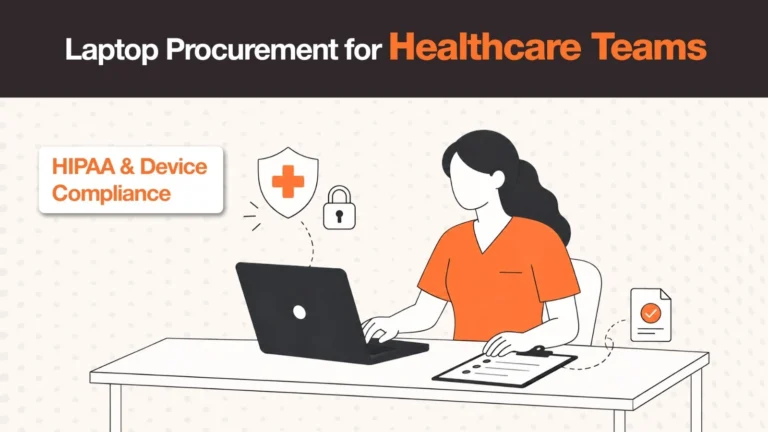
- Laptop Procurement for Healthcare Teams: HIPAA and Device Compliance — the companion piece covering the healthcare equivalent of this process.
- Zero-Touch Deployment Readiness: A Checklist Before You Buy — the MDM enrollment and pre-shipment configuration process this article references.
- Best Data Destruction and Device Disposal Tools — the NIST 800-88 sanitization workflows that apply at end of life.
- Remote Device Offboarding Checklist for IT Teams — the full offboarding process that closes out the asset record and determines disposal path.
The Practical Advantage of Resolving Compliance at Procurement
Financial-services organizations do not need four separate laptops because they have four different regulatory considerations. They need a process that understands which requirements apply to which devices and establishes the appropriate baseline before those devices enter the workforce.
A documented configuration baseline means IT does not have to rediscover the required settings every time someone orders a laptop. An asset inventory tied to data and device categories means compliance teams do not have to reconstruct the environment from disconnected spreadsheets. And a lifecycle record means the organization can carry that context forward when the device is retrieved, reassigned, or retired.
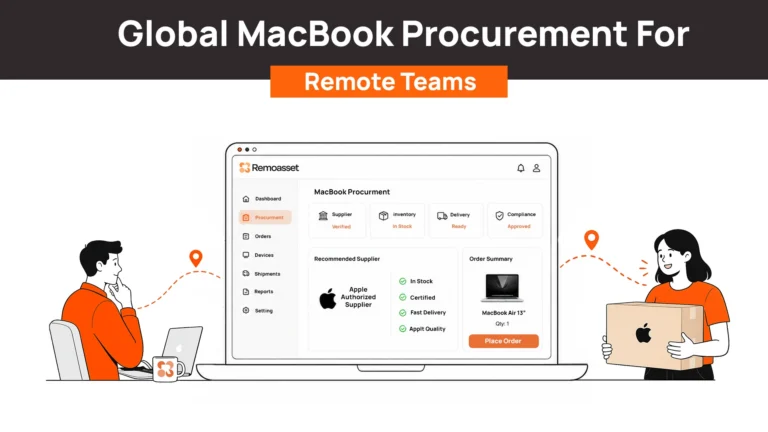
Remoasset can support that model by connecting procurement with device configuration, asset management, and lifecycle operations rather than treating the laptop purchase as an isolated transaction. The objective is not to claim that a procurement platform makes an organization compliant — compliance remains the responsibility of the organization and its applicable regulatory and security programs. The value is in making the operational controls those programs require easier to apply consistently. Book a demo to see how a documented configuration and lifecycle baseline can be applied from procurement through deployment, asset tracking, retrieval, and eventual disposition.
This article provides operational guidance and is not legal or compliance advice. Financial institutions, fintechs, and other regulated organizations should confirm their specific obligations, scope determinations, and control requirements with qualified compliance and legal professionals.
Frequently Asked Questions
What compliance rules apply to laptops in financial services?
There is no single rule that applies to every financial-services laptop. Depending on the organization, employee role, systems accessed, and data handled, relevant requirements may come from GLBA, PCI DSS, SOX, FACTA, contractual obligations, or other regulatory and internal controls. GLBA’s Safeguards Rule broadly requires covered financial institutions under FTC jurisdiction to maintain an information-security program protecting customer information. PCI DSS applies to entities and system components within the relevant payment-card environment. SOX relates to internal controls over financial reporting for applicable public companies, while FACTA’s Disposal Rule addresses the secure disposal of consumer-report information.
Is GLBA the same as PCI DSS?
No. GLBA’s Safeguards Rule requires covered financial institutions under FTC jurisdiction to maintain an appropriate information-security program for customer information. PCI DSS is an industry security standard focused specifically on payment account data and the systems that store, process, transmit, or can impact the security of that data. A financial institution may have obligations under both, but they should not be treated as interchangeable.
Do all financial institutions need to comply with PCI DSS?
Not simply because they are financial institutions. PCI DSS applies based on involvement with payment account data and the cardholder-data environment. Entities that store, process, or transmit cardholder data, or can impact the security of that environment, can fall within its scope. Specific validation requirements are managed through the relevant payment brands, acquirers, or other organizations responsible for the compliance program.
What happens to financial-services laptops at the end of life?
The appropriate process depends on what information the device contained or could access and which requirements apply to it. For devices containing cardholder data, PCI DSS includes requirements for secure media handling and destruction. FACTA’s Disposal Rule also requires reasonable measures to prevent unauthorized access to consumer-report information during disposal. The organization should therefore have a documented process for sanitization, reuse, or destruction rather than treating every retired laptop identically. For the technical procedures behind secure media sanitization including NIST 800-88, see the hard drive disposal and data destruction guide.