The laptop may be the easiest cost to see, and one of the hardest assets to budget correctly. An invoice arrives, a purchase order gets approved, and the line item looks final. It isn’t. That invoice captures one stage of a much longer economic lifecycle.
This is what laptop total cost of ownership actually measures: not what a company pays to acquire a device, but what it pays — directly and indirectly — to own, operate, and eventually retire it. For most companies, that number is meaningfully higher than the purchase price, and the gap is made up almost entirely of costs nobody assigned a budget line to.
This article breaks down where those costs come from, how to calculate them, and what a company can actually do to close the gap.
TL;DR
The purchase price of a laptop is only the acquisition cost. Laptop total cost of ownership also includes deployment, IT support, maintenance and repairs, downtime, storage, retrieval at offboarding, data wiping, and disposal — minus whatever residual value the device recovers through resale or redeployment.
Most of these costs are indirect, created in the handoffs between procurement, IT, vendors, and employees, which is exactly why they get missed in a budget built around the purchase invoice alone.
What Is the Total Cost of Ownership of a Laptop?
Laptop total cost of ownership is the sum of every cost a company incurs across a device’s full lifecycle — from procurement through disposal — minus any value recovered at the end. It includes the purchase price, but also deployment labor, IT support, maintenance, downtime, storage, retrieval, data wiping, and disposal costs.
Most companies track the purchase price closely because it appears on a single invoice. The rest of the cost is spread across IT time, support tickets, shipping, storage space, and processes that happen months or years after the purchase — which is why it rarely gets tracked as one number. For the full framework, see our dedicated guide to laptop total cost of ownership.
Why the Laptop Purchase Price Hides the Real Cost
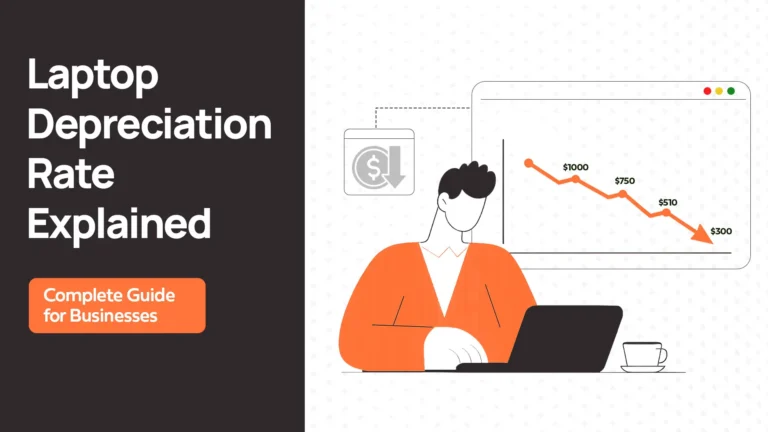
A purchase price is a single, visible transaction. Everything else that happens to a laptop over its working life is distributed: a bit of IT labor here, a support ticket there, a shipping delay somewhere else. None of it shows up on the original invoice, and none of it gets attributed back to that specific device unless someone builds a system to track it. The laptop depreciation curve makes this concrete — value erodes continuously even when costs are invisible.
The Lifecycle Costs That Companies Forget to Budget For
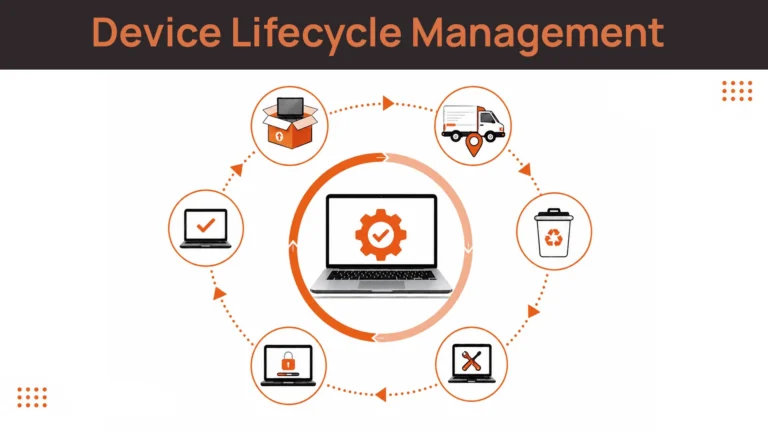
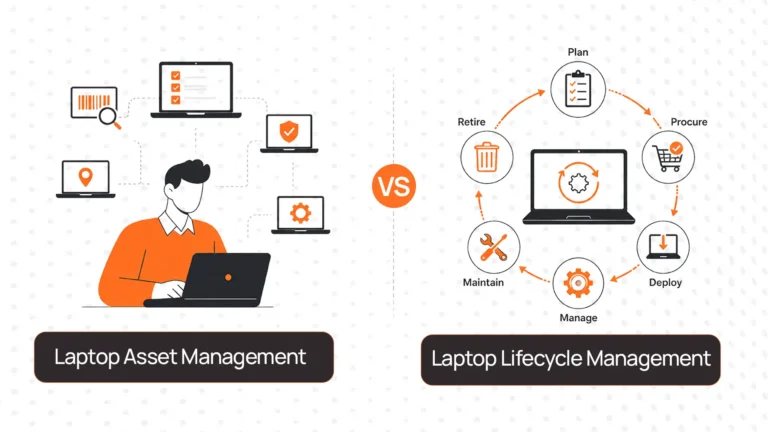
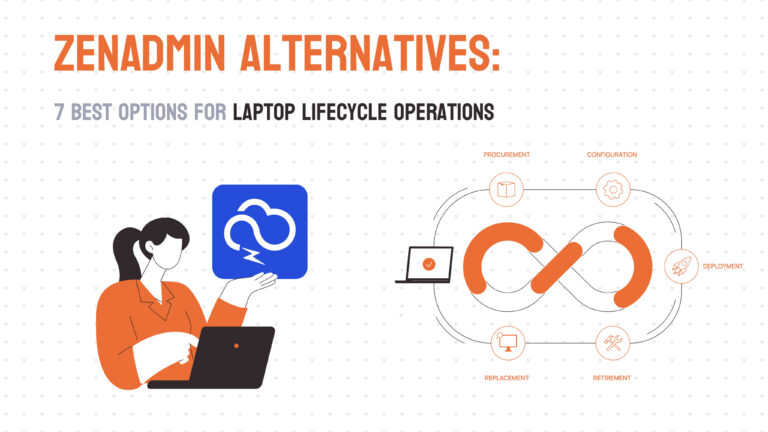
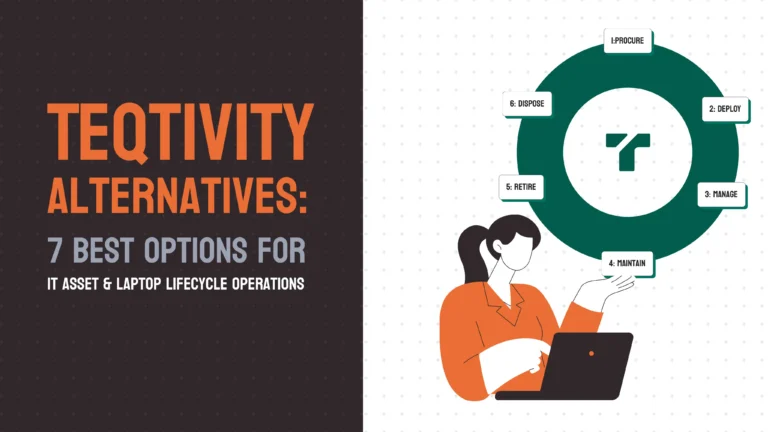
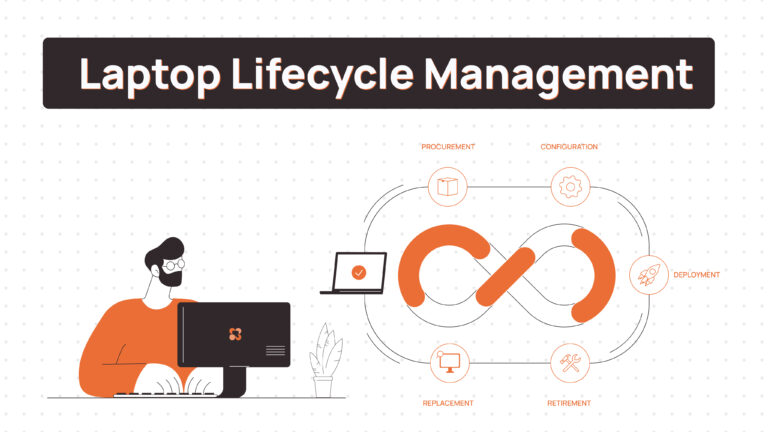
Every laptop moves through the same general stages: procurement, deployment, active use, maintenance, offboarding, and end-of-life disposition. Each stage carries its own cost, and most of them go unbudgeted.
1. Procurement and Vendor Coordination
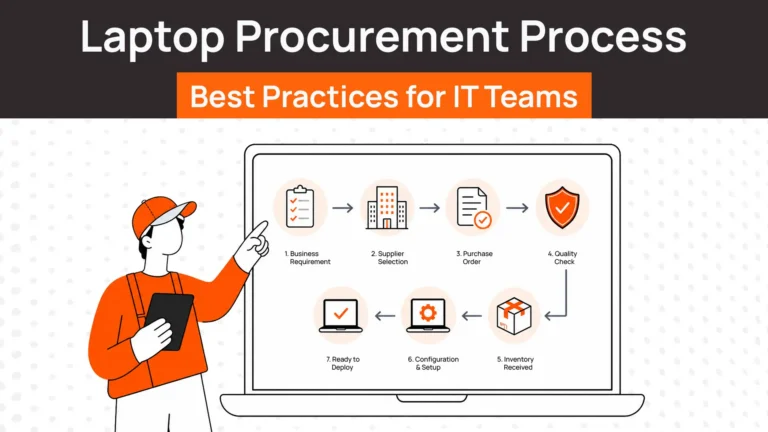
Buying a laptop isn’t just paying a vendor. It’s sourcing the right device, comparing suppliers, negotiating pricing, and coordinating delivery timelines — especially when a company is buying across multiple regions rather than from a single domestic supplier. Our guide to device procurement best practices covers how to structure this to minimize coordination overhead.
2. Deployment and Configuration
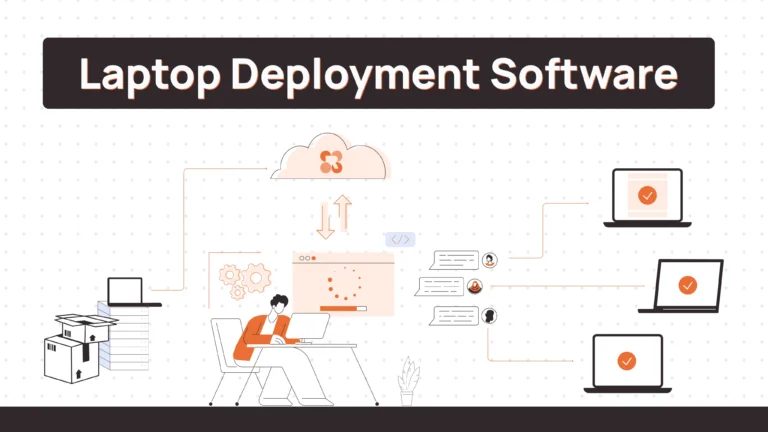
A laptop isn’t useful the moment it arrives. Someone has to configure it: operating system setup, security software, MDM enrollment, account provisioning, and any company-specific applications. Zero-touch deployment can automate much of this, but the process still carries a setup cost that rarely appears next to the purchase price.
3. Shipping and Employee Onboarding
Getting a configured laptop to the right employee, on time, is its own logistics problem. International shipping adds customs delays and cross-border costs — the full picture of why shipping laptops internationally costs more than it looks is worth reading before committing to a central-warehouse model. Local procurement eliminates most of those costs by sourcing in-country.
4. IT Support and Maintenance
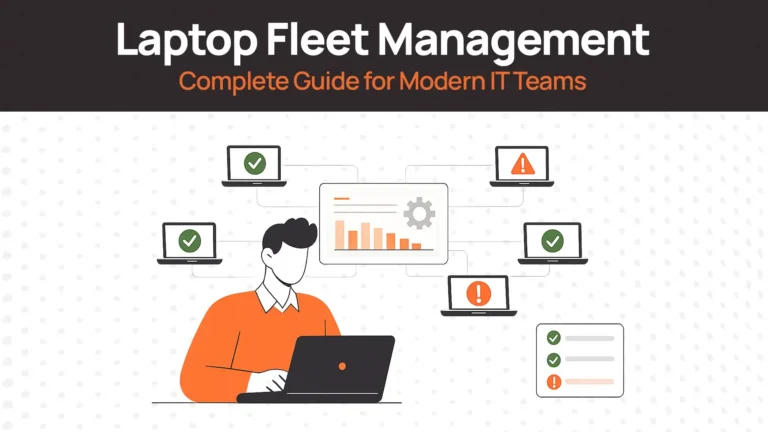
Laptops generate support tickets throughout their working life: software issues, connectivity problems, performance degradation, minor hardware faults. This is where fleet management data becomes useful — knowing which device models generate the most support load is the first step to reducing it.
5. Repairs, Replacements, and Loaner Devices
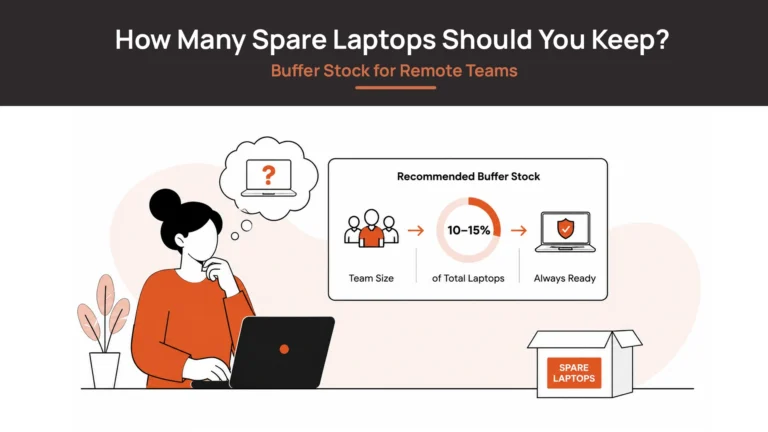
When a laptop breaks, someone has to fix it, replace it, or issue a temporary device while the original is repaired. All three options cost money, and the loaner scenario often means the company is effectively paying for two devices to keep one employee working. This is exactly where spare-pool sizing becomes a TCO lever rather than just a capacity question.
6. Downtime and Lost Productivity
An employee without a working laptop isn’t working, or is working at reduced capacity on a personal device or a shared machine. This is one of the hardest lifecycle costs to quantify precisely, but it’s rarely zero, and it scales with how quickly IT can resolve hardware issues. A buffer stock of pre-configured spares is the most direct fix.
7. Asset Tracking and Storage
Someone has to know how many laptops the company owns, where they are, and what condition they’re in. Laptop inventory management software addresses this, but physical storage space — whether a closet or a regional warehouse — also carries a real cost that rarely appears in the hardware budget.
8. Retrieval When Employees Leave
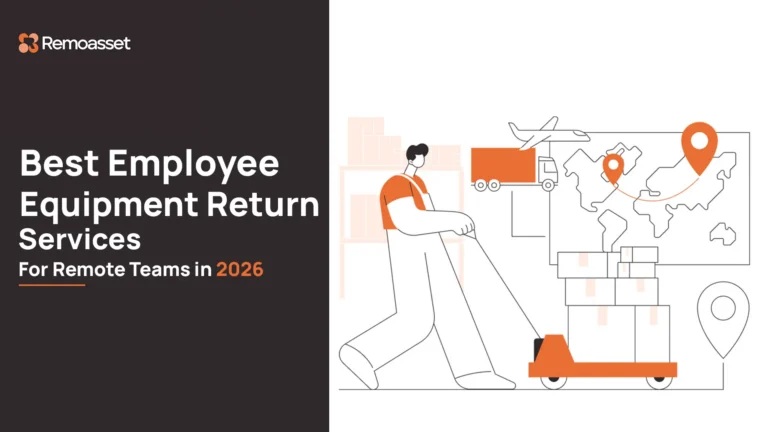
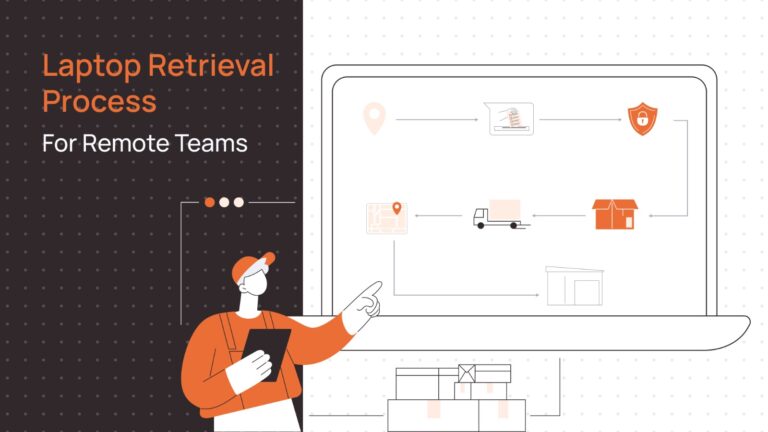
When an employee leaves, the laptop needs to come back. For distributed teams, that means coordinating pickup from wherever the employee is located, which can be slow, inconsistent, or entirely dependent on the departing employee’s cooperation. The true cost of retrieval goes well beyond the courier invoice — coordination time, follow-up, and lost residual value all add up.
9. Data Wiping and Secure Disposition
A retrieved laptop isn’t ready for reuse until its data has been securely wiped and that wipe has been documented. Skipping or rushing this step creates real security exposure, and doing it properly takes time and process — both of which are costs.
10. Depreciation and Lost Residual Value
Every laptop loses value over time, whether or not the company ever recovers any of it. A device that’s tracked, maintained, and retrieved promptly at offboarding retains meaningfully more resale or redeployment value than one that sits unused for a year before anyone notices it’s still assigned to a former employee.
What a Laptop Really Costs Across Its Entire Lifecycle
It helps to group these costs into four buckets that map to where they occur in the lifecycle.
1. Acquisition Costs
The purchase price, plus procurement labor, vendor coordination, shipping, and any accessories or warranty added at the time of purchase. Our guide to how businesses actually buy laptops for employees covers channel selection and what the hidden acquisition costs look like across models.
2. Operating Costs
Everything that happens while the device is in active use: IT support, maintenance, repairs, replacement parts, loaner devices, software licensing tied to the device, and the downtime that comes with any of the above.
3. End-of-Life Costs
Retrieval logistics, secure data wiping, inspection, and the labor involved in deciding whether a device is redeployed, resold, or recycled. For teams retiring many devices at once, bulk laptop retirement covers how to run that as one coordinated project.
4. Residual Value and Redeployment
The value recovered when a device is resold, or the cost avoided when a device is redeployed to another employee instead of the company buying a new one. This is the most underused TCO lever — a laptop already in the fleet is almost always the cheapest available hardware.
Why Cheap Laptops Can Become Expensive Assets
The cheapest laptop on a price list isn’t automatically the cheapest asset over its lifecycle. A lower-cost device with a shorter lifespan, higher failure rate, or limited repairability can generate more support tickets, more repairs, and an earlier replacement than a more expensive device that lasts longer and needs less intervention. Standardizing device models by role is the first step to making this comparison systematically rather than on a per-device basis.
Related Reads
Each cost category above has a guide that goes further if you want to reduce a specific line item:
- Laptop Total Cost of Ownership: The Full Lifecycle Math — the structured TCO framework with a full calculation model.
- Laptop Depreciation: Cost, Rate and What It Means for Your Fleet — how residual value erodes and when to act on it.
- Laptop Retrieval Cost: What Businesses Really Pay — the true cost of getting devices back, beyond the courier invoice.
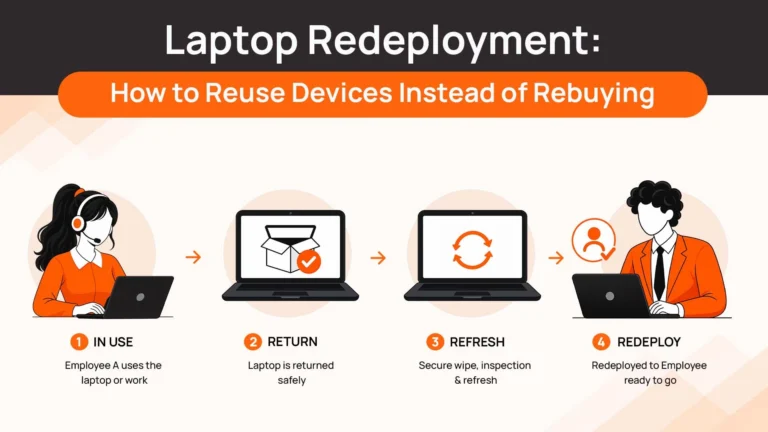
- Laptop Redeployment: How to Reuse Devices Instead of Rebuying — the single biggest lever on the back half of the TCO curve.
- How Many Spare Laptops Should You Keep? A Buffer Stock Guide — sizing the spare pool so downtime and replacement costs stay proportionate.
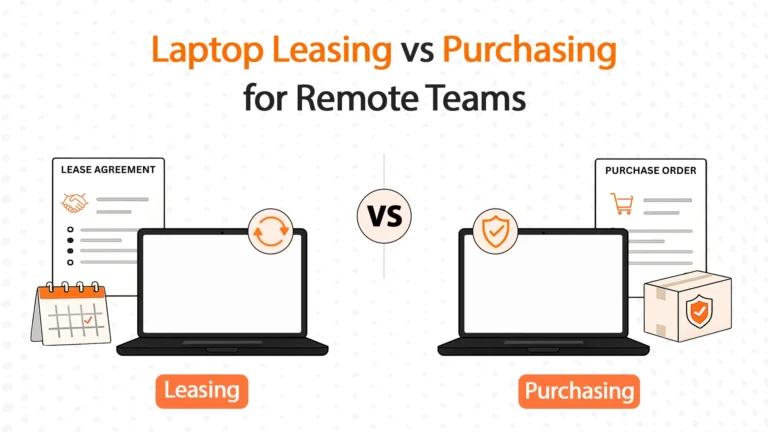
- CapEx vs OpEx in Remote IT Asset Management — how the acquisition model changes the shape of total cost.
- Corporate Laptop Disposal: A Complete Guide — recovering residual value at end of life rather than writing it off.
How Laptop Lifecycle Management Reduces Total Cost of Ownership
Most lifecycle cost isn’t created by any single decision. It’s created in the handoffs: between procurement and IT, between IT and the employee, between offboarding and retrieval, between a returned device and its next assignment. A structured lifecycle process closes those gaps.
1. Standardize Procurement and Device Models
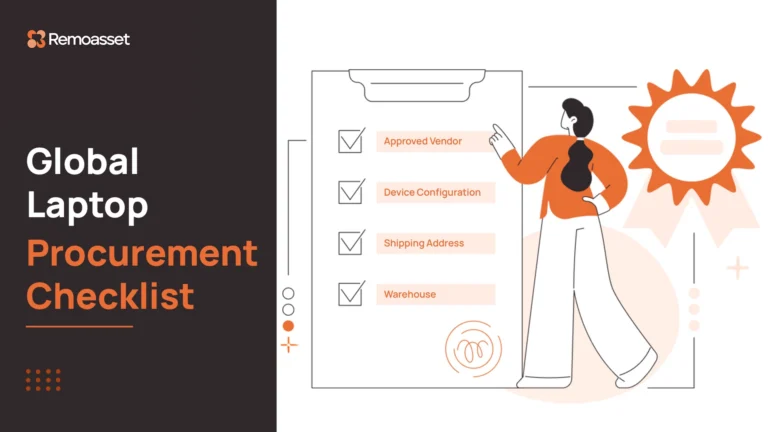
Fewer device models mean simpler support, easier parts and repairs, and more predictable costs across the fleet. Standardization also makes it easier to negotiate with a smaller number of vendors. See our global laptop procurement checklist for a structured approach.
2. Track Every Device Throughout Its Lifecycle
A company that knows exactly how many laptops it owns, where each one is, and what condition it’s in stops buying replacement hardware it didn’t need. Asset tracking visibility is what turns “we’re not sure if we have a spare” into “we have three usable devices in regional storage.”
3. Automate Deployment and Delivery
Pre-configuring devices before they ship, and coordinating delivery around confirmed start dates, cuts both the IT labor per device and the onboarding delay that comes from hardware arriving late. Tools that automate laptop onboarding and offboarding reduce this further.
4. Maintain and Repair Devices Before Replacement
A defined maintenance and repair process extends the usable life of a device, which delays the next purchase and reduces the number of devices that get replaced simply because nobody evaluated whether a repair made more sense.
5. Retrieve Devices During Offboarding
Fast, consistent retrieval — especially for distributed employees with no office to return a device to — protects both the security posture and the residual value of the laptop. The longer a device sits with a former employee, the more that value erodes. Our remote device offboarding guide covers the full retrieval sequence.
6. Redeploy Usable Devices Instead of Buying New Ones
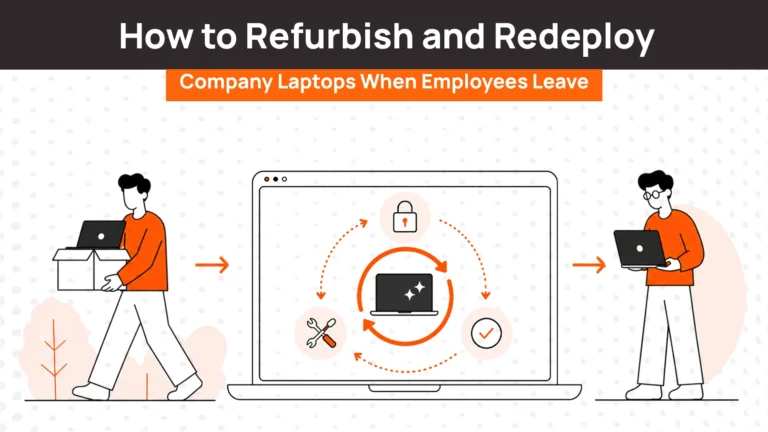
A retrieved laptop that’s inspected, wiped, and put back into rotation offsets the cost of a new purchase entirely. Our laptop redeployment guide covers this process in detail — it’s the single largest lever most companies underuse, largely because they lack visibility into what’s already recoverable in their existing fleet.
7. Securely Wipe and Dispose of Retired Devices
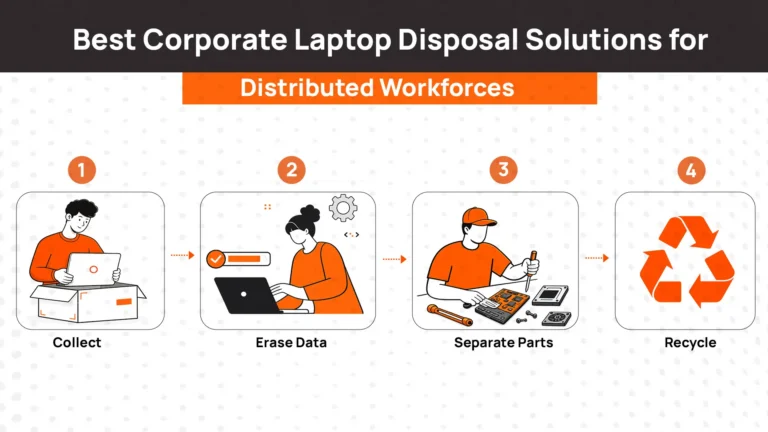
For devices that have genuinely reached end of life, a documented data wiping and disposition process protects the company from security and compliance exposure, and any resale or recycling value gets captured instead of left on the table. See our guide to best corporate laptop disposal solutions for the full options.
Direct Costs vs. Indirect Costs
It’s worth separating these explicitly, because indirect costs are the ones that get missed in a budget.
Direct costs are easy to see because they generate an invoice: the laptop purchase, shipping, accessories, warranty, repairs, software licensing, storage fees, retrieval logistics, data wiping services, and disposal fees.
Indirect costs rarely generate a single invoice — which is exactly why they’re harder to budget: IT labor for deployment and support, procurement coordination time, onboarding delays while a new hire waits for hardware, productivity loss during downtime, unused inventory sitting in storage, vendor management overhead, replacement purchases made only because nobody could confirm a spare device existed, and residual value lost when retired devices aren’t recovered or redeployed in time.
Indirect costs often add up to more than the direct ones, precisely because nobody is assigned to track them the way a finance team tracks an invoice.
Data Security and Disposal Aren’t an Afterthought
End-of-life management isn’t simply discarding an old laptop. A retrieved device that’s being retired still requires the same care as one being redeployed: a documented chain of custody, secure data wiping, and verification that the wipe was completed before the device is resold, recycled, or refurbished.
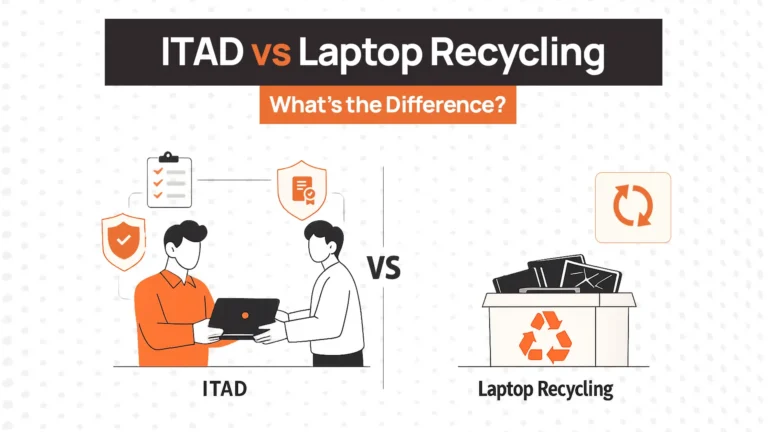
Skipping this step to save time creates real exposure. A device that leaves the company’s control with recoverable data on it is a security incident waiting to be discovered, regardless of whether the device itself had any remaining resale value. Our guide on ITAD vs recycling covers the different disposition paths and what each one recovers or costs.
The Real Lesson: Cheap to Buy Isn’t the Same as Cheap to Own
The purchase price is the one laptop cost every company already tracks closely. It’s also the smallest piece of the total. The larger, less visible costs — deployment labor, support, downtime, storage, retrieval, data wiping, and lost residual value — accumulate in the handoffs between procurement, IT, employees, and vendors, which is exactly why they rarely make it into a budget built around the invoice alone.
A structured lifecycle process doesn’t eliminate these costs. It makes them visible, and visibility is what lets a company reduce them: fewer replacement purchases made out of uncertainty, faster retrieval that protects residual value, and a consistent process for moving every device toward its next useful state instead of letting it sit.
Remoasset connects procurement, tracking, maintenance, retrieval, storage, and redeployment into one lifecycle record — which is the practical starting point for actually seeing what a fleet costs, not just what it costs to buy. Book a demo to see how the lifecycle cost picture changes when every stage is connected.
FAQs About Laptop Lifecycle Costs
What is the total cost of ownership of a laptop?
Laptop total cost of ownership is the full cost of owning a device across its lifecycle, including the purchase price, deployment, support, maintenance, downtime, storage, retrieval, data wiping, and disposal — minus any residual value recovered through resale or redeployment. The full calculation model is in our laptop TCO guide.
What are the hidden costs of laptop ownership?
The most commonly missed costs are IT deployment and support labor, onboarding delays from shipping, downtime during repairs, unused inventory sitting in storage, and lost residual value from devices that aren’t retrieved and redeployed promptly after an employee leaves.
How much does laptop lifecycle management cost?
There’s no universal figure, since it depends on fleet size, device models, geography, and support model. The more useful question is whether current lifecycle costs are visible and tracked at all. Our laptop fleet management guide covers how to approach this for larger fleets.
How can companies reduce laptop lifecycle costs?
Standardizing device models, maintaining accurate fleet visibility, retrieving devices promptly during offboarding, redeploying usable hardware instead of buying new devices by default, and following a documented data wiping and disposal process are the levers with the clearest impact.
When should a company replace its laptops?
Replacement decisions should weigh performance needs, repair frequency, security update support, warranty status, and expected resale value rather than following a fixed age-based refresh cycle. Our laptop depreciation guide covers how value declines across different device categories and refresh scenarios. When a cohort reaches end of life together, bulk laptop retirement is worth running as a single coordinated project.
What happens to laptops after an employee leaves?
Ideally, the device is retrieved, inspected, and securely wiped, then either redeployed to another employee, resold, or recycled depending on its condition. Delays in this process reduce both the security posture and the residual value the company can recover. The remote device offboarding checklist covers the full sequence.