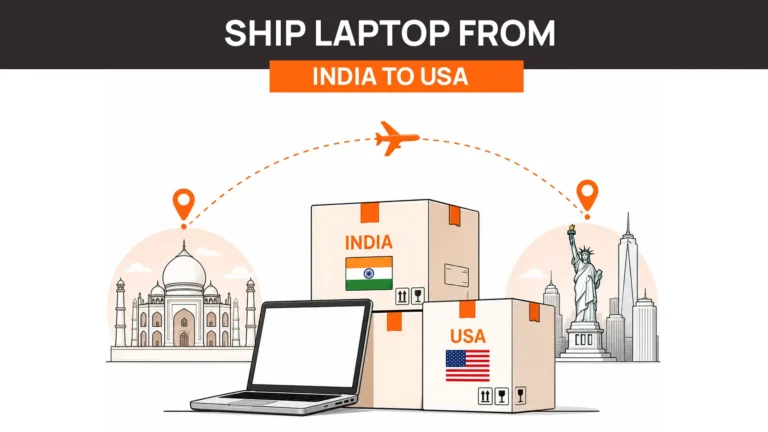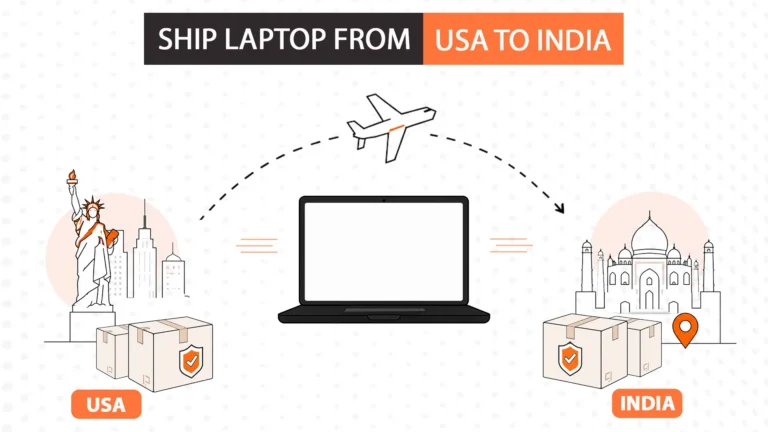
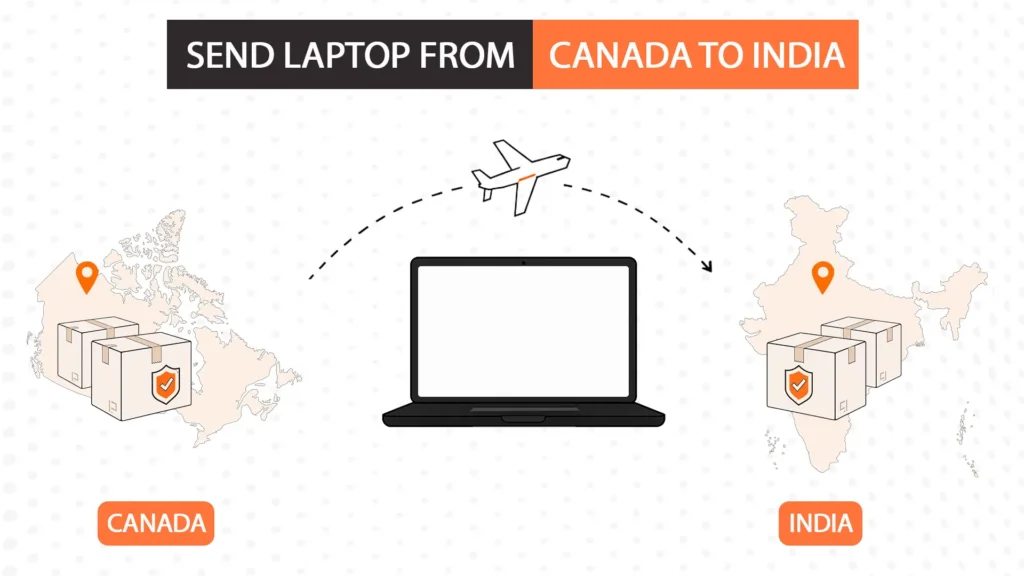
Sending a laptop from Canada to India sounds straightforward until shipping costs, customs duties, lithium battery regulations, and paperwork enter the picture.
Whether you’re sending a personal laptop to a family member, relocating to India, returning company equipment, or shipping a device to a remote employee, understanding the process beforehand can help avoid delays, unexpected charges, customs holds, and delivery failures.
What many people underestimate is that the actual shipping process is often the easiest part. Customs clearance, documentation requirements, battery transportation rules, and ownership verification are usually where problems arise. A shipment that appears simple on paper can become significantly more complicated if the declared value is incorrect, supporting documents are missing, or customs officials require additional verification.
For businesses, the complexity increases even further. Companies sending laptops to employees in India must think beyond shipping costs and consider onboarding timelines, device ownership, asset tracking, security policies, retrieval obligations, and lifecycle management.
In this guide, we’ll cover:
- How to send a laptop from Canada to India
- Courier options and delivery timelines
- Customs duties and taxes
- Required shipping documents
- Common mistakes that cause delays
- Business considerations for company-owned laptops
- Whether local procurement is a better alternative
Can You Send a Laptop From Canada to India?
Short Answer
Yes.
Laptops can generally be shipped from Canada to India through major international courier services, provided they comply with transportation regulations governing lithium-ion batteries and satisfy Indian customs requirements.
Every year, thousands of laptops are shipped from Canada to India by students, expatriates, businesses, contractors, and remote workers. The process is legal and relatively common, but successful delivery depends heavily on accurate documentation and compliance with import regulations.
Related Read:
- How to Manage Company Laptops
- Best International Laptop Retrieval Services for Remote Teams
- Laptop Retrieval Process for Remote Teams
What Determines Whether a Shipment Is Allowed?
Several factors influence whether a laptop shipment proceeds smoothly through customs and delivery channels.
New vs Used Laptop
Customs authorities often treat brand-new devices differently from used personal devices.
A sealed, newly purchased laptop may attract closer scrutiny regarding valuation and import duties than a personal laptop that has already been in use.
Personal vs Commercial Shipment
The purpose of the shipment matters significantly.
A laptop sent to a family member for personal use may be processed differently than a corporate device being delivered to an employee.
Battery Type and Condition
Most modern laptops contain lithium-ion batteries, which are subject to international transportation regulations.
Damaged, defective, or improperly packaged batteries can create compliance issues and shipping restrictions.
Declared Value
The declared value impacts customs assessments, insurance coverage, and duty calculations.
Undervaluing a shipment can create compliance problems and potentially delay customs clearance.
Supporting Documentation
Clear and accurate paperwork often determines whether customs processing takes hours or weeks.
Personal Shipment vs Business Shipment
One of the biggest misconceptions is that all laptop shipments are handled identically. In reality, personal and business shipments often follow different operational paths.
Personal Shipments
Typically involve:
- Individual sender and recipient
- Personal ownership
- Simpler documentation
- Lower shipment frequency
Examples include:
- Students moving to India
- Family members sending devices
- Personal relocations
Business Shipments
Usually require additional consideration around:
- Device ownership
- Asset tracking
- Employee assignment
- Security policies
- Future retrieval obligations
- Audit requirements
This distinction becomes important as organizations scale remote hiring across India.
How to Send a Laptop From Canada to India
Sending a laptop internationally is typically a five-step process. While the exact workflow varies by courier, the overall process remains largely consistent.
Step 1 — Choose a Shipping Carrier
The courier you choose affects:
- Cost
- Delivery speed
- Customs support
- Tracking visibility
- Reliability
Courier Comparison
| Courier | Speed | Tracking | Customs Support |
| DHL Express | Excellent | Excellent | Strong |
| FedEx International Priority | Excellent | Excellent | Strong |
| UPS Worldwide Saver | Very Good | Very Good | Strong |
| Canada Post | Moderate | Moderate | Limited |
DHL Express
DHL is frequently used for international electronics shipments due to its extensive customs infrastructure and strong presence in India.
Best for:
- Urgent shipments
- High-value laptops
- Business deliveries
FedEx
FedEx offers comparable speed and tracking capabilities while providing strong support for commercial shipments.
Best for:
- Corporate devices
- Time-sensitive deliveries
- High-value electronics
UPS
UPS provides broad international coverage and competitive service levels for business shipments.
Best for:
- Corporate deployments
- Frequent international shippers
Canada Post
Canada Post can be cost-effective but generally involves longer transit times and less hands-on customs support.
Best for:
- Personal shipments
- Non-urgent deliveries
Step 2 — Prepare the Laptop
Proper preparation reduces both security and shipping risks.
Back Up Important Data
Before shipping any laptop internationally, create a complete backup.
Potential risks include:
- Damage
- Loss
- Customs inspection
- Transit issues
Important files should never exist solely on the shipped device.
Remove Sensitive Information
If ownership is changing, remove unnecessary personal or corporate information before shipping.
Businesses should follow formal data handling procedures.
Factory Reset (If Appropriate)
For devices changing users, a reset helps protect data privacy.
Photograph Device Condition
Take photos showing:
- Screen condition
- Chassis condition
- Serial numbers
- Packaging
This documentation can help support insurance claims if necessary.
Step 3 — Package the Laptop Properly
Improper packaging is one of the leading causes of shipping damage.
Best Packaging Practices
Use:
- Original manufacturer packaging
- Anti-static protection
- Foam inserts
- Bubble wrap
- Double-wall boxes
The goal is to eliminate movement during transit.
Battery Transportation Requirements
Lithium-ion batteries require compliance with international air transportation standards. Major couriers provide approved packaging guidelines that should be followed carefully.
Step 4 — Complete Shipping Documents
Documentation errors remain one of the most common causes of customs delays.
Required Documents
Commercial Invoice
Typically includes:
- Device description
- Brand and model
- Serial number (if required)
- Declared value
- Country of origin
Device Description
Avoid generic descriptions such as:
“Electronic item”
Instead use:
“Laptop Computer – Lenovo ThinkPad X1 Carbon”
Specific descriptions improve customs processing.
Receiver Information
Include:
- Full name
- Address
- Contact number
- Email address
Proof of Ownership
Sometimes required for used devices.
Examples include:
- Purchase receipts
- Asset records
- Company ownership documentation
Step 5 — Ship and Track
Once shipped, the laptop generally passes through:
- Export processing in Canada
- International transit
- Indian customs clearance
- Local distribution
- Final delivery
The customs stage is usually the least predictable part of the process.
How Much Does It Cost to Send a Laptop From Canada to India?
Shipping costs vary considerably depending on the device, courier, speed, and destination.
Factors That Affect Shipping Cost
Weight and Dimensions
Packaging materials often increase shipment weight significantly.
Courier Selected
Premium couriers typically charge more but offer faster delivery and better customs support.
Delivery Speed
Express services can cost substantially more than economy options.
Insurance
High-value laptops often justify insurance coverage.
Destination City
Major cities generally experience lower costs and faster service than remote regions.
Estimated Shipping Costs
| Shipping Service | Estimated Cost Range |
| Economy | CAD 80–150 |
| Standard | CAD 150–250 |
| Express | CAD 250–450+ |
Actual pricing varies by courier and shipment specifications.
How Long Does Shipping Take?
Delivery timelines depend on both courier performance and customs processing.
Delivery Time Comparison
| Courier | Typical Transit Time |
| DHL Express | 3–5 Business Days |
| FedEx International Priority | 3–6 Business Days |
| UPS Worldwide Saver | 4–7 Business Days |
| Canada Post | 7–20+ Business Days |
Factors That Cause Delays
Customs Clearance
The most common source of delays.
Incorrect Paperwork
Missing documentation often results in additional verification requests.
Peak Shipping Seasons
Holiday periods can increase transit times.
Remote Destinations
Rural deliveries typically require additional time.
Customs Duty on Laptops Sent From Canada to India
This is often the most researched aspect of international laptop shipping.
Are Laptops Subject to Customs Duty?
Potentially, yes.
Indian customs authorities evaluate imports based on:
- Shipment purpose
- Device value
- Ownership
- Documentation
- Device condition
Personal Shipments
Personal-use laptops may be treated differently depending on circumstances.
Gifts
Declaring a laptop as a gift does not automatically eliminate customs obligations.
Commercial Shipments
Business-owned devices often require additional documentation.
Company-Owned Devices
Corporate imports generally involve more detailed compliance requirements.
Common Customs Mistakes
The most frequent causes of customs delays include:
- Under-declaring value
- Incorrect product descriptions
- Missing documentation
- Improper shipment classification
- Incomplete recipient information
Sending a Company Laptop From Canada to India
Many Canadian companies now hire employees, contractors, and remote workers throughout India.
While sending a single laptop may appear simple, scaling that process quickly introduces operational challenges.
Why Business Shipments Are More Complex
Organizations must manage:
- Device ownership records
- Asset tracking
- Security compliance
- Employee delivery coordination
- Future retrieval requirements
Unlike personal shipments, business devices remain company assets throughout their lifecycle.
The Hidden Cost of Cross-Border Laptop Shipping
Many organizations focus only on courier costs.
The larger costs often include:
- Delayed onboarding
- Customs holds
- Lost productivity
- Device retrieval complexity
- Operational coordination
A laptop delayed by customs can postpone employee productivity by days or even weeks.
For companies supporting distributed workforces, this becomes a recurring operational problem.
Related reading:
https://remoasset.com/blog/why-you-shouldnt-ship-laptops-internationally/
The Alternative to Shipping Devices Internationally
Many organizations now avoid international shipments entirely.
Instead, they source devices locally within India.
This approach often provides:
- Faster onboarding
- Reduced customs complexity
- Local warranty support
- Improved employee experience
- Easier retrieval and replacement
This approach is increasingly common among companies hiring at scale across India.
Related Read:
- How to Provide and Monitor Laptops for Remote Employees
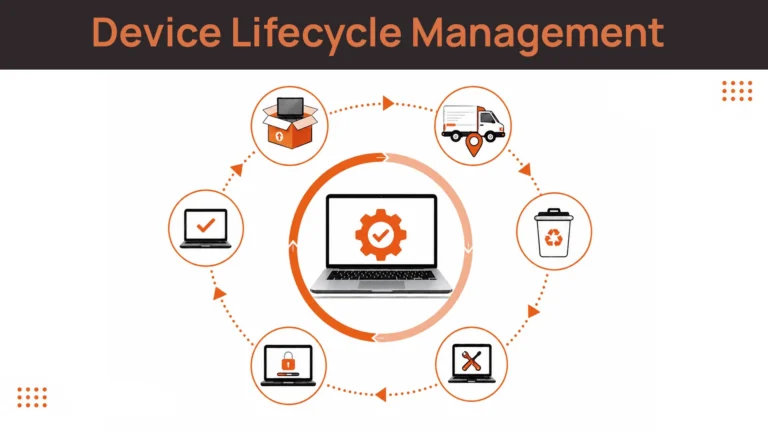
- Laptop Lifecycle Management: A Practical Guide for Modern IT Teams
Is It Better to Ship a Laptop or Buy One Locally in India?
The answer depends on the situation.
Decision Matrix
| Scenario | Recommended Approach |
| Personal device | Ship |
| One-time relocation | Ship |
| Specialized hardware | Ship |
| One employee hire | Depends |
| Multiple hires in India | Local procurement |
| Ongoing expansion | Local procurement |
Common Reasons Laptop Shipments Get Delayed
Customs Documentation Errors
Missing or inconsistent paperwork frequently causes delays.
Lithium Battery Compliance Issues
Battery-related documentation must be accurate.
Incorrect Declared Values
Valuation discrepancies often trigger reviews.
Missing Recipient Information
Even minor errors can create delivery failures.
Customs Inspections
Some shipments are selected for additional review regardless of preparation.
Improper Packaging
Damaged shipments frequently experience additional delays.
Best Practices for Sending Laptops Internationally
Verify Import Rules Before Shipping
Requirements change regularly.
Use Insurance for High-Value Devices
Protection is often worth the additional cost.
Keep Purchase Documentation
Useful for customs and ownership verification.
Track Every Shipment
Visibility helps resolve issues quickly.
Plan Device Retrieval Before Deployment
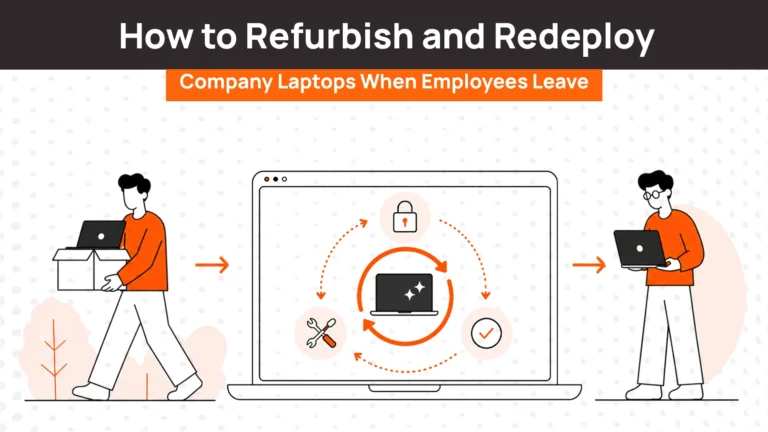
Organizations often overlook retrieval until employees leave.
Related Read:
Consider Local Sourcing for Distributed Teams
For recurring deployments, local procurement frequently provides better long-term outcomes.
The Most Practical Way to Send a Laptop From Canada to India
Sending a laptop from Canada to India is generally straightforward when proper documentation, packaging, and customs requirements are addressed beforehand.
For personal shipments, choosing the right courier and preparing accurate paperwork can significantly reduce delays and unexpected costs.
For businesses, however, international shipping often becomes an operational challenge as hiring scales. Customs delays, onboarding timelines, asset tracking requirements, and future retrieval obligations introduce complexity that extends well beyond shipping itself.
As a result, many global organizations now favor local procurement and lifecycle management models over repeated cross-border shipments. Platforms such as RemoAsset help organizations source devices locally, coordinate employee delivery, maintain asset visibility, and manage retrieval when employees leave—reducing many of the operational challenges associated with international laptop logistics.
Learn how global organizations simplify laptop deployment and retrieval in India with RemoAsset.
Frequently Asked Questions
Can I send a used laptop from Canada to India?
Yes. Used laptops can generally be shipped to India, although customs authorities may still assess duties depending on documentation, declared value, and ownership verification.
How much customs duty will I pay in India?
Duty varies based on import regulations, shipment purpose, declared value, and customs assessment. Always verify current requirements before shipping.
Which courier is best for shipping laptops internationally?
DHL, FedEx, and UPS are generally preferred for speed, tracking, and customs support. Canada Post can be more economical but usually involves longer delivery timelines.
How long does shipping take from Canada to India?
Express services typically deliver within 3–7 business days, while economy services may take 1–3 weeks depending on customs processing.
Can companies ship laptops directly to employees in India?
Yes. However, many organizations increasingly choose local procurement because it reduces customs complexity and improves onboarding speed.
Is it cheaper to ship a laptop or buy one locally?
For a single personal device, shipping may make sense. For recurring employee deployments, local procurement is often more cost-effective.
Can a company-owned laptop be shipped internationally?
Yes. However, businesses must manage ownership records, customs documentation, security requirements, and future retrieval obligations throughout the device lifecycle.