For the first few hires, laptop procurement usually does not feel like an operations problem. A founder orders a MacBook or business laptop, puts it on a company card, sends it to the new employee, and moves on. If there are ten people in the company, one person can usually remember who has what, where it was purchased, and roughly how much it cost.
Then the company raises a Series A. Hiring accelerates. Employees start joining from different cities and countries. A finance lead or fractional CFO comes in and asks for the company’s asset register, hardware spend, purchase history, or capital expenditure records.
And suddenly the question is not ‘how quickly can we get the next laptop?’ It is ‘what exactly have we bought, who has it, what did it cost, and where is the record?’ The founder-led approach was not necessarily wrong when the company had ten employees — it simply relied on assumptions that no longer hold at Series A.
Why the Founder-Buys-It Approach Works, Until It Doesn’t
When a company has five or ten employees, adding approval workflows, procurement software, vendor management, asset registers, and formal purchasing policies can create more administrative work than the hardware itself warrants. A founder can order a laptop in a few minutes. The problem appears when that same approach continues while the company is hiring at a much faster rate.
Instead of a handful of purchases, there may now be several laptops ordered every month across multiple cities or countries, with several teams involved in hiring, finance, IT, and operations. The informal process starts creating questions that cannot be answered from memory: which laptop belongs to which employee, was it purchased or leased, where is the invoice, was the previous employee’s laptop returned, can it be reassigned to the next hire?
Series A does not create that problem. It tends to expose it.
The Real Signals It’s Time to Formalize
There is no universal employee count at which every startup needs a formal procurement system. A ten-person company with employees in six countries can have a more complicated hardware operation than a 30-person company working from one office. Instead, look for the operational signals.
Procurement spend is becoming material
Some procurement guidance uses thresholds such as approximately $2 million in annual spend or 20-plus active vendor relationships as signals that a company may benefit from more formal procurement processes. For hardware specifically, the threshold can arrive much earlier — when laptops, monitors, accessories, shipping, and replacements become a meaningful recurring expense, having a defined purchasing process makes the spend easier to understand and manage.
A finance hire arrives
This is often the real trigger. A new finance lead does not necessarily care that the founder bought a laptop from a particular retailer at 11:47 p.m. six months ago. They care that the company has an accurate record of its assets. That means questions start appearing: what equipment does the company own, who is using it, when was it purchased, what did it cost, which purchases are capital expenditures, what equipment has been returned, what is still sitting unused? If the answer to most of these questions is ‘check the founder’s card statement,’ the company has outgrown the original process.
Hiring velocity jumps after the raise
A Series A often comes with a hiring plan that turns hardware procurement from an occasional task into a recurring operational workflow. If ten people are joining in a month, someone needs to know what they require, which configuration they should receive, where each device needs to be shipped, and whether the organization already has suitable equipment in inventory. Paradoxically, a standardized procurement process can make hiring faster because fewer decisions need to be made from scratch.
The company hires internationally for the first time
International hiring is another major inflection point. Ordering a laptop from the same local retailer works reasonably well when everyone lives near the same office. It becomes considerably less practical when the next hire is in another country — availability, local pricing, taxes, shipping, customs, warranties, keyboards, and power standards can all complicate the purchase. This is the moment the startup needs procurement that accounts for where devices physically need to go rather than simply where the founder happens to be placing orders from.
What a Series A Finance Hire Actually Needs
One of the biggest changes at Series A is that hardware starts becoming visible to finance as more than an employee expense. The company has accumulated physical assets, and someone needs to be able to explain what those assets are. That starts with a proper asset register connecting each device to its serial number, purchase date, cost, employee, status, and purchase documentation.
If the finance team asks ‘how many laptops do we own?’, there should be a reliable answer. If they ask ‘how much did we spend on employee hardware last year?’, the answer should not require manually searching through six different credit-card statements. And if an investor or auditor asks for evidence supporting the company’s asset records, the underlying documentation should already exist.
CapEx vs. OpEx becomes a real conversation
This is also where finance may start looking more closely at how hardware spending is categorized. The accounting treatment of equipment depends on the company’s circumstances and accounting policies — procurement should not make that determination independently, but the purchasing records need to be complete enough for finance to do so. For a deeper explanation of how CapEx and OpEx considerations play out in remote IT asset management, see the dedicated guide rather than trying to resolve it inside the procurement workflow itself.
Formalizing Without Over-Engineering It
The answer to informal procurement is not an 18-step approval workflow. A Series A startup needs enough structure to create consistency without slowing down every new hire.
Standardize configurations by role
Instead of letting every employee choose a different laptop, establish a small number of approved configurations — a standard option for general employees, a higher-performance option for developers or designers, and a specialized option for roles with unusual requirements. This makes purchasing easier, reduces the number of decisions required per hire, and simplifies support and replacement because IT is dealing with a smaller hardware fleet.
Establish one system of record
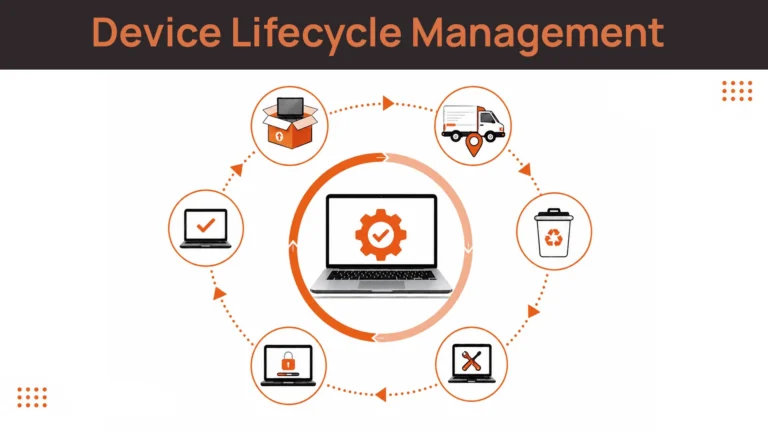
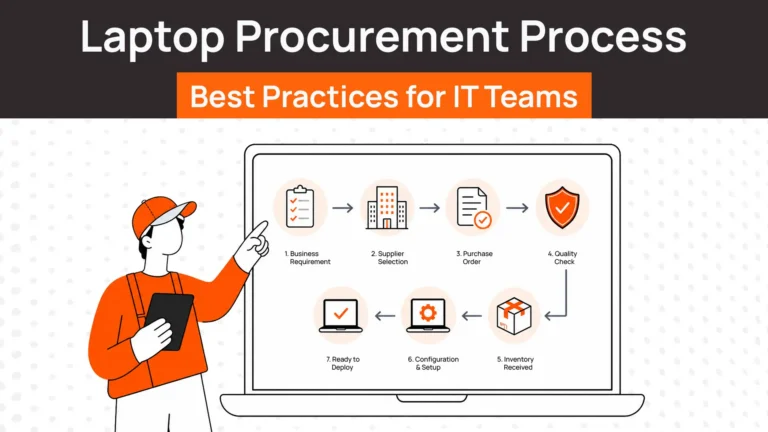
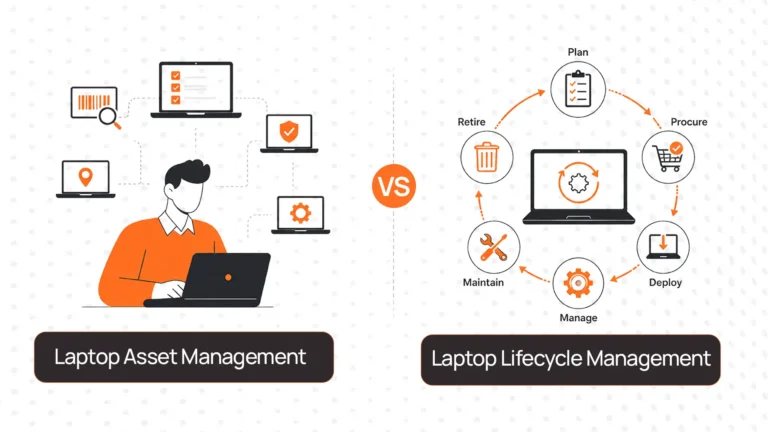
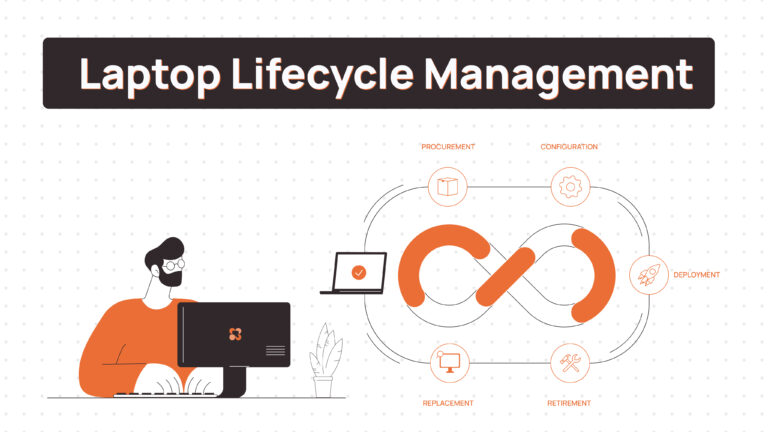
The company needs somewhere to answer the basic questions about its hardware. A useful record connects the procurement record to the actual asset: device model, serial number, purchase date and cost, supplier, assigned employee, shipping information, device status, warranty, retrieval or return status, and redeployment or disposal history. The principle is straightforward: one device should have one traceable history. Our guide on tracking devices from procurement through the full lifecycle covers what that record should contain.
Move purchasing into a company-controlled process
Once a company has reached this stage, founders should generally stop acting as the default hardware procurement channel. That does not mean a founder can never approve a purchase — it means the company should move from ‘the founder buys whatever is needed’ to a process where the business knows what is needed, why it is needed, who approves it, and where the resulting asset is recorded.
Look beyond retail purchasing
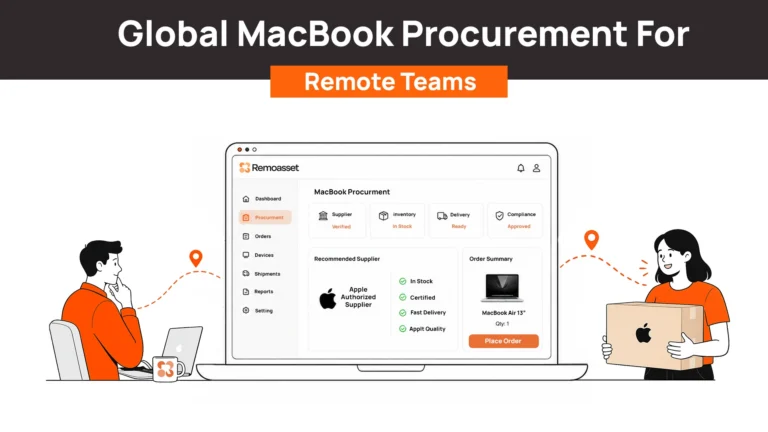
Series A is also often the point at which startups should reconsider how they source business laptops. Retail purchasing can still be reasonable for some needs, but it becomes less attractive when the company needs consistent configurations, larger quantities, international delivery, device enrollment, asset tracking, or lifecycle support. The available sourcing channels and how they compare for a growing business is worth reviewing before the next hiring sprint begins.
How Startups Can Afford Hardware for New Hires
A growing startup can have a strange cash-flow problem: it has raised money specifically to hire people, but every new employee also creates an immediate hardware expense. The answer is not to buy the cheapest laptop available — it is to look at the full lifecycle cost and expected period of use rather than the purchase price alone.
A company may choose to purchase business-class equipment outright, use financing or other non-dilutive hardware options where appropriate, or combine new purchases with redeployment of devices already in the company’s inventory. The important thing is to avoid making hardware decisions employee by employee. If a company expects to hire 40 people over the next six months, it can forecast the hardware requirement in advance and establish a standard procurement approach rather than treating every new hire as an emergency purchase.
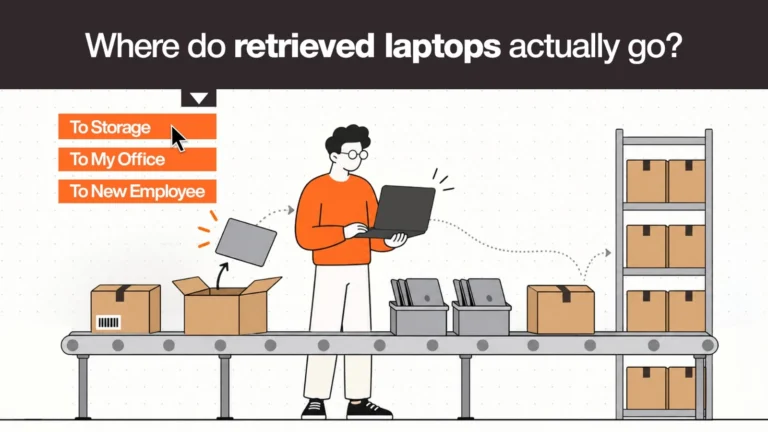
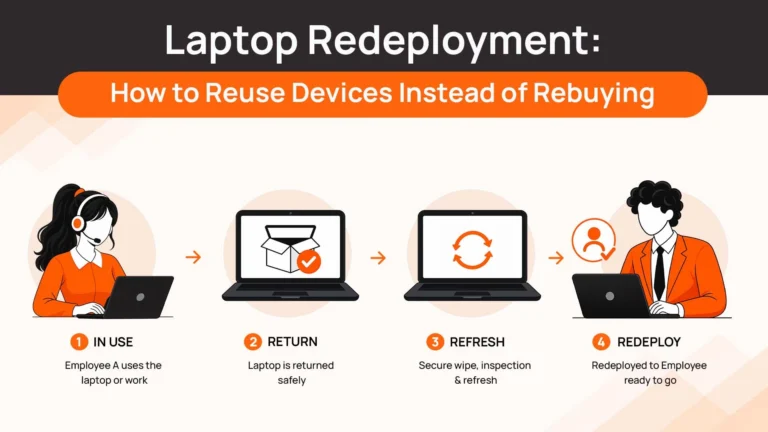
And before ordering 40 new laptops, the company should ask how many suitable devices it already owns. A returned laptop that has been inspected, securely wiped, and prepared for reassignment may be more valuable than another new purchase.
Related Reads
Each decision point in this guide connects to a deeper resource:
- CapEx vs. OpEx in Remote IT Asset Management — the finance classification question that arrives with the first CFO hire.
- Business Laptop Procurement: How Businesses Actually Buy Laptops — the channel options when retail purchasing starts to fall short.
- Laptop Total Cost of Ownership: The Full Lifecycle Math — the framework a first-time finance hire will want when building a hardware cost model.
- Laptop Redeployment: How to Reuse Devices Instead of Rebuying — checking existing inventory before approving the next procurement order.
The Hardware Problem You Don’t Want to Discover Later
The cost of informal procurement is not always visible while the startup is growing. It tends to surface during moments when documentation suddenly matters: a finance hire needs to build an asset register, an investor requests supporting records during due diligence, a former employee leaves and nobody is sure whether their laptop was returned, or finance discovers that hardware spending cannot be easily reconciled with individual assets.
At that point, someone has to reconstruct the history. That cleanup takes significantly more time than maintaining the records in the first place. This is why formalizing procurement at Series A is less about adding bureaucracy and more about preventing operational debt. The startup is already buying the laptops. The question is whether the purchasing process also creates the information the company will need later.
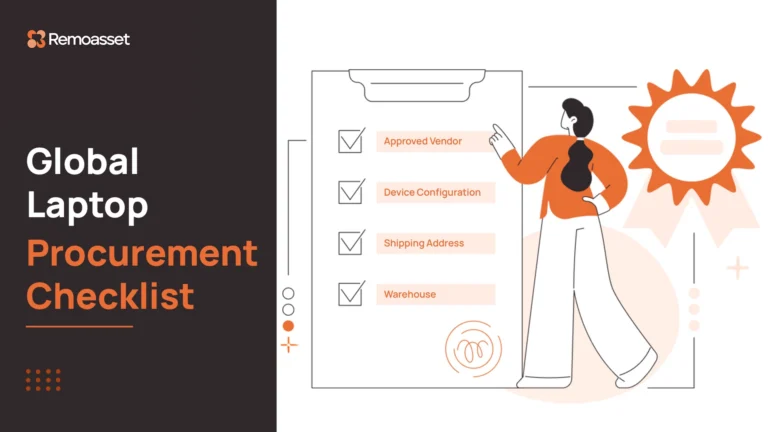
A Practical Series A Laptop Procurement Checklist
If your startup is approaching or has just closed a Series A, this is a useful starting point:
☐ Create an approved device list. Define standard laptop configurations for the roles you hire most frequently.
☐ Move purchasing into a company-controlled process. Reduce dependence on founder-owned accounts and personal purchasing.
☐ Create an asset record at purchase. Capture the serial number, purchase cost, supplier, date, and assigned employee.
☐ Connect the asset to the employee. The company should know who has each device and its current status.
☐ Standardize the deployment process. Configuration and device enrollment should follow the same process for every new hire.
☐ Plan for international hiring. Establish how devices will be sourced and delivered in countries outside the startup’s home market.
☐ Track returned devices. A laptop that comes back from an employee should become visible inventory rather than disappearing into a cupboard.
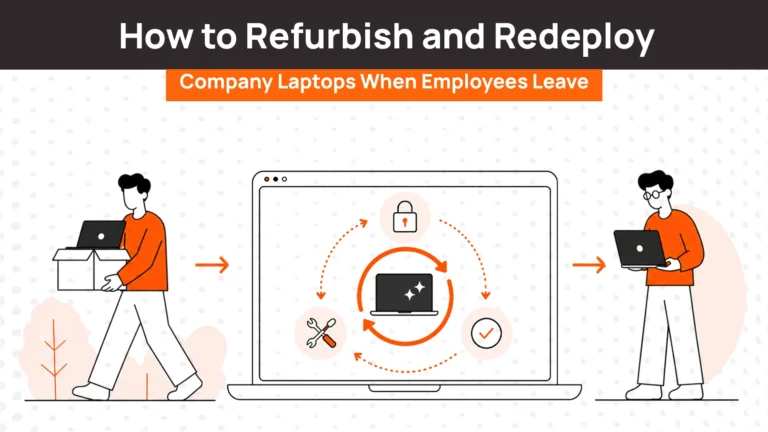
☐ Build redeployment into the process. Check existing inventory before automatically purchasing a new device.
☐ Keep procurement and finance aligned. Make sure purchasing records contain the information finance needs for accounting and reporting.
☐ Document the lifecycle. Record what happens when a device is deployed, reassigned, retrieved, repaired, or retired.
Series A Is the Time to Stop Relying on Memory
The founder-buying-laptops approach works because, early on, there simply is not that much to remember. Series A changes the equation. More employees, faster hiring, international operations, increasing spend, and the arrival of finance all create a need for records that can stand on their own.
That does not mean a startup needs to adopt the procurement machinery of a large enterprise overnight. It means putting a simple system in place before the questions become difficult to answer: what did we buy, where is it, who has it, what did it cost, and what happens to it when that employee leaves?
Remoasset gives growing teams a centralized way to manage laptop procurement and the asset lifecycle around it — standardized purchasing, a consistent record of company-owned devices, and a lifecycle process that continues through deployment, assignment, retrieval, redeployment, and eventual retirement. The objective is to make sure growth does not create a hardware record that has to be reconstructed later. Book a demo to see how a growing startup can build that record from the first few hires.
Frequently Asked Questions
When should a startup formalize its procurement process?
There is no universal headcount or revenue threshold. A startup should consider formalizing procurement when purchasing volume, vendor complexity, hiring velocity, international operations, or finance requirements make informal buying difficult to manage. For many companies, Series A is a natural inflection point because several of these pressures appear at the same time.
How do startups afford hardware for new hires?
Startups can combine direct purchases, appropriate financing options, and redeployment of existing equipment depending on their cash position and operating model. The most important step is to forecast hardware demand rather than treating every new hire as an unexpected purchase. Existing inventory should also be checked before ordering new equipment.
What happens to informal hardware spending when a startup raises Series A?
It usually becomes more visible to finance. The company may need to reconstruct purchase histories, identify existing assets, connect devices to employees, and determine how equipment spending should be accounted for. If those records were never maintained centrally, the finance or operations team may have to piece them together from expenses, invoices, card statements, and email.
Should a founder keep buying laptops personally as the company grows?
A founder may still approve hardware purchases, but they should generally stop being the system of record for them. As the company grows, procurement should move into a company-controlled process where purchases, assets, employees, and lifecycle events are recorded consistently. This reduces dependency on one person’s memory and makes the company’s hardware easier for finance, operations, and IT to manage.