Before a business decides whether to buy or lease laptops, there is a more basic question that often gets skipped: where should those laptops come from in the first place?
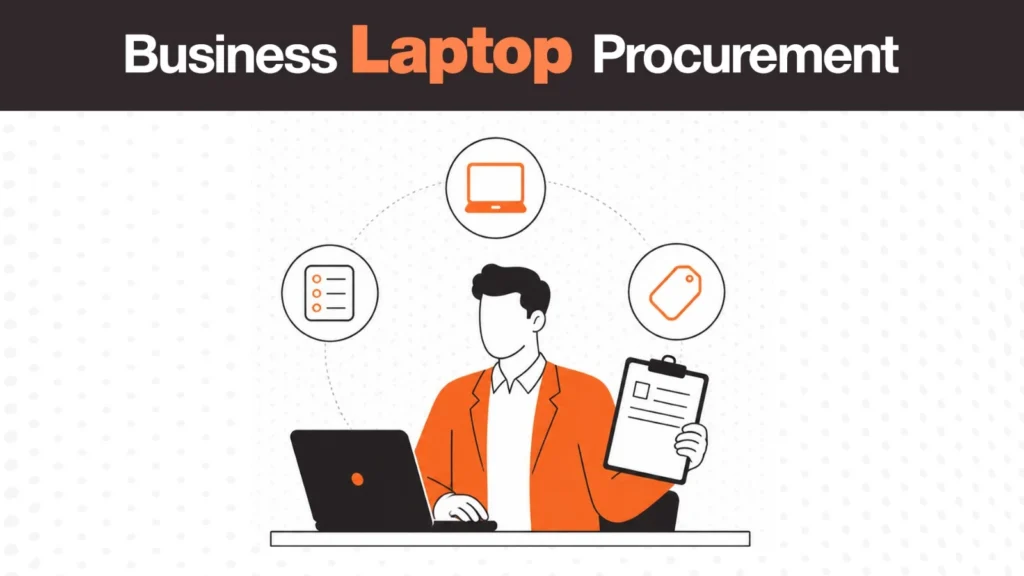
For one employee, the answer might be as simple as ordering a laptop online. For a growing company, however, buying laptops becomes a procurement decision involving pricing, standardization, warranties, approvals, delivery, asset tracking, and eventually what happens when the employee leaves.
There are several ways to approach it. A business can buy through a retail channel, purchase directly from a manufacturer through a business program, work with a reseller, use a leasing or Laptop-as-a-Service provider, or use a global procurement platform that connects purchasing with the rest of the device lifecycle. The right choice depends less on the number of laptops being purchased today and more on how the company expects its workforce and device program to evolve.
The Procurement Channels Available to a Business
There is no single business laptop supplier. Companies typically use one of several procurement channels, and each solves a slightly different problem.
1. Retail and Online Marketplaces
Retailers and online marketplaces are often the easiest starting point for a small business. If you need three laptops this week, you can search for the right specifications for each role, compare models, place an order, and have the devices delivered without establishing a formal supplier relationship. The limitation is that convenience does not automatically create a procurement process. Once a company starts buying repeatedly, questions around standard configurations, warranties, asset records, approvals, and repeat ordering become difficult to manage through individual retail transactions.
Best suited for: small teams, occasional purchases, emergency replacements, and one-off hardware requirements.
2. Manufacturer Business Programs
Purchasing directly from manufacturers such as Dell, HP, Lenovo, or Apple through their business and enterprise programs gives companies more control over configurations and purchasing policies than ordinary retail buying. Dell Premier, for example, allows businesses to create personalized catalogs, save configurations, manage users, track orders, and support multi-country purchasing.
The tradeoff is that the business still owns the relationship and the operational work. IT or procurement teams have to manage purchasing, delivery, inventory, deployment, and eventually retrieval separately unless those processes are connected to other systems.
Best suited for: companies with predictable hardware requirements and teams that want direct manufacturer relationships.
3. Authorized Resellers and IT Suppliers
Businesses can also purchase through authorized resellers or IT suppliers, particularly when they need more than the laptop itself. A reseller may bundle hardware with warranty services, imaging, configuration, asset tagging, deployment support, or other IT services. However, once a company operates across multiple countries, managing separate resellers in each market can recreate the same fragmentation that centralized procurement was supposed to eliminate.
Best suited for: businesses buying regularly in one market and organizations that benefit from a dedicated procurement relationship.
4. Leasing and Laptop-as-a-Service Providers
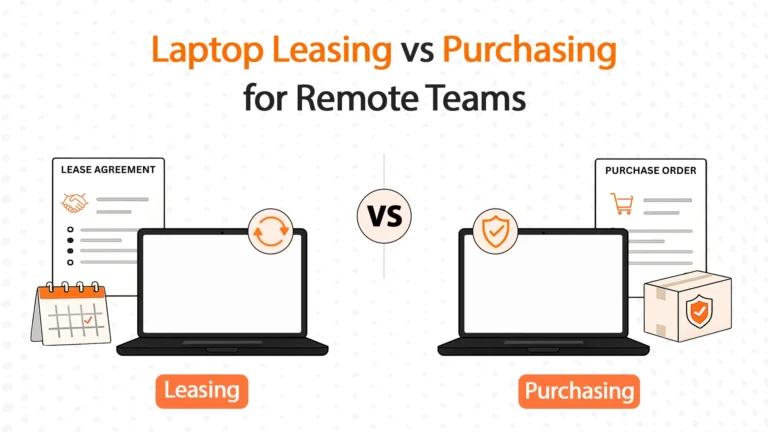
Leasing changes the financial structure rather than simply changing where the laptop is purchased. Instead of paying the entire hardware cost upfront, companies make payments over an agreed period. This can make sense for companies that want predictable payments or prefer not to make large upfront hardware purchases. However, buy versus lease is a separate decision from the procurement channel itself. If you’re specifically evaluating the financial implications of ownership versus leasing, our guide to leasing laptops for business covers the full cost comparison.
5. Global Procurement and Lifecycle Platforms
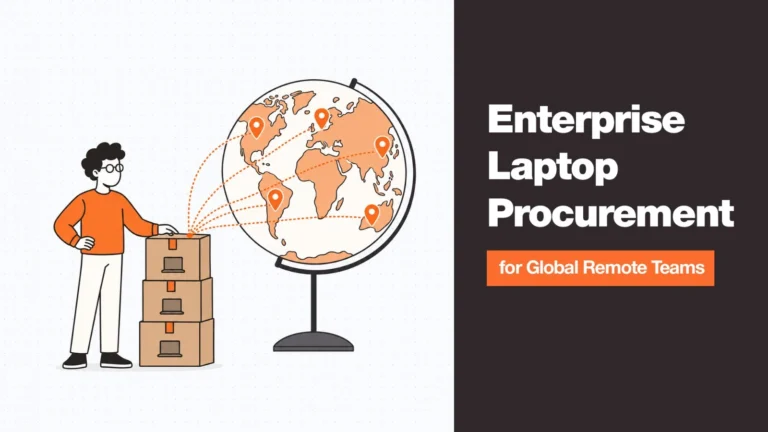
There is another category that becomes increasingly relevant once a company starts hiring across countries. A global procurement platform can combine sourcing and delivery with the operational processes around the device — answering not just ‘who can sell us this laptop?’ but also ‘can we source the right device, get it to the right employee, record it correctly, and continue managing it after delivery?’ For distributed companies, the physical location of the employee affects sourcing, customs, and eventual retrieval. A lifecycle-oriented model is designed around those realities rather than treating the laptop purchase as an isolated transaction.
What Changes Once You’re Buying for a Team, Not Yourself?
Buying one laptop is primarily a product decision. Buying laptops for employees is a systems decision. If five employees each receive a different laptop, IT may be able to support them individually. But when those five devices become 50, differences in operating systems, specifications, accessories, warranties, and replacement cycles create unnecessary complexity.
That is why companies typically establish standard configurations based on roles:
| Employee role | Typical procurement approach |
| General business user | Standard business laptop |
| Sales / operations | Standard configuration with appropriate portability |
| Developer | Higher-performance configuration |
| Designer / creative role | Higher-performance or specialized configuration |
| Executive | Standard premium configuration where justified |
The important part is creating a repeatable standard rather than allowing every employee to start a new purchasing decision. This is where a formal hardware standardization process becomes useful. The objective is not to add bureaucracy to a laptop purchase — it is to make the same decision consistently every time.
Related Reads
Once you have settled on the procurement channel, these guides cover the specific decisions inside it:
- Laptop Sourcing: Should You Ship, Source Locally, or Use a Stipend? — where devices physically come from, which sits before the channel decision.
- Leasing Laptops for Business: The Full Cost Comparison — the buy-versus-lease financial breakdown.
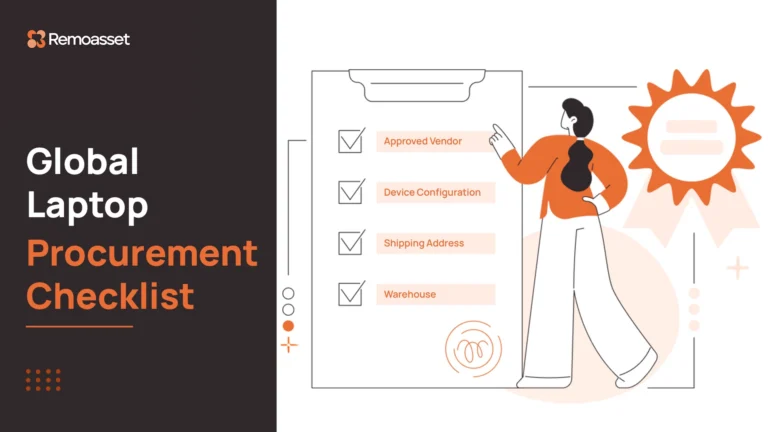
- Global Laptop Procurement Checklist — the step-by-step process for teams that have outgrown ad hoc buying.
- Laptop Total Cost of Ownership: The Full Lifecycle Math — why the purchase price understates what a device actually costs to own.
- Device Procurement Best Practices — standardizing hardware before volume makes it harder.
When Should a Business Move Past Ad Hoc Buying?
There is no magic number of laptops at which a company suddenly needs formal procurement. The better indicator is operational friction.
You have probably outgrown ad hoc purchasing if:
- Every new hire requires a fresh hardware discussion.
- Employees receive different configurations for similar roles.
- Nobody has a reliable record of which employee has which device.
- New hires are waiting for hardware.
- Warranty information is difficult to find.
- Devices are purchased without considering what happens when employees leave.
At that point, the problem is no longer ‘how do we buy a laptop?’ It becomes how do we operate a company-owned laptop program? For organizations that have reached this stage, the global laptop procurement checklist in Related Reads above covers the broader process in detail.
Choosing the Right Procurement Channel for Your Business
A useful way to think about the options is to match the procurement channel to the complexity of the organization.
| Procurement channel | Best suited for | Main tradeoff |
| Retail / marketplace | Small or occasional purchases | Limited lifecycle control |
| Manufacturer business program | Standardized fleets | You manage the broader operations |
| Authorized reseller | Regular purchases + IT services | Supplier management can become complex |
| Leasing / DaaS | Predictable payments and refresh needs | Contract and ownership considerations |
| Global lifecycle platform | Distributed, multi-country teams | Best value when hardware operations are complex |
For a small company buying a handful of laptops in one city, a retail or manufacturer business account may be perfectly adequate. For a company hiring across several countries, the question changes — the organization may need local sourcing, employee delivery, asset visibility throughout the device lifecycle, deployment coordination, retrieval, and eventual redeployment or disposal. At that point, using one company account to purchase laptops may solve only the first part of the problem.
The Real Goal of Business Laptop Procurement
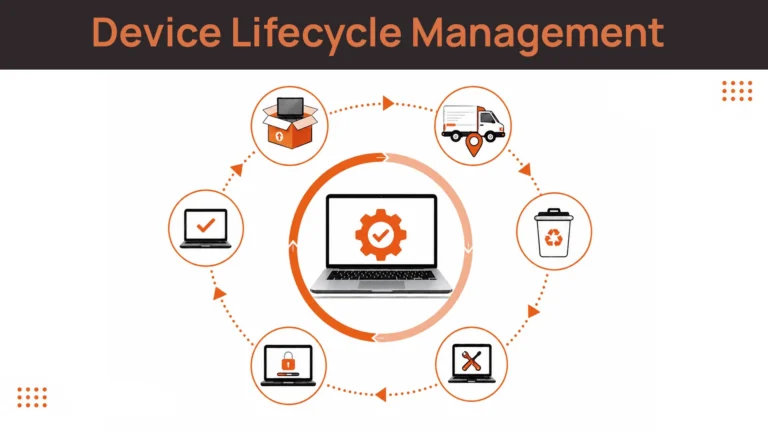
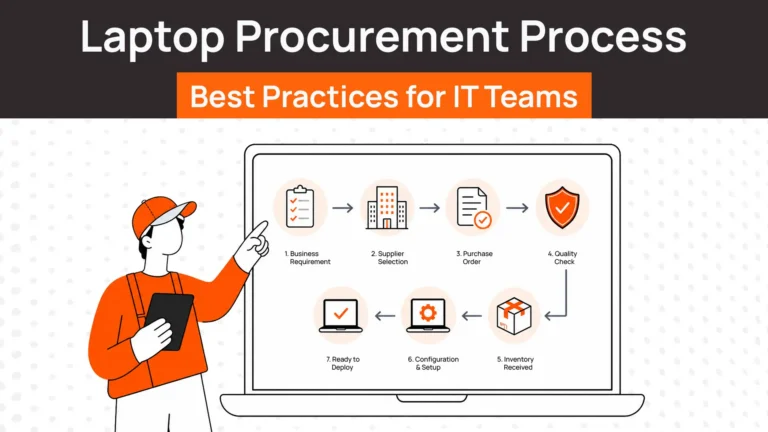
The easiest mistake is to treat procurement as the moment when money changes hands and a laptop is ordered. For a growing business, procurement is the beginning of the device lifecycle. The laptop needs to be sourced, delivered, assigned, secured, tracked, maintained, and eventually recovered. That is particularly important for distributed teams.
The right procurement model should answer:
- Can we buy the right device consistently?
- Can we get it to employees without unnecessary delays?
- Can IT maintain visibility after delivery?
- Can we recover the device when someone leaves?
- Can we reuse the hardware rather than automatically buying another device?
That final part is often overlooked. A well-run procurement program should connect naturally to retrieval and redeployment at the end of each device’s working life rather than treating those as completely separate problems.
A Procurement Model That Scales With the Business
For a small team, several procurement channels can work equally well. The important thing is knowing when the business has moved beyond simple purchasing. Once hiring becomes distributed, hardware requirements become standardized, and employees are joining and leaving regularly, procurement needs to become a repeatable operational system.
This is where a platform such as Remoasset can sit between the purchasing decision and the broader lifecycle — connecting procurement with delivery, asset visibility, retrieval, and reuse within the same operating workflow, whether the company is buying 5 laptops or 500. Book a demo to see how one channel scales from a handful of hires to a distributed global team without switching vendors along the way.
The best procurement channel is ultimately the one that fits the way your company operates today while still being capable of supporting where the workforce is going next.
Frequently Asked Questions
How do businesses buy laptops for employees?
Businesses typically purchase through retail marketplaces, manufacturer business programs, authorized resellers, leasing providers, or global procurement and lifecycle platforms. The right option depends on purchase volume, standardization requirements, geography, budget structure, and how much operational support the company needs.
What’s the difference between buying laptops through a business account vs. retail?
A business account can provide purchasing controls, centralized billing, reporting, customized catalogs, negotiated pricing, and repeat-order capabilities that are less relevant to individual retail purchases. Dell and HP both offer business procurement platforms with organization-specific catalogs and purchasing controls.
Do you need a business account to buy laptops in bulk?
Not necessarily. Businesses can purchase multiple laptops through retail channels, marketplaces, manufacturers, or resellers. However, a dedicated business procurement account becomes useful as purchase volume increases because it introduces better controls, reporting, invoicing, and repeat-order processes.
What’s the easiest way to procure laptops for a small team?
For a small team in one location, buying directly through a manufacturer business program or reputable business marketplace may be sufficient. As the company begins hiring across multiple locations, it is worth considering whether the procurement process also needs to handle delivery, asset tracking, and retrieval.
Should a company buy laptops locally or ship them from headquarters?
That depends on where employees are located. For a concentrated workforce, centralized purchasing and shipping can be efficient. For distributed international teams, local sourcing can reduce cross-border logistics and customs complexity. Our guide to the central warehouse vs. local sourcing vs. stipend tradeoffs goes deeper into this specific decision.
What should companies consider besides the laptop’s purchase price?
Businesses should also consider configuration, shipping, support, warranty, IT administration, security, asset tracking, retrieval, redeployment, resale, and disposal. Looking at these costs together gives a much more realistic picture of the laptop’s true cost than the purchase price alone.