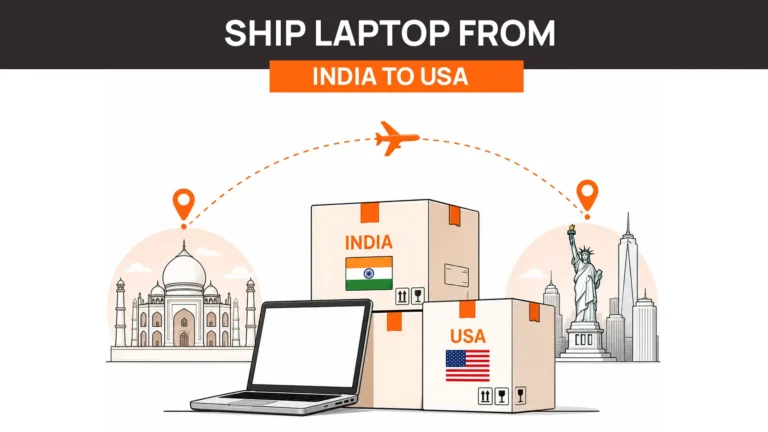
A US-based company hires someone in Manila. The company already owns a laptop for that role, so shipping it over seems like the easy part. Then the questions show up: does the lithium battery get the package flagged, does Philippine customs charge duty on a laptop, what happens if the declared value looks off, and what happens to the new hire’s start date if the box sits in a bonded warehouse for two weeks.
Shipping a laptop from the US to the Philippines is really two problems stacked together: a shipping problem (carrier, packaging, battery rules) and a customs problem (duty, VAT, documentation, valuation). Getting the courier part right doesn’t protect you from the customs part, and vice versa. And shipping the laptop is only one piece of getting a remote employee properly equipped — the full operational picture is covered in our guide to how businesses buy and manage laptops for employees internationally.
Can You Ship a Laptop from the US to the Philippines?
Yes. Company laptops can generally be shipped internationally, but the shipment has to meet the carrier’s battery packaging requirements and Philippine import rules. There’s no exemption that makes laptops different from any other dutiable, taxable commercial import once the value clears the de minimis threshold — which it almost always does.
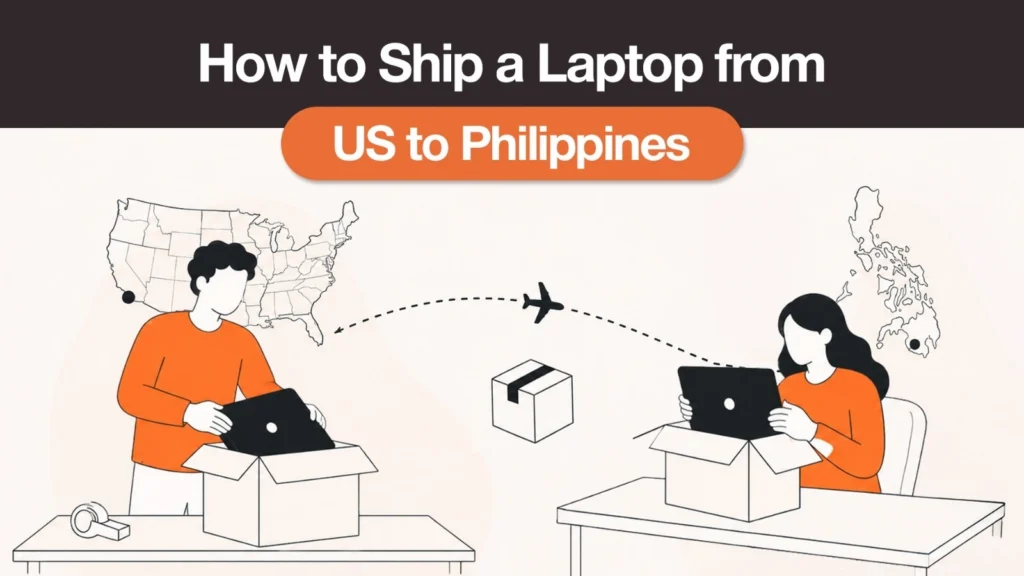
How to Ship a Laptop from the US to the Philippines: Step by Step
1. Confirm the consignee and sort out a Philippine TIN
Decide who’s the importer of record — your Philippine entity, a local contractor, or the employee themselves — and confirm they have a Tax Identification Number on file. A missing TIN is one of the most common causes of a formal-entry hold.
2. Prepare the laptop
Wipe and reset a used or redeployed device, load any MDM or security profile you need before it ships (or plan for zero-touch enrollment on first login), and check the battery for damage or swelling. Don’t ship a laptop with a compromised battery — no carrier will move it.
3. Package it correctly
Use the manufacturer’s box as an inner layer where you can, cushion the laptop on all sides, and keep the battery installed rather than shipped separately.
4. Prepare your documentation
Put together a commercial invoice with an accurate declared value and description, a packing list, and the air waybill. Note the HS code (8471.30.20) on the invoice if your carrier’s paperwork asks for it.
5. Choose a carrier and service level
Pick based on your account type and whether you want the carrier’s local partner handling customs brokerage for you, or whether you’re managing that side separately. See the carrier comparison table below.
6. Decide who pays duties and taxes upfront
Choose DDP (you pay duties/VAT in advance — smoother for the employee) or DDU (the recipient pays on delivery — cheaper for you but adds friction on their end). Settle this before you ship, not after a bill shows up at the employee’s door.
7. Confirm the delivery details
Double-check the destination address and make sure the employee knows to expect the package and can receive or sign for it. An unavailable recipient is one of the more common causes of delay on the Philippine end.
8. Track and respond to customs quickly
Be ready to supply additional documents or clarify a declared value fast if the carrier or Bureau of Customs asks. Delays usually happen here, not in transit.
9. Confirm delivery and finish setup
Once the laptop arrives, confirm receipt, complete any remaining MDM enrollment or account setup, and log the device in your asset tracking system so you know where it is if it ever needs to come back.
Philippine Customs: What Actually Happens to Your Shipment
The de minimis threshold under the CMTA is PHP 10,000 FOB/FCA value. This rarely applies to a laptop — almost any working business laptop exceeds that (roughly $175–180). Above it, the Bureau of Customs splits shipments into two tracks: formal entry for commercial goods valued at PHP 50,000 or more, and informal entry for personal-use goods below it. Most company laptops fall into formal entry given typical values.
Laptops sit under HS 8471.30.20, with a 0% Philippine import duty rate — including under ATIGA, ACFTA, and RCEP, consistent with the WTO Information Technology Agreement. Confirm the current rate against the Philippine Tariff Finder before shipping. Zero duty doesn’t mean zero tax. A 12% VAT applies at formal entry, generally on the CIF value plus duty — that’s the number that actually shows up on your landed cost.
For formal entry, expect a commercial invoice, packing list, air waybill, and a Philippine TIN for the importer or consignee. A used laptop is still a declarable import. Duty and VAT aren’t waived because it’s not new — it just needs an honest, depreciated valuation rather than the original purchase price.
Choosing a Carrier
| Carrier | Best for | Typical strength | Main consideration |
| DHL | International express | Strong global express and customs-handling network | Confirm current lithium battery and processing-fee policy for your account type |
| FedEx | Express business shipping | International tracking and documentation tools | Commercial accounts get more predictable customs handling than one-off retail shipments |
| UPS | Recurring business shipments | Broad international logistics footprint | Availability and pricing vary by origin ZIP and destination — verify directly |
| USPS | Smaller, less urgent shipments | Uses the postal network into local delivery | Slower and less consistent for high-value, time-sensitive equipment |
Don’t treat this as a fixed ranking. The right choice depends on your account type, shipment volume, and whether you need door-to-door customs handling built in or plan to manage the Philippine side separately.
When Customs Holds Your Shipment
Deciding who owns each of these scenarios before you ship — not after a hold notice arrives — is what actually prevents onboarding delays.
| Situation | Who should own it |
| Customs requests additional documents | Sender/IT team, with carrier’s brokerage support |
| Declared value is questioned | Sender/IT team (they set the declared value) |
| Shipment is physically held for inspection | Carrier’s local broker, with sender on standby for documents |
| Delivery address is incomplete | Whoever manages onboarding details — confirm before shipping |
| Employee is unavailable for delivery | HR/People ops — coordinate delivery window with the employee |
| Duties/taxes are unpaid or disputed | Depends on Incoterms (DDP vs. DDU) — decide this before shipping, not after |
| Battery information is requested | Sender/IT team — keep battery Wh rating documentation on hand |
| Shipment is returned to sender | Sender/IT team — treat as a new shipment attempt with corrected details |
Shipping vs. Local Procurement
| Situation | Ship from US | Source locally |
| One employee, standardized device the company already owns | ✓ | |
| Company already owns the specific laptop | ✓ | |
| Several employees joining in the Philippines in the same period | ✓ | |
| Strong local model availability | ✓ | |
| Device needs a specific configuration or security build | ✓ | |
| Shipping/customs complexity is creating repeated delays | ✓ | |
| Existing laptop being redeployed from a previous hire | ✓ | |
| Local warranty and support matter more than a specific brand or spec | ✓ |
From One Laptop to a Device Lifecycle
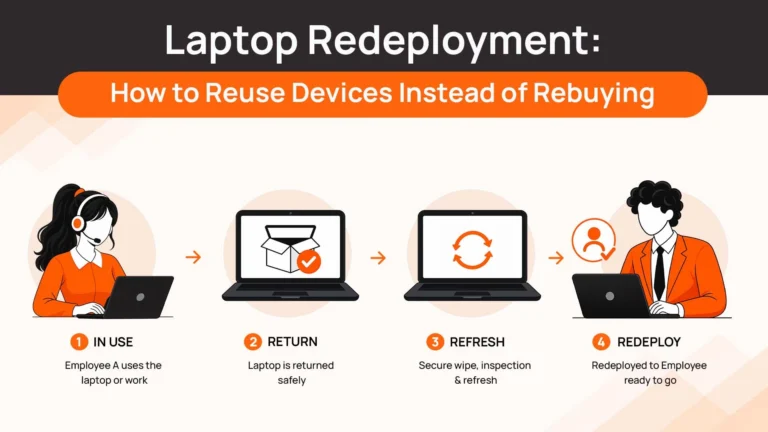
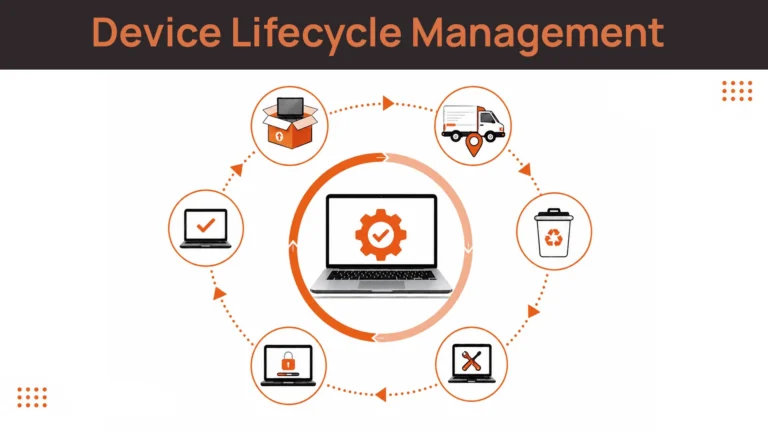
Shipping one laptop is a courier problem. Shipping, tracking, and eventually retrieving and redeploying laptops repeatedly across the Philippines and other countries turns into an IT operations problem — procurement decisions, delivery coordination, MDM enrollment, asset tracking, and retrieval and data wiping when someone leaves. For the Philippines specifically, local procurement and retrieval options can remove the cross-border logistics from each hire entirely.
Remoasset is built around this lifecycle: procurement, delivery, retrieval, and coordination, handled locally in each country rather than shipped cross-border every time. For companies hiring repeatedly in the Philippines, that usually means sourcing devices locally instead of shipping from the US for every new hire, and handling retrieval through local pickup when someone offboards. If you’re sending one laptop, a courier and this guide are probably enough. If you’re doing this every month across several countries, book a demo to see how the lifecycle around each shipment gets handled as a single workflow.
Frequently Asked Questions
Can I ship a laptop from the US to the Philippines?
Yes. Company laptops can generally be shipped internationally, but the shipment must meet the carrier’s battery packaging requirements and Philippine import and customs requirements. There’s no laptop-specific exemption from customs.
Do I have to pay customs on a laptop shipped to the Philippines?
Usually, yes. Laptops carry a 0% duty rate under their tariff classification, but a 12% VAT still applies to most shipments once value clears the PHP 10,000 de minimis threshold — which a real laptop almost always does.
How much does it cost to ship a laptop from the USA to the Philippines?
There’s no fixed price. Cost depends on origin, weight, dimensions, declared value, service level, insurance, and carrier. Get a quote for your specific shipment rather than budgeting off a generic figure.
How long does it take to ship a laptop from the USA to the Philippines?
Total delivery time includes pickup, export processing, international transit, Philippine customs clearance, and last-mile delivery — not just the carrier’s quoted transit time. Documentation issues at customs can add days.
What documents do I need to ship a laptop to the Philippines?
At minimum, a commercial invoice and packing list. Formal entry shipments — which most company laptops qualify for given typical values — also require the air waybill and, generally, a Philippine TIN for the consignee.