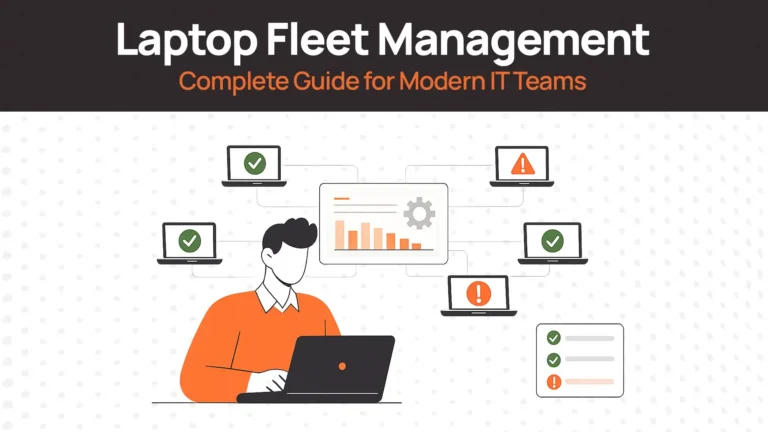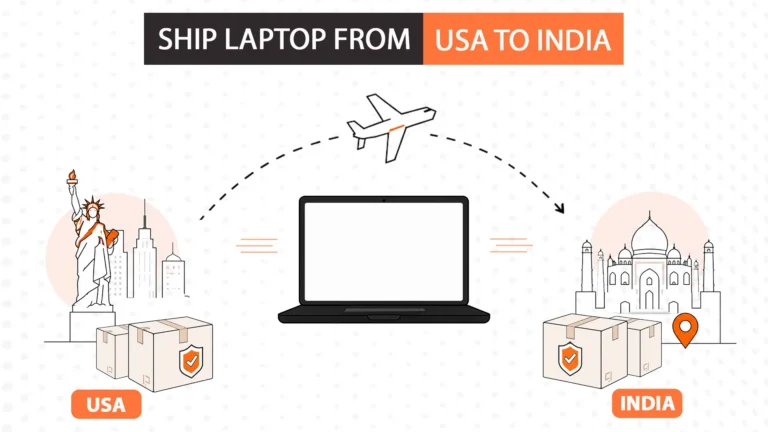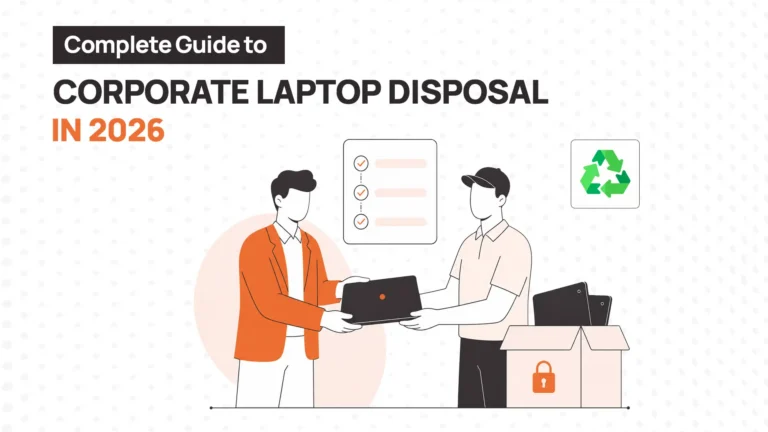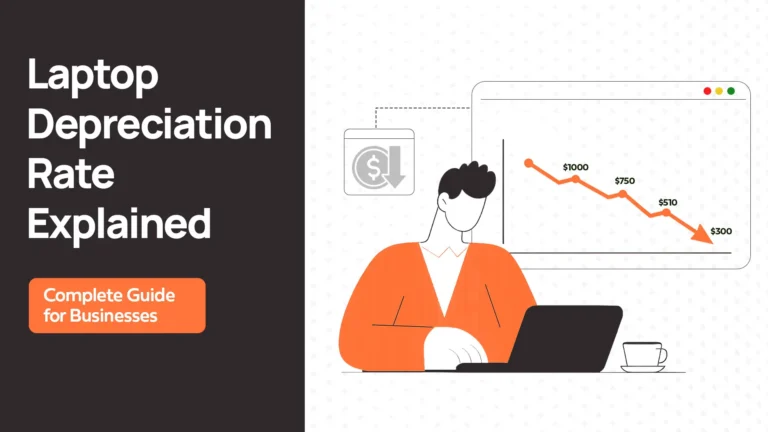
Managing employee laptops across distributed teams sounds simple in theory. Order the device. Ship it. Track it. Retrieve it when the employee leaves. In reality, it becomes operationally messy very quickly.
A laptop gets delayed in customs before a new hire’s first day. A retrieval request sits unresolved for weeks because nobody owns the process. Finance doesn’t know which devices are reusable. IT tracks assets in spreadsheets while HR handles onboarding in another system entirely.
This is why many companies start searching for Allwhere alternatives.
Allwhere works well for standardizing procurement and onboarding workflows, especially for companies operating across a smaller number of regions. But as teams scale globally, new challenges emerge:
- Multi-country logistics
- Lifecycle visibility gaps
- Vendor fragmentation
- Rising operational costs
- Retrieval and redeployment complexity
And these challenges go far beyond simply “ordering laptops.” To build this guide, we analyzed:
- Product documentation
- Public pricing information
- G2 and Capterra reviews
- Reddit discussions from IT/admin communities
- Real-world operational patterns from distributed teams
Each platform below is evaluated on two important dimensions:
- How well it handles procurement, provisioning, and retrieval
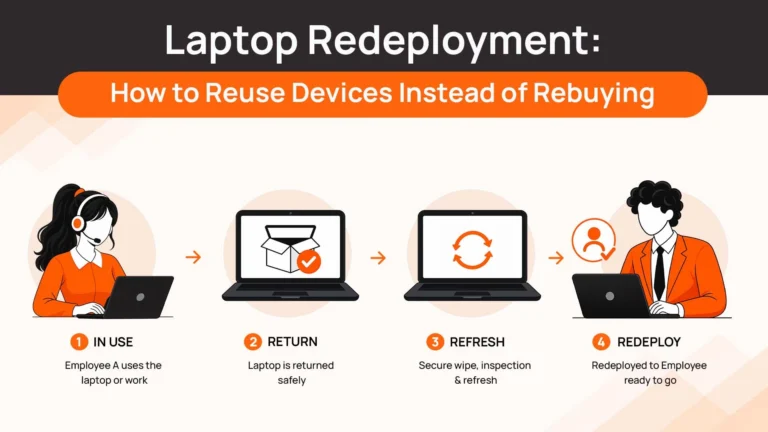
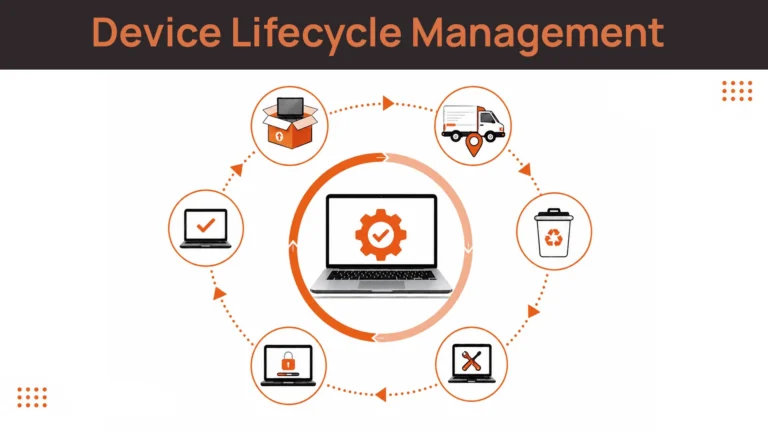
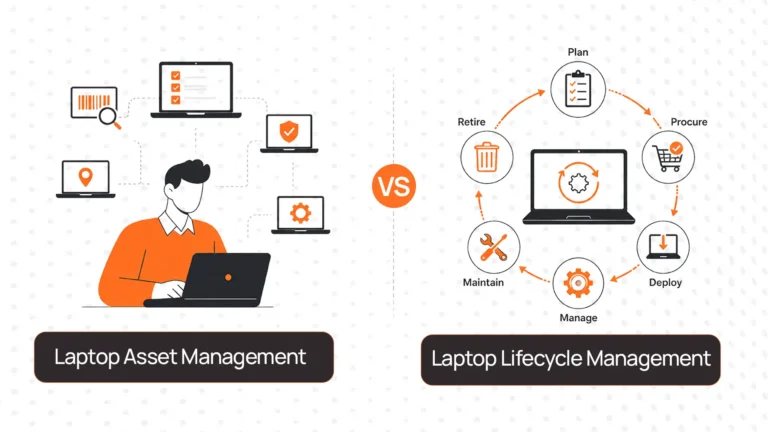
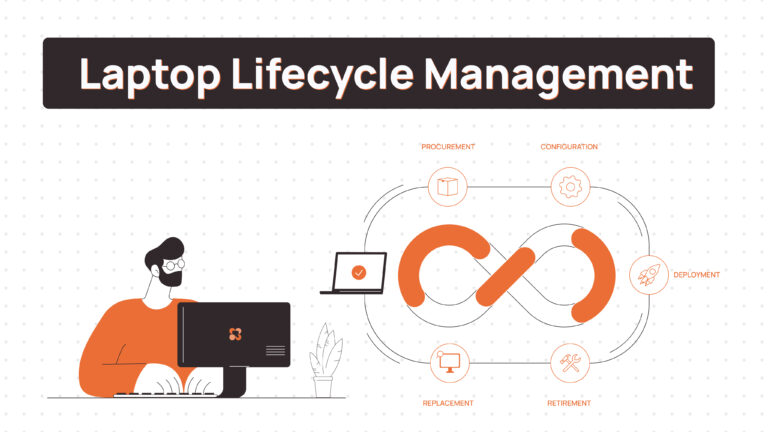
- Whether it solves the broader laptop lifecycle: procurement → delivery → tracking → retrieval → reuse
Because in modern IT operations, the biggest difference between tools is not feature lists. It is how much of the operational lifecycle they actually manage.
Related Read:
- Laptop Asset Management Software
- Best Laptop as a Service (LaaS) Providers
- Best Laptop Return Services for Remote Teams
What is Allwhere? (And What It Actually Does Well)
Allwhere is a laptop operations platform designed to help companies manage:
- Device procurement
- Employee onboarding
- Laptop delivery
- Retrieval during offboarding
- Basic lifecycle coordination
The platform is commonly used by distributed and remote-first companies that want to reduce manual coordination between HR, IT, and operations teams.
What Allwhere does well
Strong onboarding experience
One of Allwhere’s biggest strengths is employee onboarding.
The platform simplifies:
- Device ordering
- Shipping coordination
- Delivery visibility
This helps new hires receive laptops faster and creates a smoother Day 1 experience.
For growing startups and mid-sized teams, this alone can eliminate a significant amount of operational overhead.
Simplified procurement workflows
Allwhere centralizes vendor coordination and device ordering, helping companies avoid fragmented procurement processes.
Instead of:
- Managing multiple vendors manually
- Coordinating shipping individually
- Handling procurement requests over email
Teams can manage provisioning through one operational layer.
Relatively easy implementation
Compared to heavier enterprise IT systems, Allwhere is generally easier to adopt.
This makes it attractive for:
- SMBs
- Mid-market teams
- Fast-growing startups
Especially companies moving away from spreadsheets or ad-hoc procurement.
Where limitations begin to appear
Most operational limitations emerge when teams scale internationally.
Allwhere’s primary strength is procurement and onboarding orchestration.
But as device operations mature, companies often require:
- Better lifecycle visibility
- Reuse and redeployment workflows
- Regional logistics flexibility
- More cost control at scale
- Stronger retrieval infrastructure
For globally distributed companies, these gaps become more noticeable over time.
Why Teams Look for Allwhere Alternatives
Most companies do not switch platforms because a tool is “bad.” They switch because operational complexity evolves faster than the platform.
Below are the most common reasons teams evaluate alternatives to Allwhere.
1. Limited global coverage
For companies hiring globally, country coverage matters enormously.
A platform may work well in:
- North America
- UK
- Parts of Europe
But become operationally difficult in:
- LATAM
- APAC
- Africa
- Emerging markets
This affects:
- Shipping timelines
- Customs coordination
- Device sourcing
- Local vendor availability
For globally distributed teams, these gaps create onboarding delays and inconsistent employee experiences.
2. Lifecycle depth limitations
Many laptop operations tools focus heavily on:
- Procurement
- Onboarding
- Delivery
But operational maturity requires much more than deployment.
Teams eventually need:
- Reuse workflows
- Storage management
- Device health visibility
- Redeployment systems
- Lifecycle cost optimization
This is where companies start moving toward lifecycle-driven platforms rather than provisioning-only systems.
Related Read: How to Manage Company Laptops
3. Pricing inefficiencies at scale
Per-device operational pricing can work well initially.
But as device counts increase:
- Costs become harder to predict
- Logistics fees accumulate
- Regional vendor pricing varies significantly
Large distributed teams often prioritize:
- Lifecycle efficiency
- Device reuse
- Recovery optimization
Because procurement alone becomes expensive at scale.
4. Logistics complexity still exists
One misconception about laptop operations platforms:
Procurement automation does not eliminate logistics complexity.
Teams still deal with:
- Shipping delays
- Customs issues
- Vendor coordination
- Retrieval management
- Device damage handling
Especially across multiple countries.
5. Operational visibility gaps
Many companies discover they lack a unified lifecycle view.
They can see:
- Devices ordered
- Devices delivered
But not:
- Which devices are reusable
- Recovery status
- Storage inventory
- Lifecycle costs
- Utilization efficiency
And this becomes a major operational blind spot.
“Managing devices globally isn’t just about ordering—it’s dealing with shipping delays, returns, and vendor coordination.”
This theme appears repeatedly in Reddit discussions among IT and operations teams evaluating global laptop providers.
How We Evaluated Allwhere Alternatives
To ensure this comparison remains practical rather than promotional, each platform was evaluated across operational criteria that directly impact distributed teams.
| Evaluation Criteria | Why It Matters |
| Global Coverage | Critical for distributed hiring and logistics |
| Lifecycle Completeness | Determines whether teams can manage reuse and recovery |
| Procurement Capability | Impacts onboarding speed and standardization |
| Retrieval Infrastructure | Essential for offboarding and asset recovery |
| HRIS / MDM Integrations | Enables automation and reduces manual coordination |
| Pricing Model | Affects operational scalability and predictability |
| Logistics Execution | Determines real-world operational reliability |
| Verified Reviews | Validates claims using external user feedback |
Key Insight
The biggest difference between these platforms is not the feature checklist. It is how much operational complexity they remove from your team.
11 Best Allwhere Alternatives in 2026
Comparison Table
| Platform | G2 Rating* | Countries | Lifecycle Coverage | Procurement | Retrieval | Pricing Model | Best For |
| Allwhere | 4.6 | ~40–50 | Partial | ✓ | ✓ | Per-device | SMB onboarding workflows |
| RemoAsset | 4.7 | 80+ | Full | ✓ | ✓ | Pay-as-you-go / Annual | Full lifecycle operations |
| Workwize | 4.4 | 100+ | Full | ✓ | ✓ | Subscription | Mid-market distributed teams |
| GroWrk | 4.4 | 150+ | Full | ✓ | ✓ | Platform + per-device | Enterprise global operations |
| Firstbase | 4.7 | 150+ | Full | ✓ | ✓ | Per-seat | Compliance-heavy onboarding |
| Hofy | NA | 100+ | Medium | ✓ | ✓ | Custom | Onboarding-first operations |
| Reready | 5.0 | 40–60+ | Medium | ✓ | ✓ | Custom | LATAM-focused operations |
| ZenAdmin | 4.8 | 90+ | Medium | ✓ | ✓ | Subscription | IT automation workflows |
| Unduit | 4.8 | Global | Medium | ✓ | ✓ | Custom | ITAD and recovery-heavy teams |
| Retriever | NA | US/UK | Low | ✗ | ✓ | Pay-per-use | Retrieval-only use cases |
| Esevel | 4.6 | APAC | Medium | ✓ | ✓ | Subscription | APAC distributed teams |
*Ratings should always be verified live before publishing.
1. RemoAsset
RemoAsset approaches the problem differently from most provisioning-focused tools.
Instead of treating procurement, deployment, retrieval, and reuse as separate workflows, the platform manages them as a connected lifecycle system.
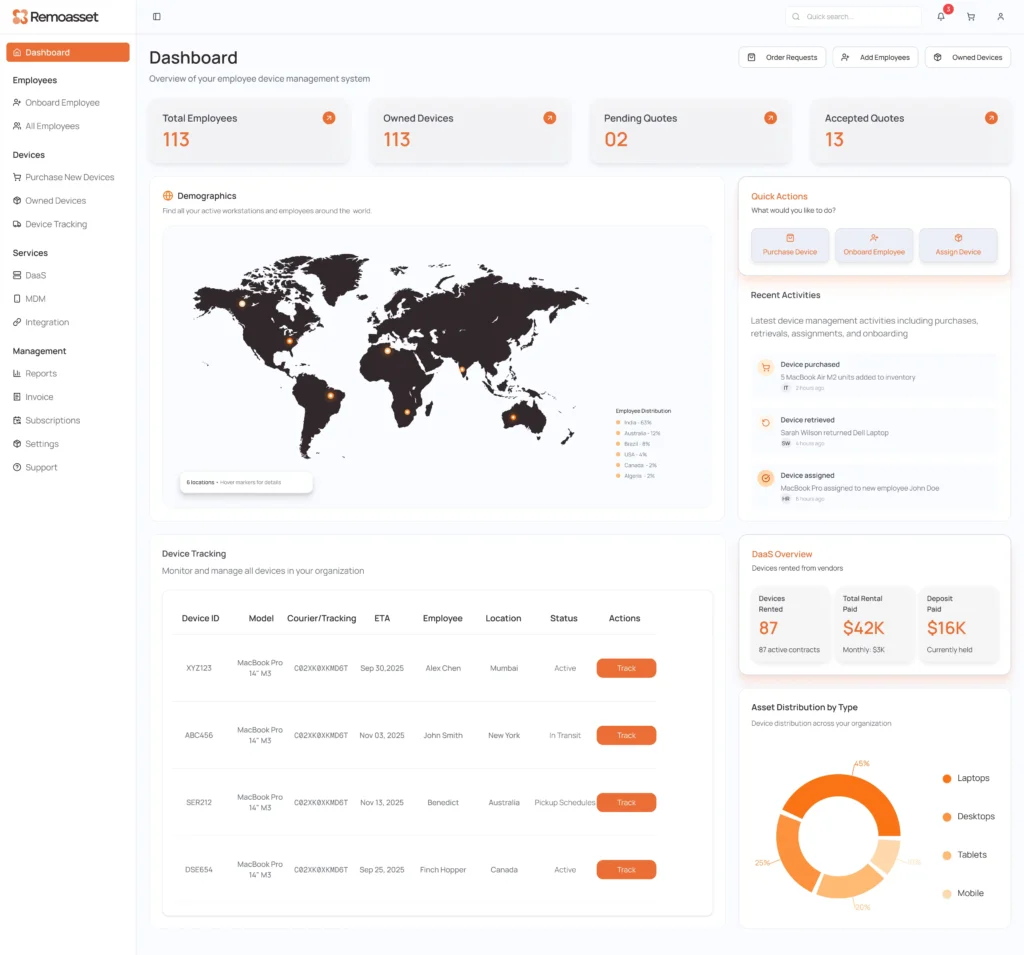
This becomes especially valuable for distributed companies where:
- Devices move across countries
- Teams scale rapidly
- Asset visibility matters operationally and financially
The platform combines:
- Procurement
- Global delivery
- Asset tracking
- Retrieval workflows
- Storage
- Redeployment coordination
Into one operational layer.
Key Features
Full lifecycle management
RemoAsset manages:
- Procurement
- Delivery
- Assignment
- Retrieval
- Storage
- Redeployment
Rather than stopping at onboarding.
Global laptop operations
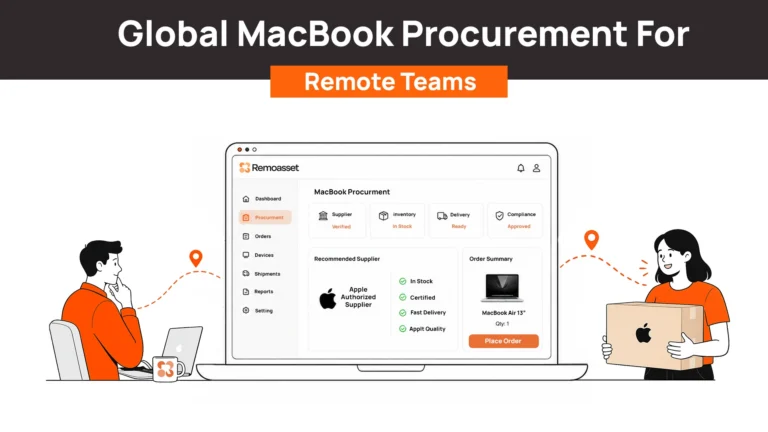
The platform supports distributed teams operating across multiple countries with centralized operational visibility. Learn more Laptop Procurement & Retrieval Worldwide
This reduces:
- Vendor fragmentation
- Manual coordination
- Regional procurement inconsistencies
Automated retrieval workflows
Retrieval is integrated into offboarding workflows rather than handled separately.
This includes:
- Retrieval requests
- Return kits
- Tracking visibility
- Data wipe coordination
Reuse and redeployment workflows
One of the strongest differentiators is lifecycle optimization.
Returned devices can:
- Be inspected
- Stored
- Redeployed
- Tracked through multiple lifecycle stages
This improves cost efficiency significantly at scale.
Pros
- Strong lifecycle visibility across procurement → reuse
- Reduces operational coordination between HR, IT, and vendors
- Better suited for global teams than onboarding-only tools
- Enables asset reuse and lifecycle cost optimization
- Strong retrieval and redeployment infrastructure
Cons
- More operationally robust than smaller teams may require
- Best value realized when managing full lifecycle workflows
- Requires process maturity for maximum efficiency
Pricing
Pay-as-you-go and annual lifecycle pricing models depending on operational scale and services required.
Best For
Distributed teams needing:
In one operational system.
2. Workwize
Workwize focuses heavily on standardizing laptop operations for distributed companies.
The platform combines:
- Procurement
- Delivery
- Retrieval workflows
With an employee-friendly onboarding experience.
Compared to Allwhere, Workwize generally offers broader operational coverage and stronger lifecycle workflows for mid-market teams.
Key Features
- Global procurement coordination
- Device provisioning workflows
- Offboarding and retrieval management
- HRIS integrations
- Operational dashboards for asset visibility
Pros
- Strong onboarding experience
- Cleaner operational workflows than spreadsheet-based systems
- Good fit for growing distributed teams
- Easier implementation compared to enterprise-heavy tools
Cons
- Subscription costs increase with scale
- Lifecycle optimization depth is still moderate
- Some teams report limitations around operational flexibility
Pricing
Subscription-based pricing model.
Best For
Mid-market companies scaling distributed operations.
Related Read: Best Workwize Alternatives & Competitors
3. GroWrk
GroWrk is one of the strongest operational alternatives for globally distributed enterprises.
The platform emphasizes:
- International procurement
- Cross-border logistics
- Retrieval operations
Compared to onboarding-first platforms, GroWrk is more logistics-driven.
Key Features
- Global procurement across 150+ countries
- International retrieval workflows
- Logistics coordination
- Device delivery management
- Employee equipment operations
Pros
- Strong international logistics infrastructure
- Better suited for enterprise global hiring
- Reduces vendor coordination complexity
- Strong operational execution across regions
Cons
- More enterprise-oriented and expensive
- Can feel operationally heavy for smaller companies
- Less lifecycle optimization than lifecycle-first platforms
Pricing
Platform fee + per-device operational pricing.
Best For
Large enterprises managing international laptop operations.
Read Also: Best Growrk Alternatives & Competitors
3. Firstbase
Firstbase combines employee onboarding workflows with device provisioning.
The platform is especially popular among companies integrating HR operations tightly with equipment management.
Key Features
- HRIS integrations
- Automated onboarding workflows
- Procurement and shipping coordination
- Device retrieval processes
- Employee lifecycle alignment
Pros
- Strong HR workflow integration
- Smooth onboarding experience
- High automation across onboarding/offboarding
- Good global infrastructure
Cons
- Expensive if used primarily for retrieval
- Lifecycle reuse capabilities are more limited
- Operational flexibility depends heavily on full platform adoption
Pricing
Per-seat pricing structure.
Best For
Companies prioritizing onboarding automation and compliance-heavy workflows.
4. Hofy
Hofy focuses strongly on employee onboarding and equipment provisioning with sustainability positioning. The platform works particularly well for companies prioritizing employee experience during onboarding.
Key Features
- Laptop procurement
- Device delivery
- Retrieval workflows
- Sustainability and reuse initiatives
- Employee-focused operational workflows
Pros
- Strong onboarding experience
- Sustainability positioning appeals to ESG-focused companies
- Good support across Europe and North America
Cons
- Lifecycle visibility is less advanced
- Global coverage is narrower than enterprise alternatives
- Retrieval and redeployment infrastructure is lighter
Pricing
Custom pricing.
Best For
Teams prioritizing onboarding experience and sustainability.
5. Reready
Reready specializes in regional operational execution, particularly across LATAM and North America.
It focuses on:
- Device logistics
- Procurement
- Regional support workflows
Key Features
- Regional device operations
- Procurement coordination
- Laptop retrieval
- Local operational execution
Pros
- Strong regional responsiveness
- Better local execution in LATAM markets
- More operational flexibility regionally
Cons
- Less suitable for fully global operations
- Smaller lifecycle ecosystem
- Limited enterprise operational depth
Pricing
Custom pricing.
Best For
LATAM-heavy distributed teams.
6. ZenAdmin
ZenAdmin blends IT operations automation with laptop provisioning workflows. The platform focuses more heavily on IT operational coordination than lifecycle optimization.
Key Features
- Procurement workflows
- Device provisioning
- IT automation
- Access coordination
- Operational visibility tools
Pros
- Strong IT workflow alignment
- Simplifies operational coordination
- Good integrations for internal IT operations
Cons
- Less mature retrieval infrastructure
- Lifecycle reuse visibility is limited
- More IT-operations-centric than lifecycle-centric
Pricing
Subscription model.
Best For
IT teams prioritizing operational workflow automation.
7. Unduit
Unduit focuses heavily on IT asset disposition (ITAD), recovery, and redeployment. The platform is strongest after the active employee lifecycle ends.
Key Features
- Device recovery
- Certified data wiping
- ITAD workflows
- Asset disposition tracking
- Redeployment coordination
Pros
- Strong recovery infrastructure
- Better end-of-life workflows
- Useful for regulated industries
Cons
- Less onboarding and procurement depth
- Not designed as a full lifecycle procurement platform
- Operational coverage depends heavily on workflow design
Pricing
Custom enterprise pricing.
Best For
Teams prioritizing ITAD and recovery operations.
8. Retriever
Retriever is designed primarily for laptop recovery and offboarding. Unlike lifecycle platforms, it focuses narrowly on retrieval workflows.
Key Features
- Return kit coordination
- Retrieval workflows
- Basic tracking
- Laptop return management
Pros
- Simple and affordable
- Easy implementation
- Useful for small domestic teams
Cons
- Limited geographic coverage
- No lifecycle management
- No procurement workflows
- Minimal operational automation
Pricing
Pay-per-use pricing.
Best For
Small companies needing basic retrieval services only.
9. Esevel
Esevel focuses primarily on APAC laptop operations and provisioning workflows. The platform is designed for regional operational support rather than global lifecycle management.
Key Features
- Procurement workflows
- Device provisioning
- Retrieval support
- Regional logistics coordination
Pros
- Strong APAC operational understanding
- Better local logistics coordination in regional markets
- Useful for Asia-focused hiring teams
Cons
- Limited outside APAC
- Smaller lifecycle infrastructure
- Less mature redeployment visibility
Pricing
Subscription-based pricing.
Best For
Companies operating primarily across APAC regions.
Which Allwhere Alternative Should You Choose?
The right alternative depends on the operational problem you are actually trying to solve.
Because procurement is only the beginning.
Operational complexity grows as:
- Hiring expands globally
- Device counts increase
- Retrieval volume grows
- Reuse becomes financially important
“I just need onboarding + procurement”
Best fit:
- Hofy
- Workwize
These tools prioritize:
- Employee experience
- Device provisioning
- Simplified onboarding
Good for mid-market distributed teams.
“I’m scaling globally across multiple countries”
Best fit:
- GroWrk
- Firstbase
These platforms are stronger operationally for:
- Cross-border logistics
- Enterprise workflows
- International provisioning
“I need cost-efficient regional execution”
Best fit:
- Reready
- Esevel
- Nuwo
Regional specialists often outperform global platforms within focused geographic markets.
“I only need retrieval workflows”
Best fit:
- Retriever
- Unduit
Useful when retrieval not lifecycle management is the primary challenge.
“I want full lifecycle control”
Best fit:
- RemoAsset
This is the strongest fit when the problem extends beyond ordering laptops.
Including:
- Procurement
- Delivery
- Tracking
- Retrieval
- Reuse
- Operational visibility
The value comes from reducing operational fragmentation and not simply adding features.
Finding the Right Fit for Your IT Operations
Allwhere works well for procurement and onboarding workflows. But as distributed teams scale globally, the operational challenge becomes much larger than ordering devices.
Companies eventually need:
- Better lifecycle visibility
- Retrieval coordination
- Cost optimization
- Redeployment workflows
- Stronger logistics execution
Different alternatives solve different parts of that problem. Some improve onboarding experience. Some specialize in global logistics.
Others focus heavily on retrieval or ITAD.
But if your challenge is managing laptops across the full lifecycle—procurement, delivery, tracking, retrieval, and reuse—platforms like RemoAsset are built specifically for that operational complexity.
Explore how lifecycle-driven laptop operations work → Book a Demo