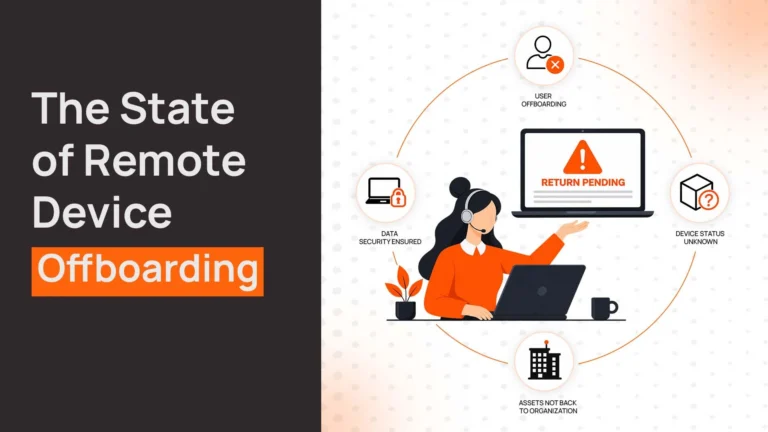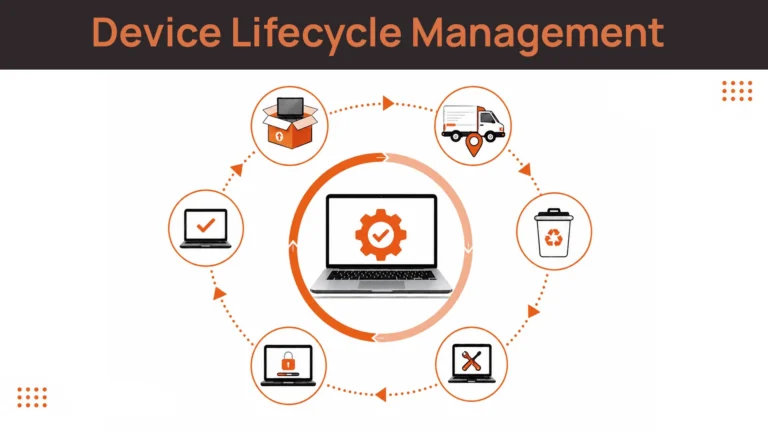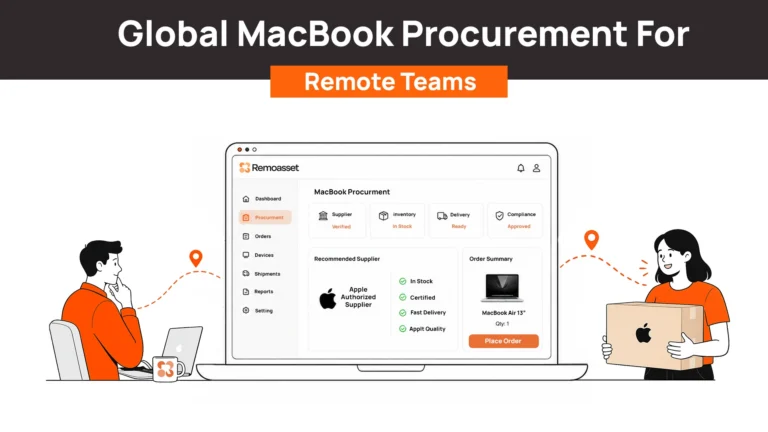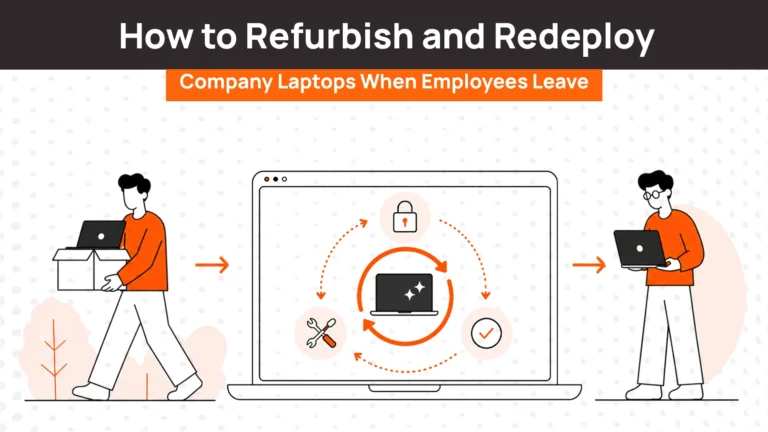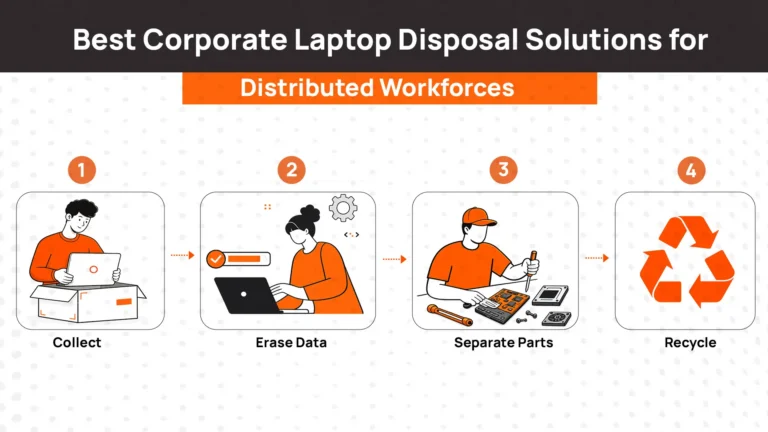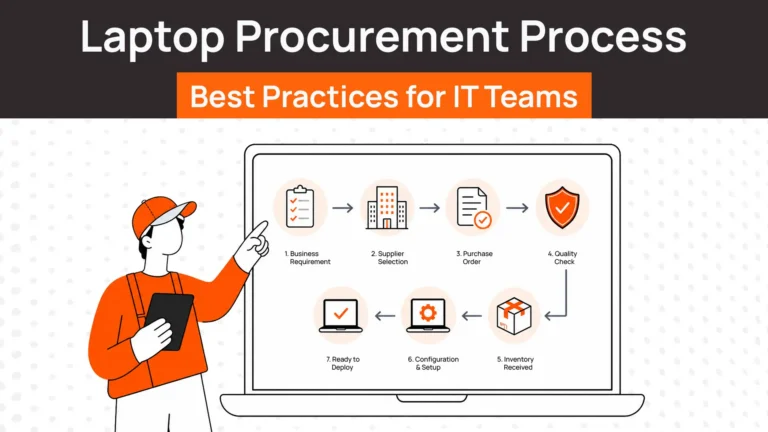

Procurement works. The device arrives. The employee starts working. And then nothing. Nobody knows where that device is after the employee departed. Nobody can prove data was wiped before it went to the next hire.
That’s the gap most IT teams discover after running logistics-focused platforms for a year or two. The shipping problem gets solved. The lifecycle problem doesn’t.
Quipteams handles the procurement and delivery side well. But teams that need stronger asset tracking, automated retrieval workflows, certified data erasure, refurbishment pipelines, or continuous lifecycle visibility eventually start looking for platforms built around the full device journey.
This guide covers the nine strongest alternatives, differentiated by what each one actually does differently.
Comparison Table for Quipteams Alternatives
Before we get to detailed product comparisons, here’s a table to help you make a fast decision for your team.
| Platform | Procurement | Deployment | Retrieval | Asset Tracking | Certified Data Wiping | Redeployment | Best Company Size |
| Remoasset | Yes | Yes, Zero-touch | Automated | Full lifecycle | NIST + DoD | Yes | Mid-market to Enterprise |
| GroWrk | Yes | Basic | Yes | Basic | Basic | Partial | SMB to Mid-market |
| Workwize | Yes | MDM-enabled | Yes | Yes | Basic | Partial | SMB to Enterprise |
| Firstbase | Buy/Lease/BYO | Yes | Yes | Yes | NIST 800-88 | Yes | Mid-market to Enterprise |
| Deel IT | Yes | ABM support | Yes | Basic | Basic | No | SMB to Enterprise |
| Allwhere | Yes | Yes | Yes | Yes | Limited | Limited | SMB to Enterprise |
Why Companies Look for Quipteams Alternatives
Most teams don’t leave Quipteams because it fails at logistics. They leave because logistics is no longer enough.
1. No native MDM or endpoint management
Once a device is in an employee’s hands, Quipteams’ visibility ends at the logistics layer. Policy enforcement, patch management, and remote device control require bolting on a separate MDM tool which means managing another vendor relationship and another integration point.
2. Limited automation at the HRIS level
While Quipteams offers HRIS sync, the automation depth varies. Teams that want device orders triggered automatically when a hire is added, or retrievals queued the moment an offboarding is processed, often find this requires custom API work rather than a native workflow.
3. Pay-as-you-go costs compound at scale
The zero-subscription model is genuinely attractive for small teams and low-volume ordering. At higher device volumes, the cost-per-device economics shift, and a subscription-based platform may offer better predictability.
4. Post-retrieval lifecycle is limited
Quipteams handles retrieval and storage well. Certified NIST 800-88 data erasure, refurbishment, and structured redeployment pipelines are areas where more specialized lifecycle platforms go deeper.
What to Look for in a Quipteams Alternative
The right platform depends on where your current process breaks down. That said, these are the capabilities that matter most for teams managing distributed device fleets seriously:
- Retrieval workflows: Does the platform automate return label generation, track the device through the return journey, and update the asset record on check-in? Or does retrieval require manual coordination?
- Certified data erasure: Does it provide NIST 800-88 compliant wiping with a Certificate of Erasure per device? Or just “basic wiping” with no audit documentation?
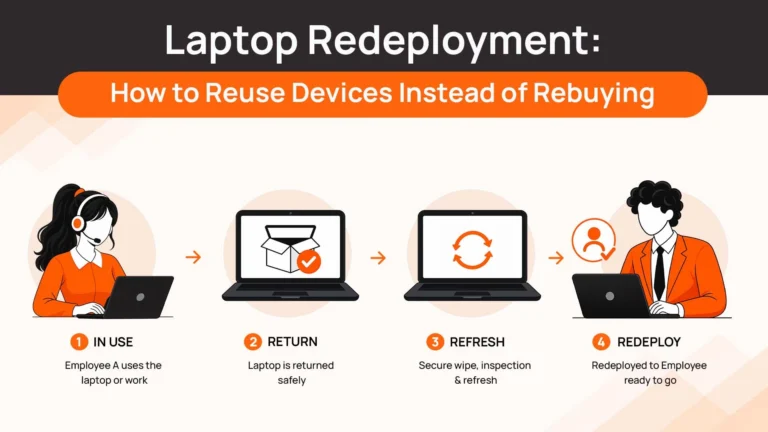
- Refurbishment and redeployment: After a device comes back, does it re-enter a managed inventory for the next deployment? Or does it sit in an untracked stockroom?
- MDM integration depth : Does the platform pre-enroll devices before shipping, or just list MDM as a supported integration without handling enrollment?
- HRIS integration and automation: Is the connection bidirectional and event-driven, or does it require manual syncs?
- Global logistics coverage: Where does the platform actually have local vendor networks vs. routing international shipments through central hubs with customs delays?
- Lifecycle visibility: Can you see every device’s full history procurement, assignment, maintenance, retrieval, wiping, redeployment in one record?
Related Read:
- Best Laptop Retrieval Services
- Laptop Asset Management Software
- Best Laptop as a Service (LaaS) Providers
- Best Laptop Return Services for Remote Teams
- Laptop Inventory Management Software
- Laptop Lifecycle Management: A Practical Guide for Modern IT Teams
- Best Laptop Deployment Software for Remote Team
Best Quipteams Alternatives in 2026
1. Remoasset
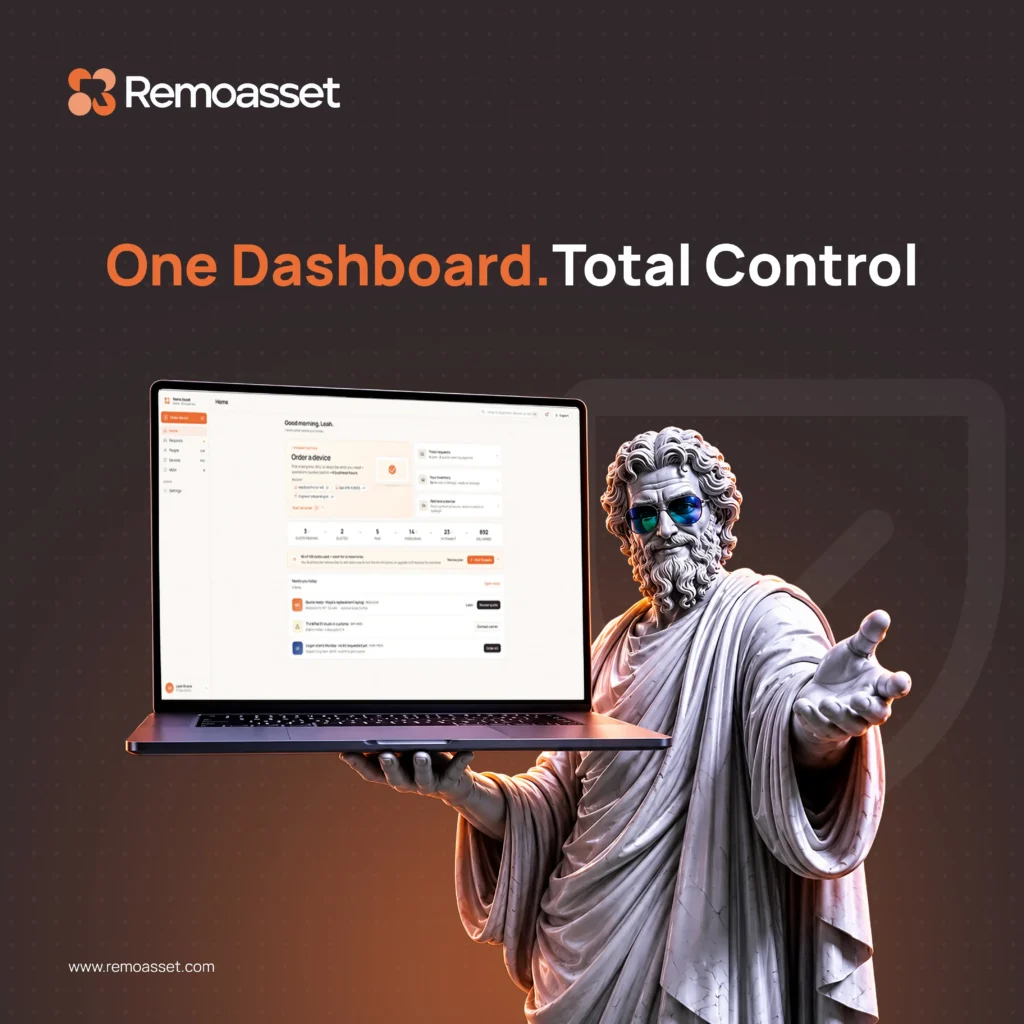
Remoasset is an all-in-one IT device lifecycle management platform built for remote and globally distributed teams. Remoasset solves this as a managed workflow that runs from initial procurement through to certified erasure and redeployment.
Best for:
Remote-first and globally distributed companies that need a complete lifecycle workflow procurement through redeployment in one platform, not just logistics coverage.
Key Strengths:
- HRIS-triggered onboarding and offboarding automation
- NIST 800-88 + DoD-compliant certified data erasure
- tamper-proof Certificates of Erasure; global device retrieval
- remote lock and wipe capability; full multi-OS support
- refurbishment and redeployment pipelines
- audit-ready reporting and full asset history.
Limitations:
Pricing is available on request rather than publicly listed which requires a direct conversation to evaluate against alternatives. Best suited for teams with meaningful device volume rather than early-stage teams procuring a handful of laptops.
Pricing: Available on request. Request a demo
2. GroWrk
GroWrk is built for IT device management across Latin America and other emerging markets where most global platforms have weak or unreliable logistics coverage. Its local fulfillment networks in Mexico, Colombia, Brazil, Chile, Argentina, and similar markets mean devices actually arrive on normal timelines.
The platform covers device procurement, basic pre-configuration, retrieval, and simple disposal workflows. HRIS integration supports automated onboarding and offboarding triggers.
Best for: Companies with significant headcount in Latin America and emerging markets where regional logistics depth is the deciding factor.
Key Strengths: Established local logistics networks in LATAM, reliable regional delivery, device retrieval included, hardware-as-a-service options available.
Limitations: Data erasure certification and post-retrieval lifecycle management are not primary strengths. MDM configuration depth is limited compared to specialist tools. Coverage outside LATAM is less differentiated from competitors.
Pricing: Available on request. Contact GroWrk
Related Read: Best Growrk Alternatives & Competitors
3. Workwize
Workwize is a hardware lifecycle management platform operating in 100+ countries with local warehouse infrastructure in key markets. It handles procurement, zero-touch deployment (MDM-enabled pre-configuration), retrieval, and basic disposal. HRIS integration automates onboarding and offboarding workflows. Learn more Best Zero-Touch Deployment Software for Laptops
The platform supports 40+ device types and users have reported meaningful reductions in manual IT coordination time after switching from multi-vendor setups.
Best for: Growing companies with distributed teams across multiple regions that need reliable global logistics, automated workflows, and a consolidated vendor relationship.
Key Strengths: 100+ country coverage, local warehousing, HRIS integration with automated triggers, MDM-enabled pre-configuration, transparent tiered pricing, multi-device type support.
Limitations: Certified data erasure depth is lighter than ITAD-specialist platforms companies with strict NIST 800-88 compliance requirements may need to supplement. API expansion was reportedly still in progress as of early 2025. Some users note narrower hardware catalog options in certain regions.
Pricing: Tiered per-user subscription. View Workwize plans
Related Read:
4. Firstbase
Firstbase (not to be confused with Firstbase.io, which is a business incorporation service) is an IT lifecycle management platform built for distributed teams that has been highlighted by Gartner in its 2025 Managed Device Lifecycle Services guide the second consecutive year it received the recognition.
Best for: Mid-market and enterprise teams that need an enterprise-grade lifecycle platform with Gartner-recognized vendor credibility, flexible procurement models (buy/lease/BYO), and strong ITSM integrations.
Key Strengths: Full lifecycle coverage including certified disposition; flexible procurement (buy, lease, or bring your own); 150+ country coverage; ITSM integrations with ServiceNow and Oomnitza; NIST 800-88 disposal with asset resale credits; Gartner MDLS Guide recognition 2024 and 2025.
Limitations: Pricing is not publicly listed; custom quotes required. Some user reviews mention that the platform has a learning curve for teams new to structured lifecycle management. Better suited for teams with meaningful device volumes than early-stage startups.
Pricing: Custom. Contact Firstbase
5. Deel IT
Deel IT is the hardware management arm of Deel’s global employment platform, operating in 130+ countries. For companies already using Deel for employer-of-record or contractor management, Deel IT integrates device logistics directly into the employment workflow devices ship when someone is hired, and retrieval is triggered on offboarding, all within the same platform managing payroll and compliance.
Best for: Companies already on Deel’s global employment platform who want device logistics managed in the same system without adding a standalone IT asset vendor.
Key Strengths: 130+ country coverage, tight Deel HRIS integration, onboarding/offboarding device triggers built into the employment workflow, device retrieval included.
Limitations: Only makes operational sense if you’re already using or committed to Deel for HR/payroll. Not a standalone lifecycle platform. MDM configuration depth and post-retrieval processes are limited compared to dedicated platforms. Pricing depends on the existing Deel plan.
Pricing: Bundled with Deel employer of record and contractor plans. Contact Deel
6. Allwhere
Allwhere is an IT asset management platform focused on distributed teams, positioning itself as an “IT closet in the cloud.” It handles procurement, deployment, global retrieval, storage in Allwhere depots, and employee wellness perks alongside hardware. The platform can deploy equipment overnight in supported markets and retrieve globally in under a week, according to their documentation.
The differentiator is the employee experience layer:
Allwhere combines hardware procurement with wellness and perks options, which appeals to People Ops and HR teams running combined onboarding programs.
Best for: People Ops and HR-led teams that want hardware procurement integrated with employee experience and perks programs, managed from a single vendor.
Key Strengths: Fast deployment and retrieval in supported markets, no monthly platform fees, global depot storage, combined hardware and employee perks management.
Limitations: Some users report the interface feels complex for teams managing multiple devices or tracking existing inventory. Global coverage has reported gaps in specific regions despite broad marketing claims.
Pricing: Custom; no public pricing. Contact Allwhere
Related Read: Best Allwhere Alternatives
Simplify IT Device Lifecycle Management with Remoasset
Most platforms in this list are strong at one part of the device lifecycle. Quipteams is strong at procurement and delivery. Kandji is strong at MDM configuration. Blancco is strong at certified erasure. The challenge for IT teams is stitching those parts together into something coherent.
Remoasset is designed to eliminate that stitching. Procurement, zero-touch-compatible deployment, global tracking, automated retrieval, certified NIST 800-88 data erasure, refurbishment, and redeployment are connected into one workflow with a single audit trail from device procurement to end-of-life disposal.
For remote-first and globally distributed teams, that operational coherence is the difference between a lifecycle management program that actually runs and one that exists only in theory.
Schedule a demo to see how Remoasset handles the full device lifecycle
FAQ
What is Quipteams?
Quipteams is a global IT device lifecycle platform that handles procurement, deployment, tracking, retrieval, storage, and device resale across 133 countries. It operates on a pay-as-you-go model with no platform fees or minimum orders, working through a network of 400+ local vendors. Clients include Figma, Scale AI, Webflow, Wise, and Revolut.
What are the best Quipteams alternatives in 2026?
The strongest alternatives depend on what Quipteams is missing for your team. For full lifecycle management including certified data erasure and redeployment, Remoasset and Firstbase are the leading options. For broader SaaS and hardware consolidation, ZenAdmin. For LATAM-heavy teams, GroWrk. For leasing-based models in the US and Europe, Fleet. For teams already on Deel’s HR platform, Deel IT.
How does Quipteams compare to GroWrk?
Both platforms focus on global device logistics with particular strength in Latin America. Quipteams has broader global coverage (133 countries vs. GroWrk’s LATAM-first focus) and a pay-as-you-go model that’s attractive at low volumes. GroWrk differentiates on localized support and service in LATAM markets specifically.
Is Quipteams suitable for large enterprise teams?
Quipteams works well for enterprises that primarily need reliable global procurement and delivery at scale. Where it becomes limiting for enterprises is post-deployment: no native MDM, limited lifecycle tracking depth, and a lack of native integrations for ITSM tools like ServiceNow. Large enterprises often need certified disposal documentation and structured redeployment workflows that go beyond what Quipteams provides natively.
Which Quipteams alternatives offer better lifecycle management?
Remoasset and Firstbase both offer the most complete lifecycle management workflows covering procurement, deployment, tracking, retrieval, certified NIST 800-88 data erasure, refurbishment, and redeployment.
Which quipteams alternatives support automated device retrieval?
Remoasset, Workwize, Firstbase, Deel IT, ZenAdmin, and Unduit all include retrieval workflows as part of their platforms. The key difference is automation depth some generate return labels and track the shipment automatically; others require more manual coordination.