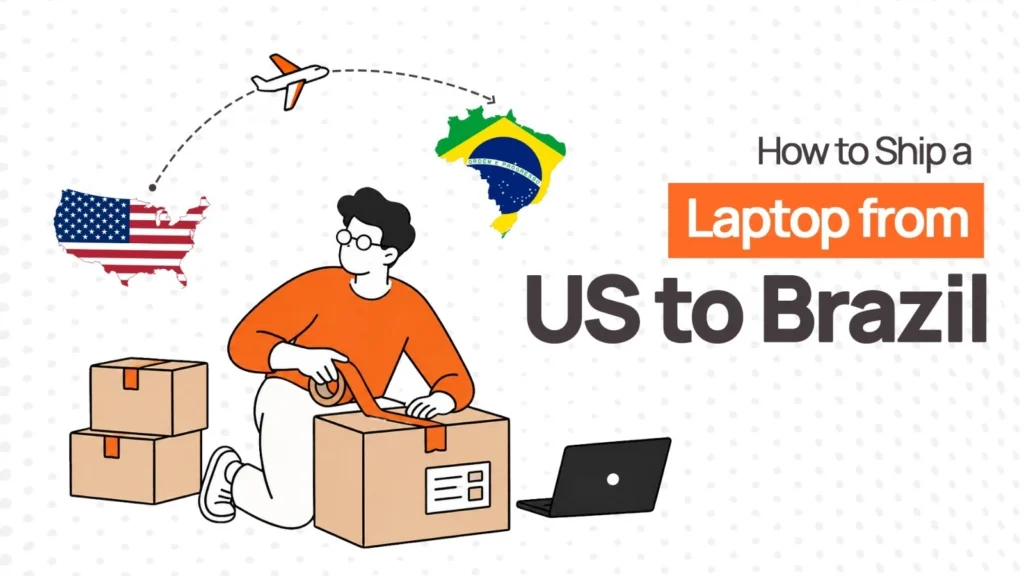
GitLab runs one of the most detailed public IT handbooks of any remote company in the world. It lists the countries it can procure and ship laptops to — dozens of them — and then a short list it can’t: Brazil, Chile, Armenia, Ukraine. Not ‘harder,’ not ‘slower.’ Cannot.
On Reddit, someone described shipping a company laptop to a new hire in Brazil as, in their words, a terrible experience: outrageous fees, the device held in customs, a tax bill that showed up months later. The top reply wasn’t a workaround. It was ‘they don’t. They buy them locally.’
That’s the actual starting point. Not ‘here’s the checklist,’ but ‘here’s why some of the most sophisticated remote-first companies in the world don’t do this the obvious way.’ The checklist matters too, and it’s below — but the decision comes first, because the number behind it is bigger than most people expect going in.
The Number That Changes the Decision
Most countries tax a laptop lightly or not at all — computing equipment carries a 0% duty rate under global trade agreements almost everywhere. Brazil doesn’t follow that pattern for courier shipments. When DHL, FedEx, or UPS carries a package to an individual in Brazil, it’s cleared under the Regime de Tributação Simplificada (RTS) — the framework Brazil’s tax authority applies specifically to courier parcels. RTS taxes the shipment’s full customs value (goods plus freight plus insurance) as one unified assessment rather than running it through the normal tariff schedule.
| Line item | Approximate amount |
| Declared customs value (laptop + freight + insurance) | $1,050 |
| Federal import tax (~60%, less small deduction) | ~$600 |
| State ICMS (~18%, on the tax-inclusive base) | ~$300 |
| Courier processing/brokerage fee | Varies by carrier |
| Approximate total tax burden | ~$900, on a $1,000 device |
Brazil has also flipped its rules on low-value parcels several times since 2023 — none of that touches laptop-value shipments either way, but it’s a useful signal of how often the underlying policy moves.
What “Buying Locally” Actually Looks Like
The Reddit answer — ‘they buy them locally’ — is simple to say and worth making concrete, because it’s not a workaround, it’s a genuinely different and often better path once you’re hiring more than one or two people in Brazil.
Major manufacturer brands sell directly into Brazil through authorized local resellers and mainstream marketplaces, with standard consumer pricing, local warranty coverage, and no customs process for the buyer at all, since the tax is already priced into the local sale. The tradeoff is real: less control over exact configuration if you need something non-standard, and it depends on having a purchasing process set up inside Brazil rather than shipping from wherever your US inventory sits. For a single hire, that setup cost isn’t worth it. For a handful of hires or more, sourcing devices locally in Brazil usually beats absorbing RTS and ICMS on every single shipment.
Before You Ship: The US Export Side
Most guides to shipping into Brazil skip what happens before the laptop even leaves the US. If the laptop’s value is over $2,500, US export regulations generally require an Electronic Export Information (EEI) filing through the Automated Export System, per the Census Bureau’s export filing rules. A standard consumer laptop is typically classified as EAR99 — the general, low-control classification for ordinary consumer electronics — meaning it can generally be exported without a license to Brazil, but the value threshold still applies regardless of classification. Your carrier or freight forwarder usually handles this filing as part of a standard commercial shipment, but it’s worth confirming they’ve done it rather than assuming, since an incomplete AES filing can hold a shipment on the US side before it even reaches Brazilian customs.
Ship It or Buy It Locally: Decide This First
| If this is true… | Do this | |
| One employee, company already owns a specific configured device | Ship it | |
| Several hires in Brazil, now or over the next year | Buy locally | |
| The device needs a very specific build or security image (single unit) | Ship it | |
| No existing relationship with a Brazilian reseller or broker | Buy locally becomes more attractive fast | |
| A laptop being redeployed from a departing employee | Ship it — but declare the honest depreciated value | |
| Doing this for the first time with no customs broker options | Buy locally, or use a provider already operating in Brazil |
This isn’t a rule — it’s what GitLab and the sysadmins on that thread landed on independently: below a certain volume threshold, shipping into Brazil’s tax regime works, mostly because a one-off cost, even a painful one, is still a one-off.
If You’re Shipping One Laptop Anyway: The Practical Process
1. Get the recipient’s CPF (or your entity’s CNPJ) before you ship
Courier clearance is filed against this tax ID. A missing or mismatched CPF is one of the most common, entirely avoidable causes of a shipment getting held at the border.
2. Confirm the AES/EEI filing is handled if the laptop’s value is over $2,500
Most carriers do this automatically for commercial shipments, but a direct confirmation is better than an assumption.
3. Wipe or configure the device, and check the battery
A swollen, damaged, or recalled battery gets refused by every major carrier, no exceptions, and no amount of correct paperwork fixes that. If you’re planning zero-touch enrollment, our pre-shipment deployment readiness checklist covers what needs to be in place before the device ships.
4. Declare the real value
If the laptop has been used, declaring it at a fair, depreciated value is accurate and lowers the tax base. Declaring a new device as used purely to cut the bill is undervaluation — exactly the kind of mismatch Brazilian customs actively watches for, with penalties that can include fines or seizure.
5. Check your carrier’s current watt-hour limit
Most laptop batteries fall well under 100Wh, which is comfortably within the range major carriers generally accept for standard air shipment. Confirm the current figure with your carrier rather than relying on any third-party guide, since limits and documentation requirements do get updated.
6. Insure the shipment
Given how much of the landed cost is tax rather than freight, losing or damaging the device mid-transit is a genuinely expensive mistake. Insurance on a shipment this valuable is a small cost against a large risk.
7. Decide who pays the tax, and when
Some couriers let you prepay duties and taxes so the bill doesn’t land on the employee’s doorstep as a surprise. Given the size of Brazil’s tax burden, prepaying is almost always the better experience for the person receiving the laptop.
8. Confirm certification status before you ship
Any laptop with Wi-Fi or Bluetooth technically falls under ANATEL’s telecom rules, but a device imported for one employee’s own use — not for resale — generally qualifies for ANATEL’s simpler ‘import for own use’ pathway, which can accept an existing foreign certification like FCC rather than requiring full local homologation.
Choosing a Shipping Method and Carrier
For one laptop, this isn’t a real question — an express courier is the only practical option. It becomes a real decision once you’re equipping a new office rather than a single hire. Express courier handles small volumes fastest and folds customs clearance into the service. Air freight makes sense for a mid-sized batch where you want speed without paying courier rates on every unit. Sea freight is meaningfully cheaper per unit for a large batch, but several weeks slower — worth considering if you’re setting up an office that won’t be staffed for a few weeks anyway.
| Carrier | Notes for Brazil specifically |
| DHL | Established RTS handling in Brazil; confirm current fees for your account type |
| FedEx | Strong tracking and documentation tools; business accounts tend to clear more predictably than retail-style shipments |
| UPS | Broad footprint; pricing and transit vary by origin and destination state |
| Correios (Brazil Post) | Cheaper, slower, and less predictable for high-value electronics than a private courier |
There’s a registered alternative to all of this: a company with a Brazilian legal entity (CNPJ) can run a formal import through a licensed customs broker instead of the courier route, using the standard tariff stack (import duty, IPI, PIS/COFINS, ICMS) rather than the flat 60% RTS rate, and potentially claiming preferential treatment under trade agreements like Mercosur depending on the laptop’s country of origin.
When Customs Holds Your Shipment
Deciding who owns each of these scenarios before you ship is what actually prevents a customs hold from turning into a weeks-long onboarding delay.
| Situation | Who should own it |
| CPF/CNPJ mismatch or missing | Sender/IT team — confirmed before shipping |
| Declared value questioned | Sender/IT team |
| ANATEL or certification documentation requested | Sender/IT team — have the FCC or equivalent certification ready in advance |
| Employee unavailable to receive or sign for delivery | HR/People ops — coordinate the delivery window ahead of time |
| Duties/taxes unpaid at the point of delivery | Depends on whether you prepaid — decide this before shipping, not after a bill shows up |
| Shipment returned to sender | Sender/IT team — treat as a new attempt with corrected documentation |
What Happens After: Retrieval, Data, and Disposal
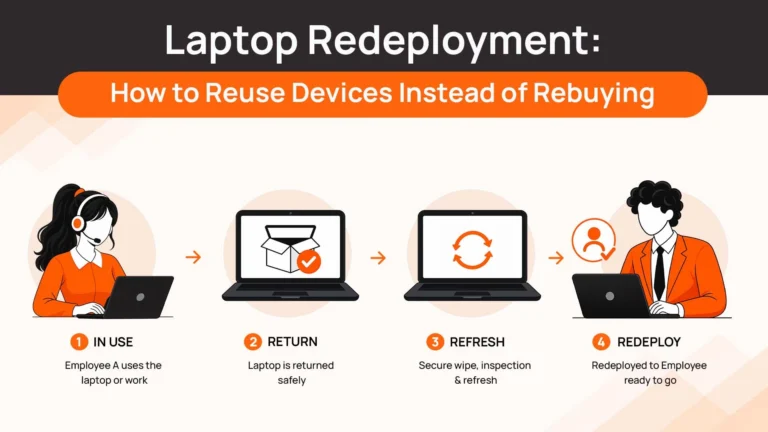
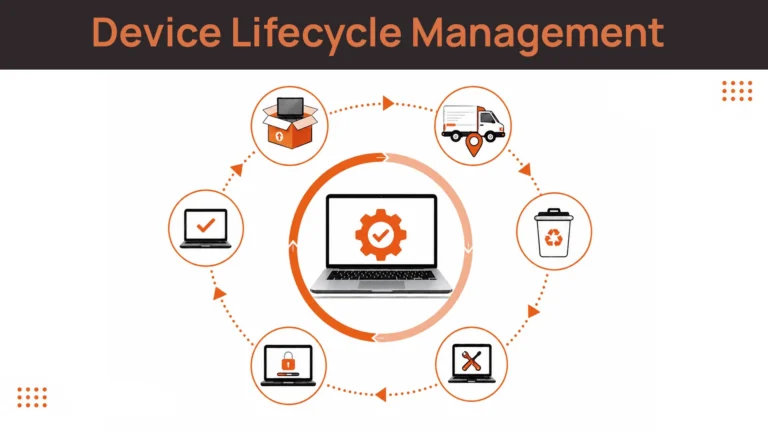
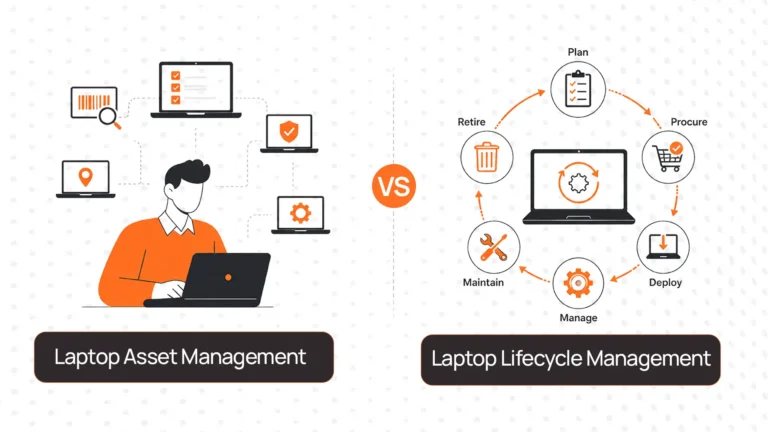
Getting the laptop into Brazil is only the first half of its life there. Brazil has its own e-waste and extended-producer-responsibility framework for electronics, worth being aware of if a device is ever retired rather than reassigned. More immediately: when the employee who received that laptop eventually leaves, the same customs math applies in reverse if you try to ship it back to the US. In practice, most companies either redeploy the device to the next hire in Brazil, store it locally, or handle secure data wiping and local resale or disposal rather than paying to ship a depreciated asset back through the same tax stack it came through.
One Laptop Now, a Hundred Later
The math above is why ‘just ship it’ stops being the right answer once hiring in Brazil becomes a pattern rather than a one-off. GitLab’s list and that Reddit thread both point at the same underlying fact: the cost and friction of Brazil’s import regime scale with volume, and at some point sourcing locally wins outright — not as a compromise but as the genuinely cheaper and faster option. Remoasset is built around this lifecycle: procurement, delivery, retrieval, and coordination handled inside each country rather than shipped across a border every time. If you’re sending one laptop, the process above should get you there. If Brazil is turning into a real hiring market, that’s the point where the math stops favoring shipping — and it’s worth having that conversation before the third or fourth hire, not after. Book a demo to see how local procurement and retrieval in Brazil are handled as one lifecycle rather than a series of individual customs decisions.
Frequently Asked Questions
Can I ship a laptop from the US to Brazil?
Yes, but expect meaningful tax exposure, not a minor customs fee. Courier shipments clear under Brazil’s simplified regime, which taxes the full value of the shipment — not a token amount.
How much does it cost to ship a laptop to Brazil?
There’s no fixed figure. Current guidance points to a 60% federal import tax on shipments above roughly $50, plus state ICMS of 17–20% stacked on top, in addition to freight. On a $1,000 device, tax alone can approach the value of the laptop itself.
Do I need to file anything with US export authorities before shipping?
If the laptop’s declared value is over $2,500, US rules generally require an Electronic Export Information filing through AES. Standard consumer laptops are typically classified EAR99, which usually doesn’t require a license, but the filing requirement is separate from licensing and still applies above that value.
Why doesn’t GitLab ship laptops to Brazil?
GitLab’s public IT handbook lists Brazil among a small number of countries it currently cannot procure or ship laptops to, without stating a specific reason in the document itself. It sits alongside other countries known for import complexity, and is consistent with the cost math covered in this article.
Does ANATEL apply to a personal laptop shipment?
Technically, yes — since laptops use Wi-Fi or Bluetooth. In practice, a device imported for one employee’s own use generally qualifies for a simpler ‘own use’ pathway rather than full commercial certification.