Global laptop procurement is the process of sourcing, configuring, and delivering laptops to employees across multiple countries. After that comes tracking, supporting, and eventually retrieving those devices throughout their working life. For mature enterprise teams, it’s an operations problem that touches IT, procurement, finance, and HR at the same time.
Buying laptops for employees in a dozen countries means managing different suppliers, import rules, delivery timelines, and configuration standards. Doing it consistently across locations means a new hire in one country has the same onboarding experience as one anywhere else.
This checklist walks through the twelve stages that make global procurement repeatable. It’s written for IT managers, procurement leads, and operations teams who are past the point of handling this manually and need a process that scales with their growth.
Why Global Laptop Procurement Is Complex for Enterprise Teams
Here are some of the factors that make global procurement more complex:
- Multiple suppliers and regional availability: Not every vendor operates in every market. Product availability, pricing, and lead times can vary significantly by region.
- Shipping and customs: International shipments may face customs clearance, import duties, and delivery delays that can affect employee onboarding timelines.
- Fixed onboarding schedules: New hires usually start on a specific date. Procurement delays can leave employees waiting for their devices and reduce productivity from day one.
- Asset visibility after delivery: Procurement doesn’t end when a laptop ships. Organizations need to know who has the device, where it’s located, and what stage of its lifecycle it’s in.
- Supporting remote and distributed teams: Without a central office, laptops must be delivered, supported, repaired, and retrieved across multiple locations.
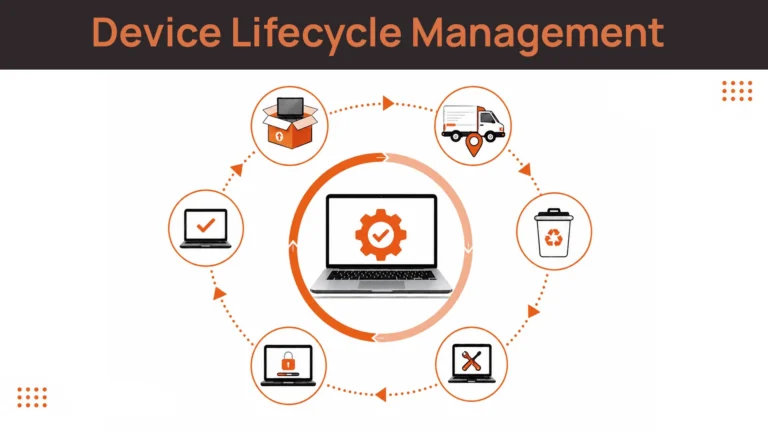
- Lifecycle management: Devices eventually need repairs, reassignment, retrieval, or replacement. Keeping procurement records connected to the rest of the device lifecycle helps maintain accurate asset data.
Global laptop procurement, for companies at this stage, requires a process that keeps all the different teams like finance, HR and ops aligned and connected from start to finish.
The Complete Global Laptop Procurement Checklist
The following steps cover procurement from initial planning through retrieval and reuse. Skipping any one of them tends to create a gap that shows up later, usually at offboarding, when it might be too late to fix it.
1. Define hardware requirements by employee role
Start by grouping employees into a small number of hardware personas like engineering, sales, finance, general office rather than approving requests case by case.
Standardized personas cut procurement decisions down to a handful of pre-approved configurations. Engineering gets a higher-spec machine built for development tools. Sales gets something lightweight for travel. Finance gets a build with stricter security defaults.
This also simplifies budgeting. Instead of pricing out one-off requests, procurement can forecast cost per hire based on role mix.
2. Standardize laptop models where practical
Reducing the number of laptop models in circulation makes everything easier later. Support teams only need to know a handful of configurations instead of dozens. Replacement parts and loaner units are easier to stock. Lifecycle planning knowing when a model needs a refresh applies to a fleet, not a patchwork of individual devices.
- Choose suppliers with regional or global coverage
Supplier availability is a major factor which decides how fast the device actually reaches an employee. A supplier with strong coverage in one region may have no presence in another. This can force enterprise teams like yours to manage a separate vendor relationship for every new location.
That adds contracts, invoices, and support contacts to track and makes it harder to have a standard setup for everyone. Suppliers with broader regional or global reach reduce that fragmentation. Fewer vendor relationships means fewer places for the process to break.
4. Verify stock availability and lead times
Lead times vary by model, region, and time of year. Confirming stock before a hiring push avoids the scramble that happens when five new hires start the same week and no laptops are in stock. Keeping a small buffer of ready-to-ship units for urgent hires or device failures is usually cheaper than the cost of a delayed onboarding and reduced productivity.
5. Plan shipping, customs, and local delivery
Once a laptop is ordered, the priority shifts to how well you can see where each device is and in what condition. Cross-border shipments add customs processing, which can hold a device for days without warning.
Teams that only find out about a delay when an employee asks where their laptop is are always managing procurement reactively.
6. Prepare devices before employees receive them
A laptop should never arrive as a blank machine that still needs setup. Configuration should happen before it ships. That includes the operating system, standard software, and security policies for the employee’s role.
MDM enrollment belongs to this stage too. Devices enrolled through Windows Autopilot or Apple Business Manager before shipping let employees sign in and start working without IT walking them through setup remotely.
7. Connect procurement with asset tracking
The moment a laptop is purchased, it should enter an asset record not after it’s been in use for months. That record should capture the serial number, assigned employee, location, and current lifecycle status from day one. Procurement and asset tracking are often run as separate processes, which creates a communication gap on which devices exist in a purchase order but not yet in any tracking system.
8. Confirm delivery and employee handover
Shipping confirmation should not be taken as a delivery confirmation, and delivery isn’t the same as the employee actually having a working machine.
A clean handover process confirms three things: the device arrived, the employee received it, and the asset record was updated to reflect the assignment. Missing any one of these leaves a record that doesn’t match reality.
9. Plan for repairs and ongoing support
Devices fail during their working life, and that’s normal. As a mature team, you need to have policies for support and repairs ready with fixed defined scope. Warranty terms, repair turnaround, and loaner device availability should be considered before a device ships.
10. Build retrieval into procurement planning
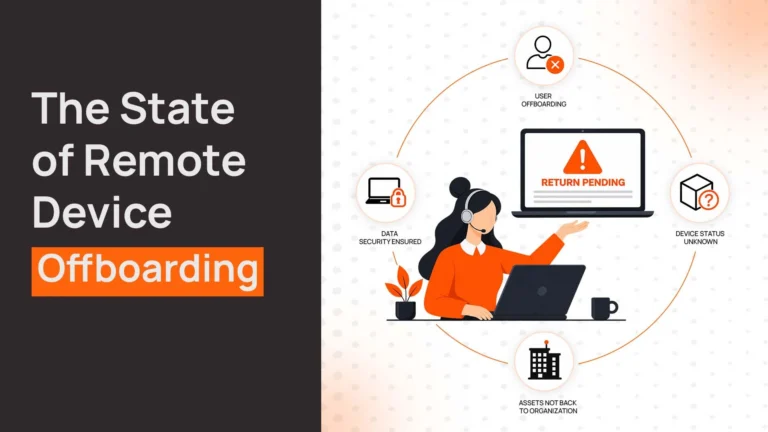
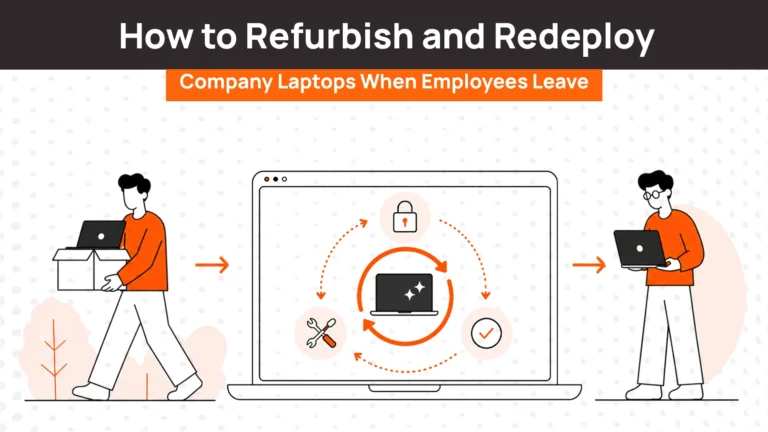
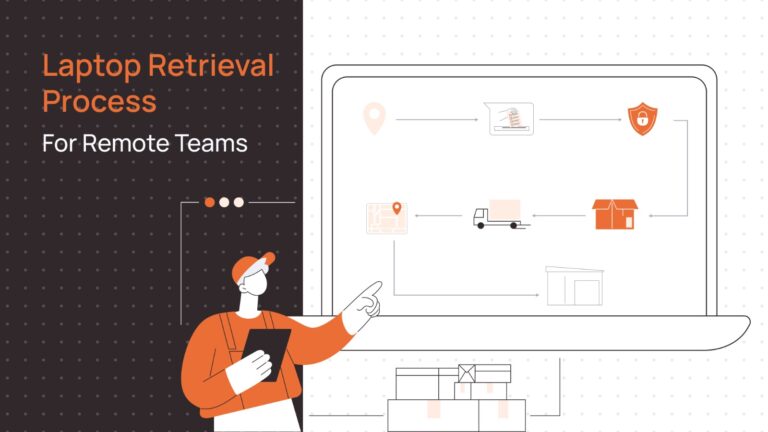
Laptop Retrieval is where most procurement processes fall apart, mainly because it’s treated as an afterthought instead of part of the plan. Every laptop procured will eventually need to come back through offboarding, a refresh cycle, or role change.
Building retrieval logistics into the procurement process from the start a defined path for getting a device back, wherever the employee is located turns offboarding from a recurring problem into a routine step.
11. Include security and compliance requirements
Every device should ship with encryption enabled, MDM enrollment active, and a documented configuration baseline. These aren’t optional add-ons for regulated industries; they’re baseline expectations for any distributed fleet of devices.
At the other end of the lifecycle, secure data wiping needs to be standard with strict policies following the geographical area’s needs.
12. Measure procurement performance
Procurement should be measured the same way any operational process is: against defined metrics, tracked over time.
Useful KPIs include:
- Delivery SLA: time from order to device in hand
- Deployment time: time from delivery to employee productive on the device
- Procurement cost per device: including shipping and customs, not just hardware price
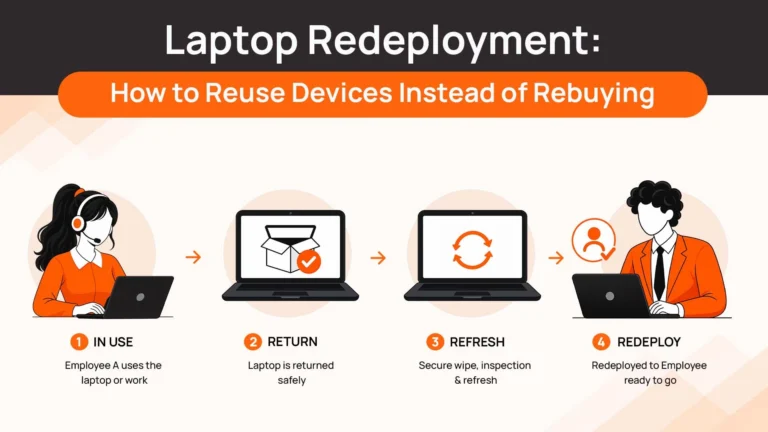
- Redeployment rate: percentage of returned devices reused instead of replaced
- Recovery rate: percentage of devices successfully retrieved at offboarding
Without these numbers, procurement decisions tend to be based on anecdotes of the one bad shipping experience everyone remembers rather than actual performance.
Related Reads –
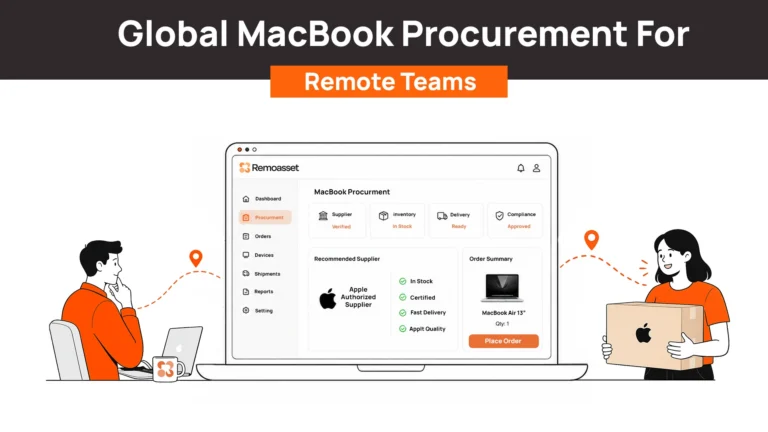
- Global Macbook Procurement for Remote Teams
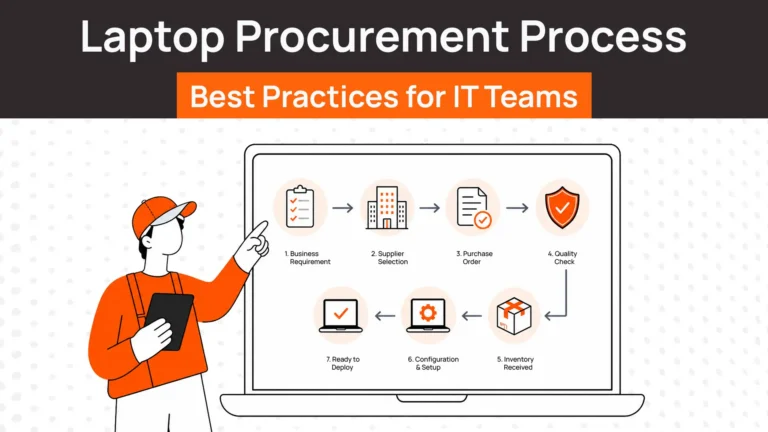
- Laptop Procurement Process
- Device Procurement Best Practices
- Warranty Coverage Across Borders
Common Global Laptop Procurement Mistakes
Most procurement problems trace back to a handful of recurring gaps. Here’s where they show up even for enterprise IT teams:
1. Buying without standardization
Every request gets approved individually, resulting in dozens of laptop models for your team. Support becomes harder, replacement parts are inconsistent, and lifecycle planning has no common baseline to work from. Not to mention, you need to have proper rules for service and repair for each of these models.
Set a small number of approved configurations per role and use them as the default path, with exceptions requiring sign-off.
2. Ignoring retrieval
Procurement planning stops at delivery, with no defined process for getting devices back. Offboarding becomes reactive, devices go missing, and data security risk increases with every laptop that’s never recovered.
Define the retrieval path, who initiates it, how the device gets picked up, where it goes at the same time procurement is set up, not after the first departure.
3. No procurement visibility
Orders, shipments, and deployments are tracked across email threads and vendor portals instead of one system. Nobody has a single view of what’s ordered, in transit, delivered, or overdue.
Centralize procurement status in one place that procurement, IT, and HR can all check without asking each other.
4. No ownership records
Devices are purchased and shipped, but asset records lag behind sometimes by months. Audits take longer, lost devices are harder to trace, and finance can’t reliably report on hardware assets.
Tie asset record creation to the purchase order, so a device exists in the tracking system before it ever ships.
5. Using spreadsheets
Procurement and asset data live in spreadsheets. Spreadsheets don’t scale past beyond 20-25 devices, and manual updates aren’t worth the hassle when something has broken down.
Move to a system that updates automatically as devices move through delivery, assignment, and retrieval.
6. No lifecycle planning
Devices are purchased with no plan for refresh cycles, repairs, or eventual retirement. Hardware ages unevenly across the fleet, and refresh decisions get made device by device instead of on a predictable schedule.
Set a standard refresh interval per hardware persona and plan procurement volume around it in advance.
7. Procurement disconnected from HR
IT finds out about a new hire’s start date the same week the laptop is needed. There’s no lead time to source, configure, and ship the device, which forces rush orders and inconsistent onboarding.
Connect procurement triggers to HR systems so device ordering starts as soon as a start date is confirmed, not after.
Global Laptop Procurement Checklist Template
| Stage | Checklist Item | Owner | Purpose |
| Planning | Hardware personas defined by role | IT | Reduce ad hoc purchasing decisions |
| Planning | Approved laptop models per region confirmed | Procurement | Support standardization |
| Sourcing | Suppliers evaluated for regional/global coverage | Procurement | Avoid fragmented vendor relationships |
| Sourcing | Stock and lead times confirmed against hiring plan | Procurement | Prevent onboarding delays |
| Logistics | Shipping and customs process documented | IT Ops | Maintain delivery visibility |
| Configuration | Devices imaged and MDM-enrolled pre-ship | IT | Reduce setup time on arrival |
| Configuration | Accessories included per role standard | Procurement | Ensure employee is fully equipped |
| Tracking | Asset record created at purchase | IT | Establish ownership from day one |
| Delivery | Delivery and handover confirmed | IT Ops | Verify device reached employee working |
| Support | Warranty and repair process defined | IT | Reduce downtime from device issues |
| Retrieval | Retrieval process defined for offboarding | IT/HR | Recover devices reliably |
| Security | Encryption, wipe, and compliance checks documented | Security | Protect data across lifecycle |
| Reporting | KPIs tracked (SLA, cost, redeployment, recovery) | IT Ops | Measure and improve process over time |
How Remoasset Simplifies Global Laptop Procurement
Global laptop procurement doesn’t end when a device is ordered. IT teams still need to manage delivery, setup, tracking, maintenance, retrieval, and redeployment. When these activities are handled by different vendors or systems, visibility gaps and manual work quickly follow.
Remoasset connects procurement with the rest of the device lifecycle. Laptops can be sourced globally, configured and enrolled in MDM before delivery, then tracked through assignment, maintenance, retrieval, storage, secure data wiping, and redeployment from a single platform.
Instead of treating procurement and lifecycle management as separate processes, Remoasset keeps every stage connected. Get your IT teams a complete view of each device from purchase through redeployment.
Frequently Asked Questions
What is global laptop procurement?
Global laptop procurement is the process of sourcing, purchasing, and delivering laptops to employees across multiple countries, accounting for regional suppliers, customs, delivery timelines, and configuration standards that vary by location.
How is laptop procurement different from provisioning?
Procurement covers sourcing and purchasing the hardware. Provisioning covers configuring its operating system, software, MDM enrollment, security policies before or immediately after it reaches the employee. Procurement without provisioning delivers a laptop that still needs setup.
How do companies procure laptops for remote employees?
Most companies work with suppliers that can ship directly to an employee’s location, pre-configure the device before shipping, and enroll it in MDM so the employee can start working without visiting an office or IT desk.
What should a laptop procurement checklist include?
At minimum: hardware standards by role, supplier coverage, stock and lead time verification, shipping visibility, pre-ship configuration, asset tracking integration, delivery confirmation, support planning, retrieval planning, and security compliance checks.
What challenges affect global procurement?
The most common are inconsistent supplier coverage across countries, customs delays, lack of visibility into shipment status, and asset records that fall out of sync with what’s actually been delivered and assigned.