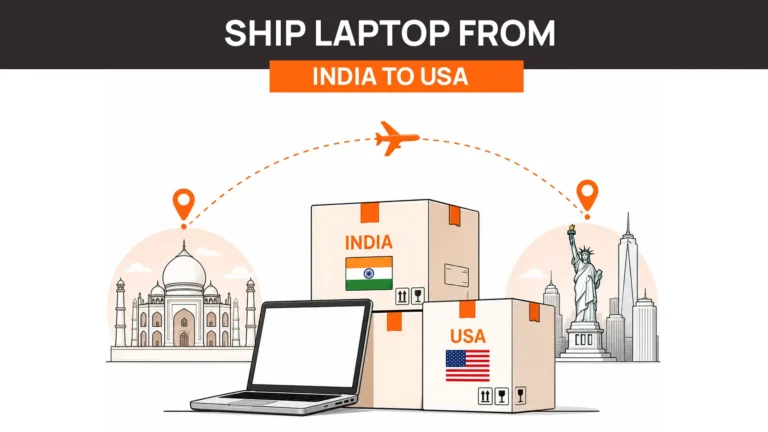
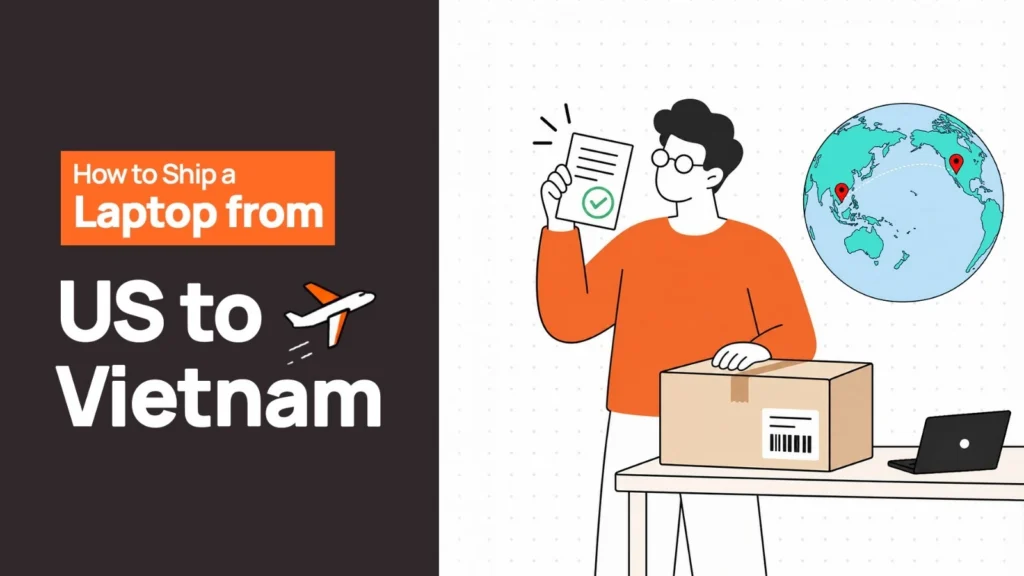
Until early 2025, there was a workaround everyone used for small shipments into Vietnam: keep the declared value low enough and customs waived it through duty-free. That low-value exemption is gone. Vietnam abolished it in its 2025 customs reforms, and DHL’s own market guidance confirms nearly every shipment now goes through duty and VAT assessment regardless of value.
Taxes aren’t the main problem when you ship a laptop from the US to Vietnam. Laptops carry a 0% import duty, and VAT sits at a manageable 8–10%. The actual friction is elsewhere — in a wireless-device certification requirement most guides either skip or overstate, and in getting the importer’s tax ID right the first time. Get those two things right, and shipping a laptop into Vietnam is one of the more manageable versions of this problem. Get them wrong, and the laptop sits in customs while nothing about the tax bill was ever the issue.
Duty and Paperwork for Shipping Laptops to Vietnam from the US
Laptops fall under HS code 8471.30, and multiple current sources — including carrier-published duty guidance for Vietnam — agree they’re duty-free entering Vietnam. VAT applies on top, currently 8% as part of a temporary reduction through the end of 2026 (reverting to the standard 10% after that unless extended), calculated on the CIF value — goods plus insurance plus freight. On a $1,000 laptop, that’s roughly $80–100 in tax, nowhere near what some other countries in this region charge for the same shipment.
The wireless certification question
Vietnam’s Ministry of Information and Communications regulates wireless devices under its Group 2 goods list, and a laptop with Wi-Fi or Bluetooth technically falls under that list. Full compliance means Type Approval testing and a conformity certificate — a real process meant for companies importing laptops to sell in Vietnam. For a single laptop imported for one employee’s own use, MIC’s Circular 02/2024/TT-BTTTT provides an exemption from that certification for self-use importing lots of up to three wireless devices, explicitly naming laptops as one of the covered product types. That’s the detail that makes ‘ship one laptop to one employee’ a fundamentally different case than ‘import laptops to distribute in Vietnam,’ and it’s worth having that distinction ready if customs asks.
Wi-Fi 6E and Wi-Fi 7: an extra check for newer laptops
Vietnam doesn’t yet have technical standards covering Wi-Fi 6E or Wi-Fi 7. Guidance on importing newer laptops recommends disabling those specific wireless standards before shipping if the device supports them, since there’s no regulatory pathway to certify them yet, even under the self-use exemption.
Getting the Tax ID Right
FedEx’s own Vietnam import clearance guidelines are direct about this: the importer must have a tax ID registered in Vietnam’s customs system (VNACCS) before the shipment arrives, and the importer’s name on the invoice has to exactly match the registered ID — no abbreviations, no spelling variants. An individual can register a personal tax code for this purpose, but it has to be sorted out before the shipment ships, not after it lands. Mismatched importer details are one of the most common, entirely avoidable reasons a shipment gets held.
Ship It or Buy It Locally: Decide This First
| If this is true… | Do this |
| One employee, company already owns a specific configured device | Ship it — Vietnam’s tax and duty load is manageable |
| Several hires in Vietnam, now or over time | Worth comparing against local purchase — Vietnam has a strong local electronics retail market |
| Laptop has Wi-Fi 6E or Wi-Fi 7 | Confirm whether to disable those bands before shipping |
| Recipient has no Vietnam tax ID registered in VNACCS yet | Sort this before shipping, not after |
| A laptop being redeployed from a previous hire | Ship it — declare the honest depreciated value |
Vietnam’s own electronics manufacturing base — Samsung, LG, and others run major operations there — means local laptop retail availability is genuinely good in the major cities. For a single already-owned device, Vietnam’s low duty and moderate VAT mean shipping is a reasonable default. This isn’t a market where shipping is the expensive option by default.
The Practical Process of Shipping a Laptop from the US to Vietnam
Shipping one laptop to Vietnam is manageable. The challenge starts when an IT team has to repeat the process across dozens of employees, while keeping tax documentation, device configuration, delivery, and asset records straight.
Step 1: Register the recipient’s Vietnam tax ID
Confirm the exact name match between the commercial invoice and the registered tax ID. A mismatch can turn a routine delivery into a customs hold.
Step 2: Check the laptop’s wireless specifications
If the device supports Wi-Fi 6E or Wi-Fi 7, verify the current MIC requirements before shipping and confirm whether any bands need to be disabled.
Step 3: Prepare the self-use documentation
For eligible employee-use shipments, have the necessary documentation ready to support the applicable MIC exemption rather than discovering a compliance issue after the laptop reaches customs.
Step 4: Configure and inspect the laptop
Wipe or configure the device, check the battery condition, and make sure the laptop is ready for the employee to use. A damaged or swollen battery can prevent a carrier from accepting the shipment.
Step 5: Declare the actual device value
With Vietnam’s low-value exemption no longer available, underdeclaring the laptop creates more risk than benefit. Use the appropriate value for new or redeployed equipment and keep the supporting documentation.
Step 6: Package the laptop correctly
Keep the battery installed in the laptop, use adequate cushioning, and follow the carrier’s packaging requirements for lithium-ion batteries.
Step 7: Decide how VAT and import charges will be handled
With Delivered Duty Paid (DDP), applicable charges are settled as part of the shipment rather than leaving the employee to deal with them on delivery.
Step 8: Track the shipment and resolve documentation issues quickly
Most avoidable delays come from incomplete or inconsistent documentation, so someone needs to own the shipment from dispatch through delivery.
Where This Gets Difficult for Distributed IT Teams
The problem with this process isn’t any individual step. It’s having to repeat all eight of them every time a remote employee joins the company.
A team hiring one employee in Vietnam can manage an international shipment manually. A team hiring 20, 50, or 100 employees across Vietnam now has to coordinate suppliers, customs documentation, employee addresses, delivery, device configuration, MDM enrollment, invoices, and eventually the return of those same devices when employees leave. That’s the operational gap local procurement and retrieval in Vietnam is designed to solve — sourcing from a Ho Chi Minh City hub, delivering pre-configured devices to employees across Vietnam, with pre-enrollment in Jamf, Intune, Kandji, Apple Business Manager, or Windows Autopilot before the device reaches the employee.
That matters because the real problem isn’t just getting a laptop into Vietnam. It’s getting the right laptop to the right employee, configured correctly, while keeping the device inside the company’s lifecycle process.
Picking a Carrier
The major express carriers can all handle laptop shipments to Vietnam, but the practical difference is how much clearance support and documentation guidance you want around the shipment.
| Carrier / Option | What to know for Vietnam |
| DHL | Established Vietnam operations and publishes guidance on import duties, taxes, and customs requirements. A practical option for teams handling recurring international shipments. |
| FedEx | Provides detailed Vietnam-specific import clearance guidance, including requirements around the importer and tax documentation. Worth reviewing before a first shipment. |
| UPS | Broad international express network with standard customs-clearance support for shipments into Vietnam. |
| Remoasset | Can source laptops locally in Vietnam, deliver them to employee addresses, and handle the device through procurement, deployment, retrieval, and redeployment — removing the need to ship cross-border entirely. |
| Main gateways | Ho Chi Minh City (SGN), Hanoi (HAN), and Da Nang (DAD) are the main air gateways for international shipments into Vietnam. |
When Customs Holds Your Shipment
Even with the right carrier, customs issues usually require someone on the company’s side to resolve the underlying documentation or delivery problem. Deciding who owns each of these before you ship prevents a customs hold from turning into an onboarding delay.
| Situation | Who should own it |
| Tax ID mismatch or missing | Sender/IT team — verify the recipient’s registered details before shipping |
| MIC self-use exemption documentation requested | Sender/IT team — have the required compliance documentation ready |
| Declared value questioned | Sender/IT team — provide the invoice and supporting valuation documents |
| Employee unavailable for delivery | HR/People Ops — coordinate an alternative delivery time or address |
| VAT unpaid at delivery | Depends on agreed shipping terms — decide whether charges will be prepaid or collected before dispatch |
What Happens After the Laptop Arrives
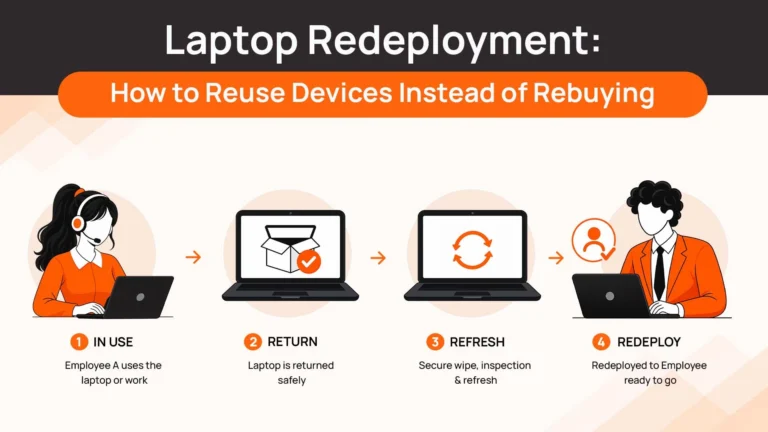
Getting the laptop to the employee is only the first part of its lifecycle. When the employee leaves, the company still has to decide what happens to the device. If the laptop is being returned to the US, another international shipment means another round of customs requirements. For devices staying in Vietnam, the alternatives include redeploying the laptop to another employee, storing it locally for a future hire, or securely wiping and retiring it according to the company’s asset-disposal process.
For distributed teams, planning this second stage matters just as much as the initial shipment. A laptop that can be recovered and reassigned locally can avoid unnecessary international shipping, reduce downtime for the next employee, and keep the company’s hardware inventory more useful over time.
Related Reads
If this shipment is part of a broader device procurement or lifecycle conversation, these guides cover the surrounding decisions:
- Laptop Sourcing: Ship, Source Locally, or Use a Stipend? — when local sourcing removes the need for a cross-border shipment to Vietnam entirely.
- Why You Shouldn’t Ship Laptops Internationally for Regular Procurement — the operational and cost case for local sourcing as the default.
- Remote Employee Laptop Return: A Guide for IT Teams — the reverse journey: recovering a laptop from an employee in Vietnam.
- Best International Laptop Retrieval Services for Remote Teams — providers that manage cross-border device recovery as a service.
When Shipping from the US Stops Making Sense
Shipping a single laptop from the US to Vietnam is manageable when the documentation is in order. The calculation changes when Vietnam becomes a recurring hiring market. At that point, the challenge is repeatedly coordinating tax IDs, customs paperwork, wireless-device requirements, employee delivery, and everything that happens to the laptop after it arrives. For companies hiring regularly in Vietnam, Remoasset can handle local laptop procurement and retrieval — devices sourced in-country, delivered to employees, and returned for secure wiping and redeployment when they leave — removing the cross-border work from each hire entirely. Book a demo to see how recurring Vietnam hiring is handled as one lifecycle rather than a series of individual shipments.
Frequently Asked Questions
Can I ship a laptop from the US to Vietnam?
Yes. Laptops are duty-free under Vietnam’s tariff schedule, and a single laptop for an employee’s own use generally qualifies for a wireless-certification exemption rather than full Type Approval testing.
How much does it cost to ship a laptop to Vietnam?
Duty is 0%. VAT is currently 8% (through the end of 2026, then reverting to 10% unless extended), calculated on the shipment’s CIF value. There’s no low-value exemption — Vietnam removed it in 2025 — so this applies regardless of the laptop’s price.
Does a laptop need MIC certification to enter Vietnam?
Technically it falls under MIC’s regulated wireless-device list, but a single laptop imported for one employee’s own use generally qualifies for the self-use exemption under Circular 02/2024/TT-BTTTT, which covers up to three wireless devices per shipment without requiring full Type Approval testing.
Do I need a trading license to ship a laptop to an employee in Vietnam?
No. That’s a requirement for commercial import operations. A personal-use shipment needs the recipient’s tax ID registered in Vietnam’s VNACCS customs system, not a business trading licence.
Should I ship a laptop or buy one locally in Vietnam?
For a single device, shipping is reasonable given the low duty and moderate VAT. For recurring hiring, local purchase is worth comparing seriously — Vietnam’s own electronics manufacturing base means local retail availability is genuinely strong in the major cities.