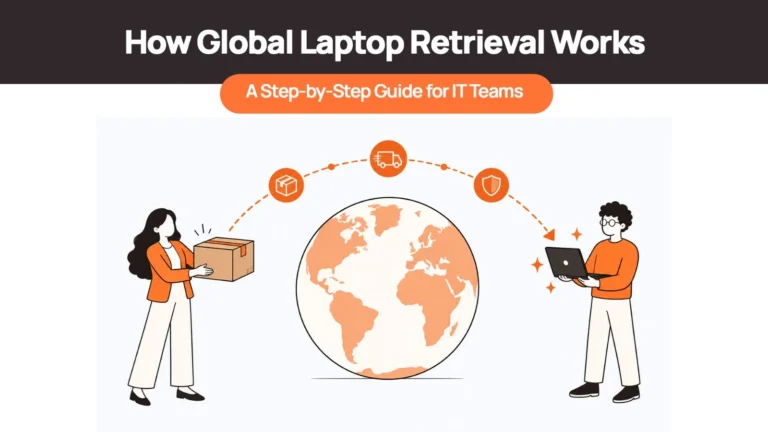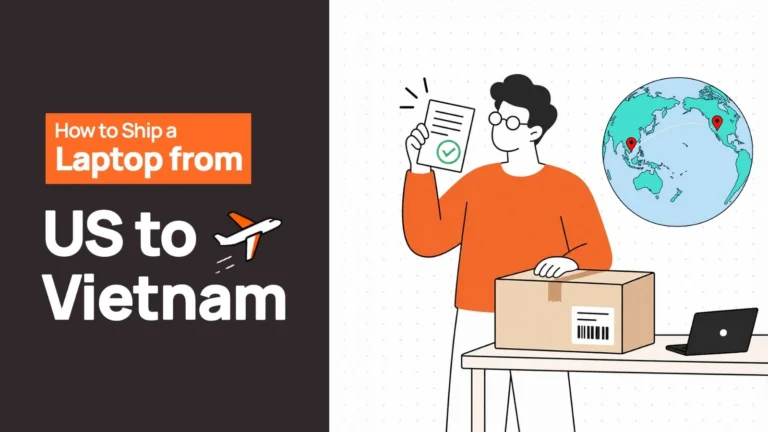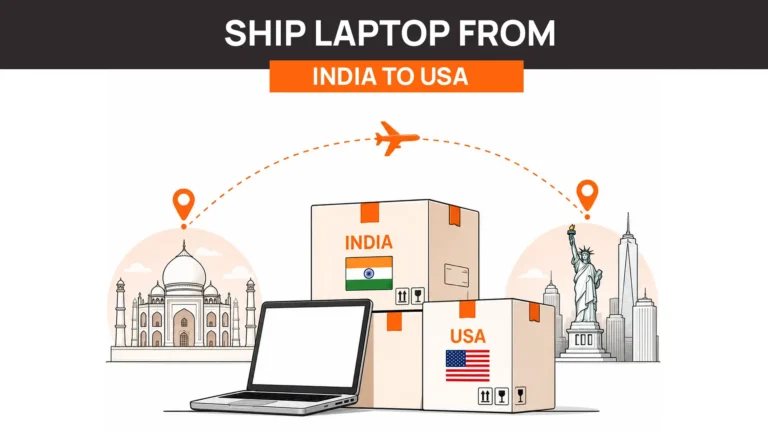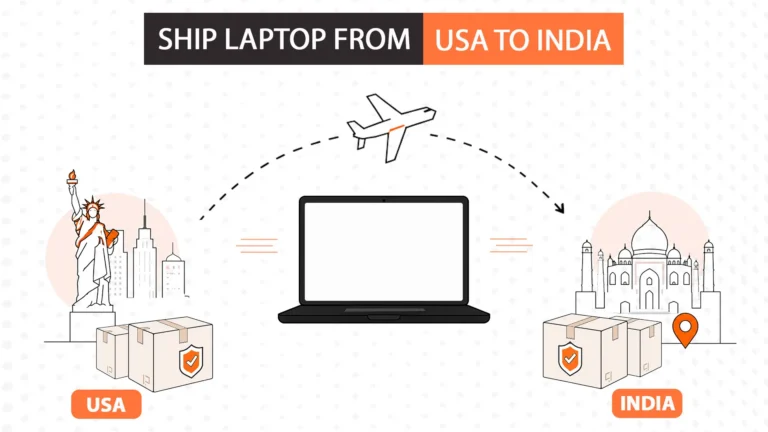

Shipping a laptop to another country sounds straightforward until the shipment gets rejected, held at customs, or returned to the sender. The laptop itself is rarely the complicated part. The difficulty usually comes from everything surrounding it: the lithium-ion battery inside the device, customs documentation, the declared value, import duties, packaging requirements, and deciding who is responsible for customs clearance when the shipment reaches its destination.
This often comes up unexpectedly. An employee’s laptop fails while they are working abroad. A contractor needs equipment before starting a project. A replacement device has to reach someone in another country. A company needs to send a specific machine internationally rather than source a replacement locally.
For a one-off shipment like these, international shipping can be perfectly workable. This guide covers the battery rules, documentation, duties, and packaging steps to get it right. For ongoing employee hardware procurement, international shipping should not automatically be the default — local sourcing removes most of this complexity for the majority of hires. This guide is for the cases where you genuinely need to ship the laptop across a border.
1. Check the Laptop Battery Before You Do Anything Else
The first question is not the destination country. It is the battery. Most modern laptops contain lithium-ion batteries, which are regulated for air transport because of the risks associated with lithium in transportation. The exact requirements depend on whether the battery is installed in the equipment or shipped separately, its watt-hour rating, and the applicable transport classification.
Where to find the watt-hour rating
The battery specification may be printed directly on the battery, included in the laptop’s technical documentation, or available from the manufacturer. If the battery lists voltage and amp-hours rather than watt-hours, the calculation is: Wh = V × Ah. A 15.2V battery rated at 4.5Ah would have a nominal energy rating of approximately 68.4 Wh. Use the manufacturer’s stated rating where available rather than relying on an estimate.
A common threshold is 100 Wh — but that should not be interpreted as meaning every battery below 100 Wh can be shipped without restrictions. IATA’s guidance distinguishes lithium-ion batteries contained in equipment from batteries packed with equipment and applies different packing instructions and quantity limits to each.
The installed battery and spare batteries are treated differently
A laptop with its battery installed is treated differently from a loose or spare lithium-ion battery. Spare batteries can be subject to more restrictive requirements than batteries installed in equipment. If you are sending a laptop and an extra replacement battery in the same box, do not assume the rules for the laptop automatically cover the spare battery. Check the carrier’s current dangerous-goods requirements before shipping.
Carrier requirements can be stricter than the general rules
Check the battery → identify the shipment classification → check the carrier → then prepare the package. Even when a shipment is technically permitted under applicable transport rules, the carrier may have its own acceptance conditions, packaging standards, quantity limits, labeling requirements, or service restrictions. Do not rely on a generic lithium-battery checklist for every carrier and route.
2. Prepare the Customs Documentation
Once the battery requirements are understood, the next major issue is customs. A laptop crossing an international border needs enough information for customs authorities and the carrier to understand what the shipment is, what it is worth, where it originated, and why it is being imported. For a business shipment, that normally means preparing a commercial invoice and any other documents required for the specific destination and shipment type.
Describe the laptop accurately
Avoid vague descriptions such as ‘Electronics’ or ‘Computer equipment.’ A more useful description identifies what is actually being shipped: “Laptop computer with lithium-ion battery installed.” The goal is to make the contents clear enough that the shipment does not create unnecessary questions during customs review.
Declare the correct value and state the purpose clearly
The declared value should accurately represent the value required for customs purposes. The fact that the company is not selling the laptop to the employee does not mean the customs declaration can say $0. Companies often ship employee equipment, warranty replacements, temporary-use devices, or replacement equipment for contractors — each of these has its own correct customs treatment. Provide a description that makes the business purpose understandable: ‘Company-owned laptop being shipped to employee for business use’ or ‘Warranty replacement laptop; replacement for previously supplied device.’ Specific descriptions give customs authorities more context than generic language.
3. Get the Country of Origin and Tariff Classification Right
Customs authorities use tariff classification systems to determine how imported goods should be treated. For laptops, this generally means providing the appropriate HS code or tariff classification for the device. Do not copy a code from an old shipment without checking that it applies to the actual product and destination — the classification can affect duties, taxes, customs processing, and reporting requirements.
You may also need to provide the laptop’s country of origin, which is not necessarily the country from which you are shipping it. A laptop purchased in Germany could have been manufactured in another country. The relevant origin information should come from the product documentation or supplier rather than being guessed from the shipping location. If your organization regularly ships hardware internationally, maintaining standardized product information for common laptop models can reduce repeated customs errors.
4. Record the Serial Number Before It Leaves
The laptop’s serial number is not simply an IT asset-management detail. For international shipments, it becomes part of the device’s history — connecting the device to the employee, the asset to the shipping record, the shipment to the customs documentation, and the returned device to the original asset. This becomes especially useful when the laptop is temporarily exported and later needs to return: instead of asking ‘is this the same company-owned laptop that left the country six months ago?’, the organization has an identifiable asset record. For companies managing distributed teams, that connection between procurement, logistics, and asset visibility can be just as important as the physical shipment itself.
5. Decide Who Pays the Duties and Taxes
One of the easiest ways to create a customs problem is to assume that the person receiving the laptop will automatically know what to do when import charges appear. Before shipping, decide who is responsible for import duties, taxes, customs clearance, and related charges. This is where Incoterms help establish responsibility.
DAP vs. DDP
Under DAP (Delivered at Place), the sender arranges transportation to the agreed destination, but the recipient is responsible for import clearance and applicable duties and taxes. If the recipient does not know this, the laptop may sit at the border until someone resolves it.
Under DDP (Delivered Duty Paid), the sender takes on substantially more responsibility, including import clearance and applicable duties and taxes. Note that DDP is not available or practical in every destination — local rules can restrict who may act as the importer of record, and sellers may face difficulties carrying out import clearance in some countries.
Decide the responsibility before the laptop ships, not when customs sends the first payment request. The exact choice should be based on the company’s legal, tax, customs, and logistics setup.
6. Check the Destination Country’s Import Rules
There is no universal international customs rule for laptops. Every destination country can have its own requirements around imports, duties, taxes, documentation, importer registration, valuation, and exemptions. Do not assume a laptop that entered one country without additional charges will receive the same treatment somewhere else.
Some countries provide a de minimis threshold below which certain imported shipments may qualify for simplified treatment or relief from particular duties or taxes — but those thresholds vary by jurisdiction and change over time. A company-owned laptop sent to an employee may not be treated the same way as a consumer ordering a laptop online. The purpose, ownership, whether it is temporary or permanent, and local customs rules can all affect the treatment. If the shipment is unusual, confirm requirements with the carrier or a customs professional before dispatch.
7. Pack the Laptop for the Actual Journey
A laptop can survive being carried across an office. That does not mean it will survive international transport in its retail box. The package may be moved through multiple sorting facilities, vehicles, aircraft, warehouses, and customs locations before reaching the employee. Packaging needs to protect both the device and its battery.
- Power the laptop down completely before packaging. Do not ship a device that is running or can easily power on.
- Remove unnecessary removable media such as SD cards and SIM cards.
- Secure the laptop against movement inside the outer carton — it should not be able to shift during transit.
- Protect exposed ports and fragile areas from impact, especially if the laptop is shipped without its retail packaging.
- Secure the charger and accessories separately inside the package rather than leaving them loose against the laptop.
- Use an outer carton strong enough to withstand normal international handling. A damaged retail box inside a weak outer carton is not sufficient protection.
Follow the carrier’s current packaging guidance for the shipment classification rather than improvising based on what is available in the office.
8. Label the Shipment Correctly
Laptop shipments containing lithium-ion batteries can have specific marking and labeling requirements depending on their classification and the applicable transport rules. The shipment description, battery classification, quantity, packaging method, and carrier requirements all matter. A laptop with a battery installed should be described accurately rather than declared as generic ‘electronics.’ At the same time, do not add dangerous-goods labels or marks simply because a package contains a lithium battery — the correct marking depends on the applicable rules and shipment classification. If the carrier provides a shipment-specific lithium-battery workflow, use it.
Pre-Shipment Checklist
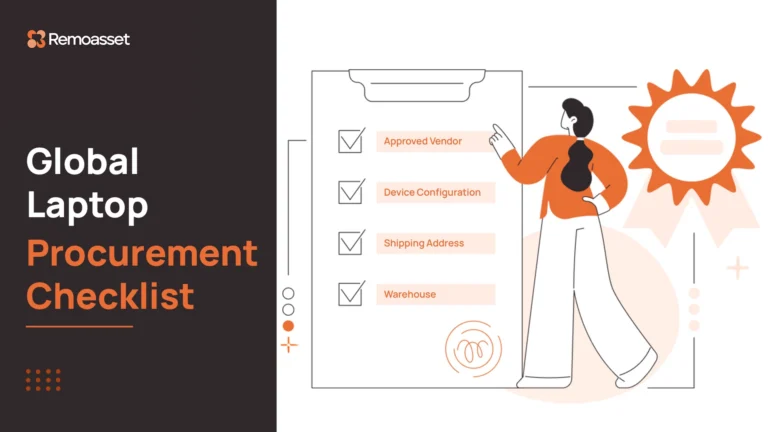
Before handing the package to the carrier, work through the following:
Battery
☐ Confirm the laptop contains a lithium-ion battery
☐ Record the battery’s watt-hour rating
☐ Confirm whether the battery is installed or being shipped separately
☐ Check current carrier and route requirements for this shipment classification
☐ Confirm the battery and shipment are permitted for the chosen service
Customs documentation
☐ Prepare the commercial invoice where required
☐ Use an accurate description of the laptop
☐ Declare the appropriate value
☐ Provide the correct country of origin
☐ Confirm the applicable HS/tariff classification
☐ State the shipment purpose clearly
☐ Record the laptop’s serial number
Duties and taxes
☐ Check the destination country’s current import requirements
☐ Confirm any applicable de minimis threshold
☐ Decide who will handle import clearance
☐ Confirm who will pay duties and taxes
☐ Agree the appropriate Incoterm where applicable
Packaging and dispatch
☐ Shut the laptop down and remove unnecessary media
☐ Secure the laptop against movement and protect from impact
☐ Secure the charger and accessories separately
☐ Use packaging appropriate for the carrier and battery classification
☐ Save all shipping documentation and record the tracking number against the asset record
☐ Give the recipient clear instructions about delivery and potential customs contact
Why International Laptop Shipments Get Held
When a laptop shipment is delayed, the problem is often something surprisingly basic. The customs description may be too vague. The declared value may not make sense. The importer may not know who is responsible for clearance. The documentation may not match the physical shipment. The carrier may have rejected the battery classification. Or the recipient may simply have been unaware that duties and taxes were their responsibility. None of these problems has much to do with the laptop itself. They are process problems — which is why international shipping works best when someone owns the shipment from preparation through delivery rather than treating the courier pickup as the end of the task.
Related Reads
If this shipment is part of a broader device procurement or lifecycle conversation, these guides cover the surrounding decisions:
- Laptop Sourcing: Ship, Source Locally, or Use a Stipend? — when local sourcing removes the need for a cross-border shipment entirely.
- Why You Shouldn’t Ship Laptops Internationally for Regular Procurement — the operational and cost case for local sourcing as the default.
- Remote Employee Laptop Return: A Guide for IT Teams — the reverse journey: recovering a laptop from an employee across a border.
- Best International Laptop Retrieval Services for Remote Teams — providers that manage cross-border device recovery as a service.
When Local Sourcing Makes More Sense
International shipping is useful when the specific device needs to move from one country to another. It is less compelling when the only reason for shipping is that the company normally buys all of its laptops in one country. For dozens or hundreds of international hires, sourcing devices in-country eliminates battery compliance, customs, and import duties while still getting the right device to the employee. The most efficient international laptop shipment is often the one you do not have to make.
How Remoasset Handles Cross-Border Device Logistics
There are legitimate situations where a laptop has to cross a border — a warranty replacement reaching an employee, a specific configured device being transferred, a contractor requiring a particular machine. In those situations, the customs, battery, documentation, packaging, and delivery requirements still need to be handled correctly. Remoasset‘s logistics model supports these cross-border device movements as part of a broader laptop lifecycle, including procurement, deployment, retrieval, and asset management. For standard international hiring, local sourcing can often remove the need for a cross-border shipment in the first place — while the international logistics workflow handles the genuine exceptions. Book a demo to see how cross-border device movements, customs coordination, and the wider laptop lifecycle are handled in one workflow.
Shipping requirements vary by carrier, origin, destination, transport mode, battery classification, and applicable local regulations. This guide is general operational information, not legal, customs, or dangerous-goods advice. Always confirm the current requirements with your carrier and, where necessary, a qualified customs or dangerous-goods specialist before shipping.
Frequently Asked Questions
Can you ship a laptop internationally with the battery inside?
Yes, laptops with lithium-ion batteries installed can generally be shipped internationally when the shipment meets the applicable dangerous-goods, carrier, packaging, and route requirements. Batteries installed in equipment are treated differently from spare batteries shipped separately — check the current requirements for the specific carrier and route before shipping.
What documents are needed to ship a laptop internationally?
A commercial invoice is commonly required for international commercial shipments, along with accurate information about the contents, value, origin, classification, and shipment purpose. Additional documents may be required depending on the destination, carrier, battery classification, and type of transaction. Confirm requirements for the specific origin-destination pair rather than assuming they match another shipment.
Why do laptop shipments get held in customs?
Common causes include incomplete or inconsistent documentation, inaccurate declared values, unclear descriptions, incorrect tariff classification, unpaid duties or taxes, missing importer information, or additional requirements at the destination. Battery-related carrier restrictions can also cause a shipment to be rejected or delayed before it even reaches customs.
How many laptops can you ship in one package?
There is no universal limit. The allowable quantity depends on the battery classification, watt-hour rating, applicable packing instruction, carrier, and route. IATA’s guidance shows that battery quantity limits differ depending on how lithium-ion batteries are classified and packed. If you are shipping several laptops together, check the current carrier requirements before preparing the shipment.