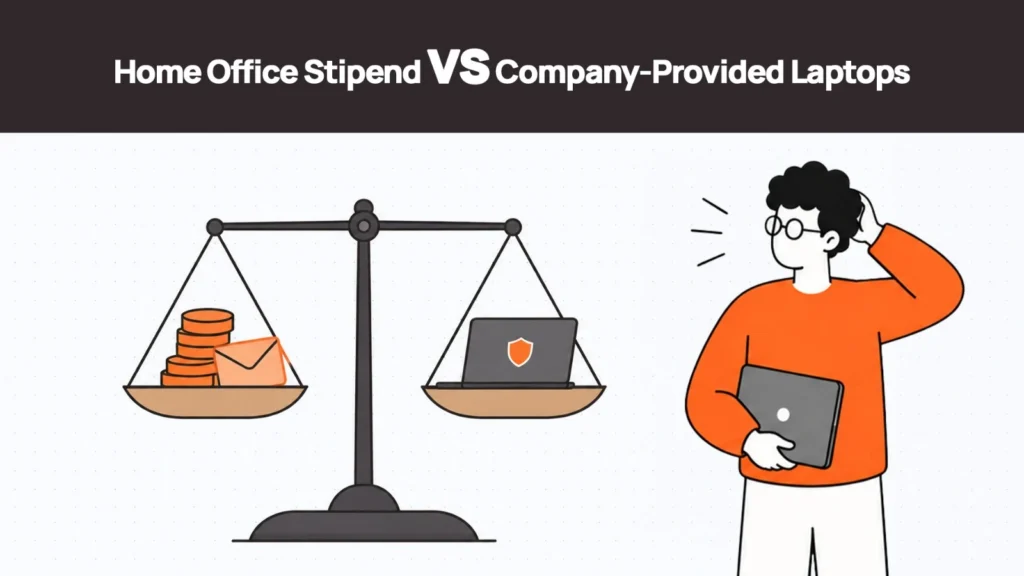
There’s no universal winner here. A stipend works well for a small, trusted team doing low-risk work. A company-provided laptop works better once security, role-specific hardware, or multi-country hiring enter the picture. The right call depends on company size, what the role actually touches, and how much operational overhead you’re willing to own.
What’s the Difference Between a Stipend and a Company-Provided Laptop?
A fixed stipend is a set amount paid regularly, regardless of what the employee actually spends it on. Reimbursement is narrower: the company pays back documented, approved expenses rather than handing over a flat sum.
A company-owned laptop means the business buys, configures, and retains ownership of the device throughout its life. BYOD lets an employee use their personal device for work, with no company hardware involved at all. A hybrid model supplies the core laptop but adds a smaller allowance for accessories, a monitor, or ergonomic equipment.
Treating these as interchangeable is where most comparisons go wrong. A stipend and BYOD aren’t the same thing, and reimbursement isn’t the same as a stipend for tax purposes — which matters more than most companies initially assume.
Stipend vs. Company Laptop: Side-by-Side
| Factor | Stipend / BYOD | Company-provided laptop |
|---|---|---|
| Upfront cost to company | Low or none | Higher, paid at purchase |
| Hardware ownership | Employee | Company |
| Standardization | Low, varies by employee | High, consistent fleet |
| Security and endpoint management | Limited, depends on personal device | Full MDM, encryption, access control |
| IT support | Harder, unmanaged hardware | Easier, known configuration |
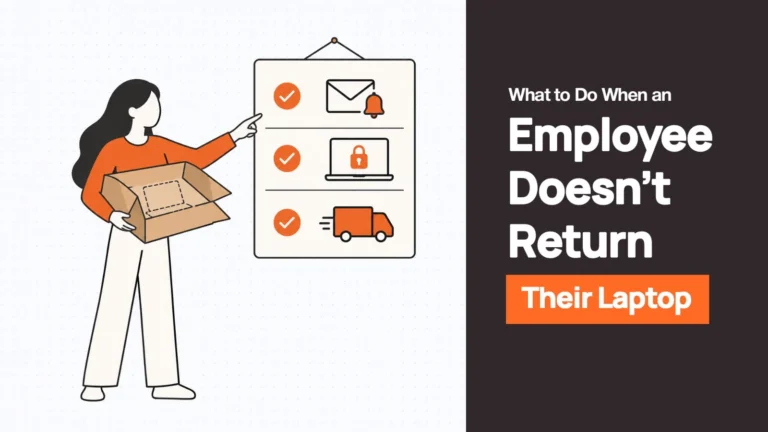
| Offboarding and data removal | Difficult, device stays with employee | Device and data recoverable |
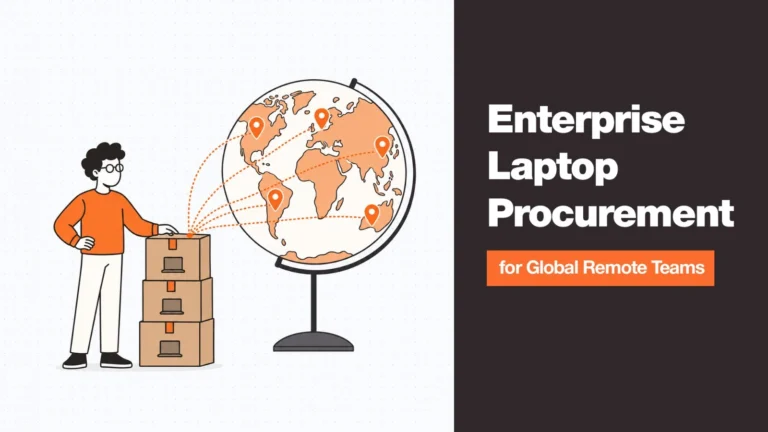
| Multi-country hiring | Simple, no shipping or customs | Requires procurement and logistics per country |
| Role-specific performance needs | Hard to guarantee | Can be specified upfront |
| Related Reads |
| → Remote Device Offboarding Checklist The full checklist for recovering, wiping, and closing out a device when someone leaves. |
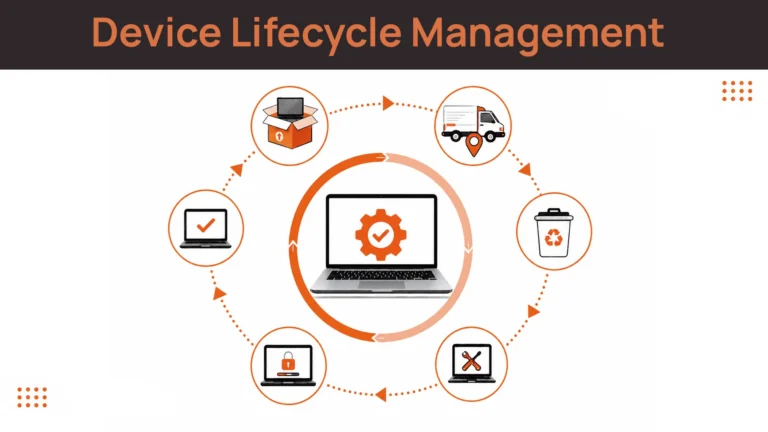
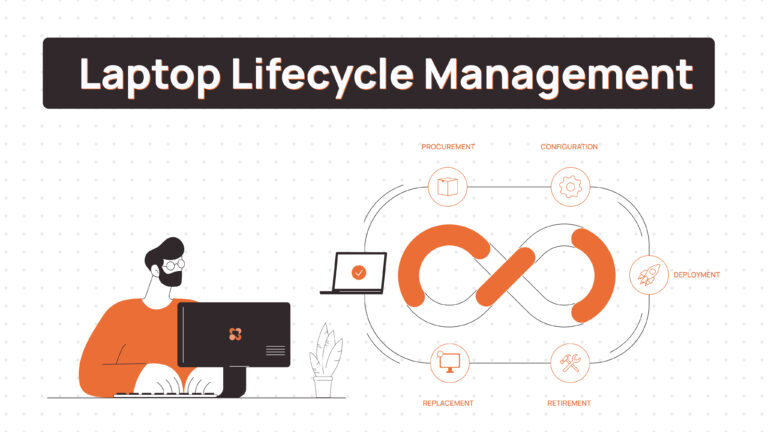
| → Laptop Lifecycle Management How procurement, deployment, and retrieval fit together across a device’s full life. |
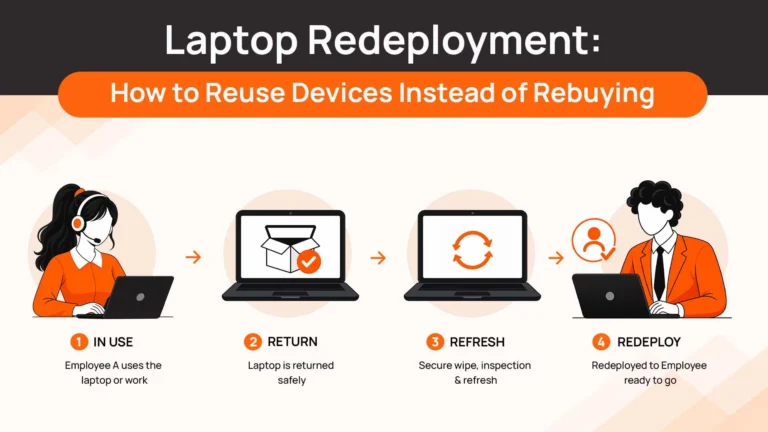
| → Laptop Redeployment Guide What it takes to turn a retrieved device around and get it to the next hire. |
| → Certified Data Wiping How documented data sanitization closes the offboarding record for compliance. |
| → Remote Employee Onboarding Equipment setup and provisioning for new remote hires — the other end of the device lifecycle. |
What Does Each Model Actually Cost?
A stipend looks cheaper on the invoice, but that’s comparing one line item against a different set of costs entirely. The real comparison is total cost of ownership over the device’s life, not the sticker price at the start.
A company laptop’s cost includes the purchase or lease, configuration and deployment time, IT support over its life, eventual repairs, and what happens at offboarding: retrieval, data wiping, and either resale, storage, or redeployment to the next hire. A stipend or BYOD arrangement avoids most of that upfront, but shifts cost elsewhere: inconsistent hardware means more support tickets per device, security gaps are harder to close on devices IT doesn’t control, and there’s effectively no residual value or redeployment path when someone leaves, since the device was never the company’s to begin with.
| Cost category | Stipend path | Company laptop path |
|---|---|---|
| Hardware cost | $50/month × 36 months = $1,800 cash out | $1,200 one-time purchase |
| Who holds the asset after year 3 | Employee — company has nothing to show for the $1,800 | Company — device can be redeployed or resold |
| IT support load | Higher per ticket, unmanaged hardware, inconsistent specs | Lower per ticket, known configuration |
| Offboarding | Nothing to retrieve; data exposure risk stays with the employee’s device | Retrieved, wiped, and redeployed to the next hire or resold |
| The Comparison Has to Include the End, Not Just the Start On cash alone, a $50/month stipend over three years costs $1,800 — against a $1,200 one-time purchase. That’s before the laptop still has value: redeployed to a second employee, that $1,200 effectively covers two people while the $1,800 in stipend payments produced nothing the company still holds. A lower monthly stipend, a shorter tenure, or a role with minimal support needs can flip the math the other way. The point is that the comparison has to include what happens to the asset at the end, not just what goes out the door at the start. |
Our breakdown of laptop total cost of ownership goes deeper into these categories for companies managing a full fleet rather than one hire.
When Should Companies Provide Laptops Instead of a Stipend?
Company-owned hardware earns its cost when the role actually needs it. A few situations make the case clearly:
- The role touches sensitive data, regulated information, or customer systems: Encryption, access controls, and the ability to remote-wipe a device aren’t optional here, and none of that is reliably enforceable on hardware the company doesn’t own.
- The role has specific performance requirements: Engineering, design, and data work need particular specs. “Whatever laptop the employee happens to own” isn’t good enough when the work genuinely depends on the hardware.
- The company is hiring across several countries: Standardized hardware is what makes consistent MDM enrollment and deployment possible at all. A fleet of personal devices scattered across different operating systems and configurations makes that close to unworkable.
- Offboarding needs to actually recover the device: A company-owned laptop can be retrieved, wiped, and redeployed. A stipend-funded personal device generally can’t — the data leaves with the employee, and whatever hardware they bought was never the company’s to recover.
When Does a Home Office Stipend Make More Sense?
A stipend fits better for low-risk roles with minimal access to sensitive systems, for a small team where IT doesn’t have the capacity to manage a hardware fleet yet, and for contractors or short-term roles where standing up full device management isn’t worth the overhead. It also genuinely suits accessories and ergonomic equipment better than core hardware does — a monitor, a chair, a keyboard — items where personal preference matters more than standardization.
The tax treatment matters here too, and it varies. Under US tax rules, reimbursement for substantiated business expenses through an accountable plan generally isn’t taxable income to the employee, while a flat stipend paid regardless of actual spending usually is. Some states go further: California’s Labor Code Section 2802, for instance, requires employers to reimburse necessary business expenses employees incur on the job. None of this is universal, and it changes by country and by employment arrangement, so this is worth checking against current guidance for your specific situation rather than treating any of it as settled.
The Hybrid Model: Company Laptop Plus a Stipend
The split that avoids most of the trade-offs above is straightforward: the company owns and manages the core laptop, and a smaller allowance covers accessories, a monitor, or ergonomic equipment the employee picks themselves.
This keeps the device that actually holds company data and access under company control, while still giving employees choice on the things where personal preference genuinely matters more than standardization. It’s not free of complexity — you’re still running two processes instead of one — but it’s a reasonable middle ground for companies that want some flexibility without giving up device-level security.
How to Build a Remote Equipment Policy That Scales
A policy that holds up as headcount grows needs a few things settled in advance: standard hardware specs by role, a clear approval process for exceptions, documented ownership (who the device belongs to, and what happens to it when someone leaves), security requirements tied to role risk rather than applied uniformly, and a defined offboarding step that actually gets the device back, wiped, and either redeployed or retired.
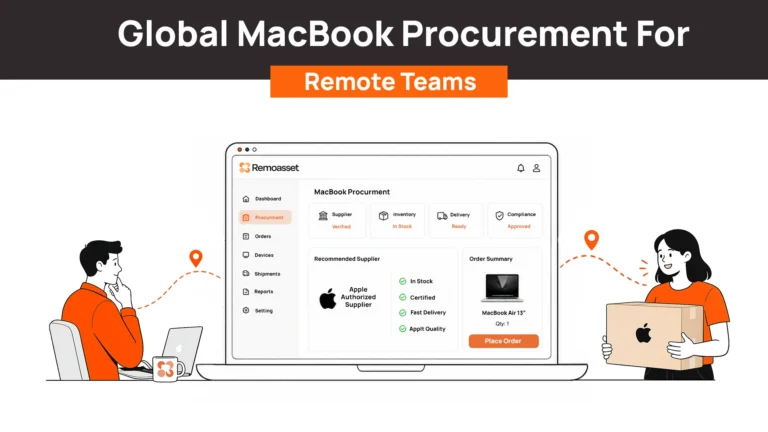
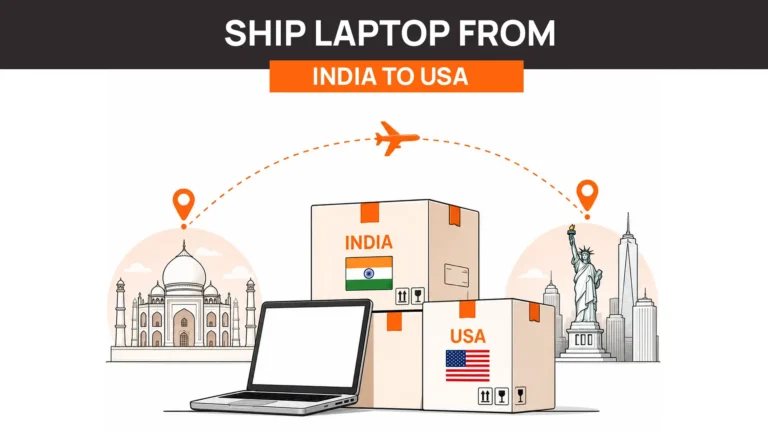
Our guide to laptop sourcing covers the related question of whether to ship hardware, source it locally, or lean on a stipend by country — worth reading alongside this if international hiring is part of the picture.
How Remoasset Helps Companies Manage Company-Provided Laptops
Once a company decides company-owned hardware is the right call for some or all roles, the operational work shifts to actually running that model at scale: sourcing devices in 80+ countries, configuring and deploying them, tracking where each one is, and handling retrieval, storage, and redeployment when someone leaves.
That’s the part a stipend sidesteps entirely and a company laptop policy has to account for. Remoasset handles that lifecycle so the decision to provide hardware doesn’t turn into a logistics problem for IT on day one and an unretrieved device problem six months later.
Frequently Asked Questions
Is a laptop stipend better than a company-provided laptop?
Neither is universally better. A stipend suits low-risk roles and small teams; a company laptop suits roles needing security, standardization, or multi-country consistency.
Who owns a laptop purchased with a stipend?
Generally the employee, since they bought it with their own funds, even if the company reimbursed part of the cost. The company usually has no recovery or control rights over it.
Can employees use their own laptops for remote work?
Yes, under a BYOD policy, but this limits the company’s ability to enforce encryption, access controls, and data removal compared to a company-owned device.
Are home-office stipends taxable?
It depends on structure and jurisdiction. Reimbursement of substantiated expenses under an accountable plan is often non-taxable in the US; a flat stipend typically is treated as taxable income. Confirm against current rules for your situation.
Should employers provide both a laptop and a home-office stipend?
It’s a common middle ground — a company-owned core laptop paired with a smaller allowance for accessories or ergonomic equipment the employee chooses themselves.
How can global companies manage employee equipment across countries?
Most standardize on company-owned hardware for consistency and security, then handle sourcing, deployment, and retrieval per country rather than shipping every device from one location.