
At some point, most distributed companies run into the same uncomfortable question.
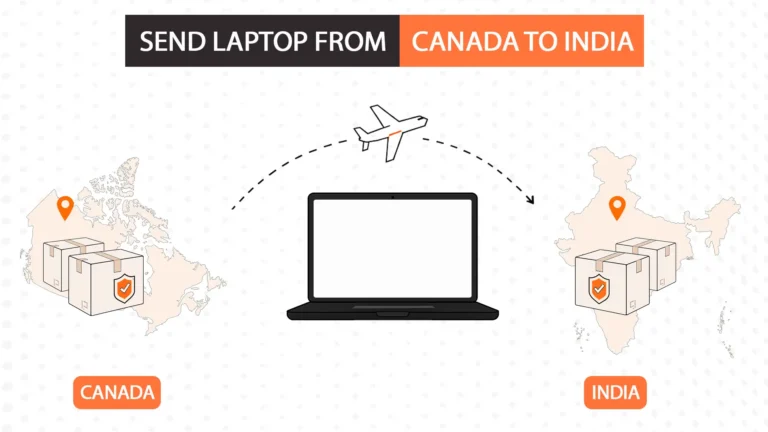
A laptop is ordered from headquarters, shipped to a new employee in another country, and then sits in customs longer than anyone expected. The employee’s start date gets closer, HR starts asking for updates, IT starts chasing the courier, and suddenly a simple laptop purchase has become an operational problem.
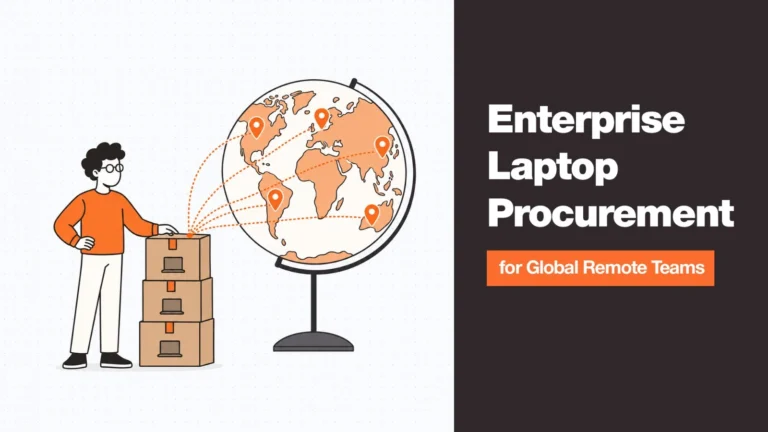
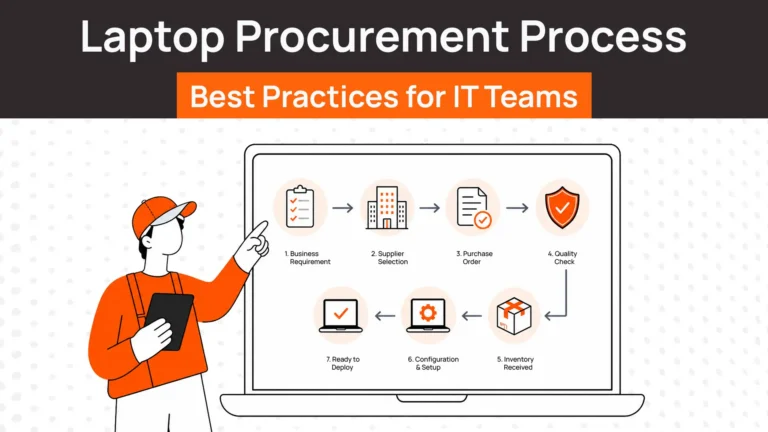
That is usually when the bigger question comes up: was shipping the laptop from the central warehouse actually the right sourcing model? For a distributed workforce, laptop sourcing is a strategic decision that sits before acquisition channel and vendor selection. It determines where devices are purchased, how they reach employees, how much control IT retains, and what happens when those devices eventually need to be recovered.
There are three common approaches: central warehouse shipping, local sourcing, and employee stipends. Each can work in the right circumstances. The problem begins when a company adopts one by default and never revisits it as its workforce expands. For global teams, the strongest model is often neither completely centralized nor completely decentralized — it is centralized control with local execution.
The Three Laptop Sourcing Models
Before comparing vendors or procurement platforms, it helps to understand the three fundamental ways a company can get laptops to remote employees.
1. Central Warehouse Shipping
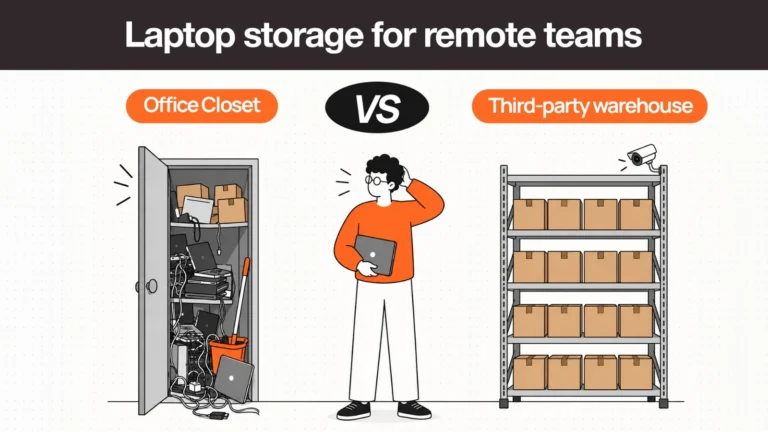
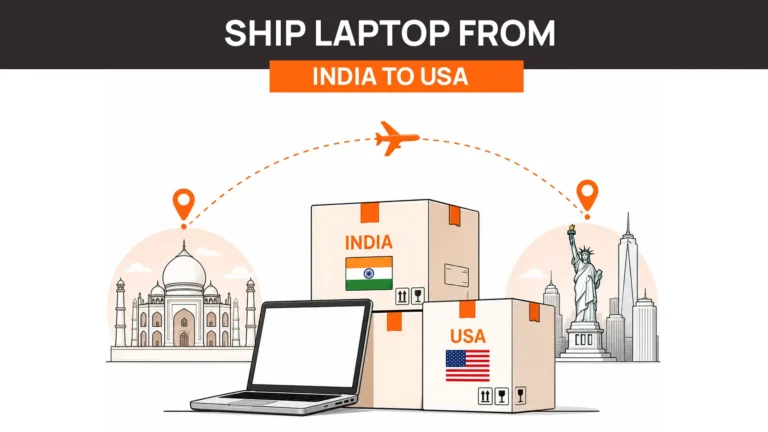
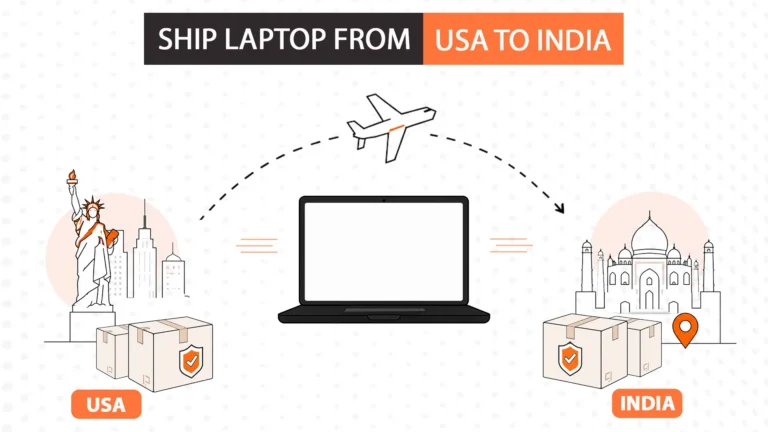
The company purchases laptops in bulk from one location, stores them centrally, and ships them as employees join. IT can standardize configurations, negotiate with fewer suppliers, and maintain a single inventory record. It works well when employees are concentrated in the same country or where cross-border shipping is simple. The problem appears when the distance between warehouse and employee keeps growing — customs documentation, import processing, taxes, and unpredictable lead times compound with every border crossed.
More importantly, the cost is not limited to the courier invoice. If a new employee cannot start productive work because their laptop is delayed, the organization is also paying for the week of idle onboarding time that follows.
2. Local Sourcing
With local sourcing, the company purchases the laptop within the same country where the employee is located — a device sourced within India rather than shipped from the US, for example. This removes cross-border complexity, accounts for regional keyboard layouts, power standards, and warranty support, and shortens delivery timelines significantly.
However, local sourcing introduces a different challenge. If every country has its own supplier, approval process, pricing structure, and preferred device model, the company can quickly lose the standardization it worked hard to create. Local sourcing solves the logistics problem, but unmanaged local sourcing creates a procurement consistency problem.
3. Employee Stipend
The third model is to give employees a fixed hardware allowance and let them purchase their own laptop. The company does not have to maintain inventory, arrange shipping, or coordinate suppliers.
The simplicity comes with real tradeoffs: employees may choose different configurations, operating systems, or specifications, and IT has less control from the start. There is also a fundamental ownership question — if the employee owns the laptop, the company may have no physical device to retrieve at offboarding, no residual hardware value to recover, and limited control after employment ends.
Where Central Warehouse Shipping Starts to Break Down
Customs adds uncertainty
The moment a laptop crosses a border, the company has introduced another layer of logistics. Depending on the destination, the shipment may require additional documentation, customs processing, duties, taxes, and recipient coordination. The price IT sees when purchasing may not represent the actual cost of getting the laptop into an employee’s hands.
Delivery times become harder to predict
A central warehouse can make a device immediately available while still being unable to deliver it quickly. The laptop may already be configured and sitting in inventory while the employee waits because it has to travel internationally. As the number of countries increases, so does the number of shipping routes and potential failure points.
The cost of delay is often invisible
Finance sees the laptop cost and shipping cost. IT sees the courier delay. HR sees a new employee waiting for equipment. The manager sees someone who cannot start properly. The real cost sits across all four teams — which is why laptop sourcing should be evaluated based on time to productivity and total lifecycle cost, not just the purchase price.
Where Pure Local Sourcing Starts to Break Down
Local sourcing sounds like the obvious answer to international shipping problems, and in many cases it is the better operational fit. But a company operating in 15 countries could end up managing 15 different purchasing relationships. Questions multiply: which supplier is approved, which configuration should be purchased, what happens if the preferred model is out of stock, who approves an alternative, how are warranties handled consistently, how does the asset enter the company’s inventory.
Without a system behind it, local sourcing becomes decentralized procurement disguised as a global strategy. The objective should not be to choose between central control and local execution — it should be a procurement process that delivers both.
Laptop Sourcing Models Compared
| Factor | Central Warehouse | Local Sourcing | Employee Stipend |
| Speed to employee | Slower internationally | Usually faster within country | Usually fastest |
| Customs exposure | Higher for cross-border | Low for domestic delivery | None for company shipment |
| Hardware standardization | Strong | Strong if centrally managed | Limited |
| IT control | High | High with the right process | Lower |
| Vendor management | Centralized | Complex without a platform | Minimal |
| Security control | Strong | Strong if devices enrolled correctly | Depends on employee setup |
| Retrieval at offboarding | Required | Required | Often limited or unavailable |
| Global scalability | Degrades with country count | Scales with the right infrastructure | Simple, but less controlled |
| Best suited for | Concentrated workforces | Distributed global teams | Small teams or specific roles |
There is no universally correct model. The right answer depends on where employees are located, how quickly they need devices, how much control the organization requires, and whether the company owns the equipment.
Related Reads
If you are further along in this decision, these guides cover specific parts of the sourcing and procurement picture:
- Why You Shouldn’t Ship Laptops Internationally — the customs and duties case against the central-warehouse model in detail.
- IT Hardware Procurement: A Practical Guide for Distributed Teams — the acquisition-channel decision that follows the sourcing model.
- Device Procurement Best Practices — standardizing hardware before local teams start choosing independently.
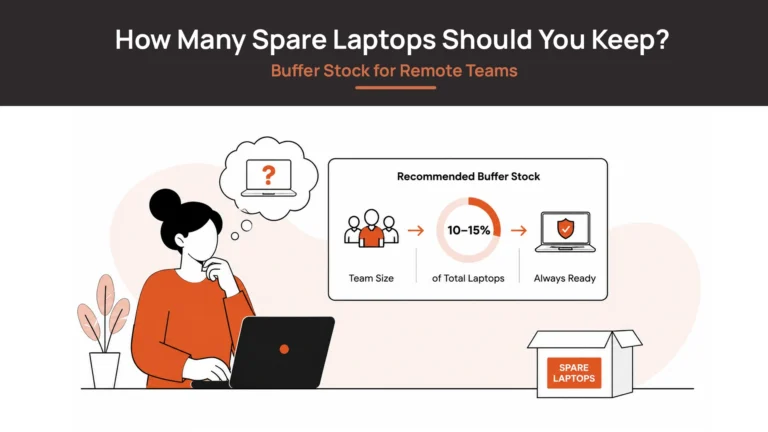
- How Many Spare Laptops Should You Keep? — buffer stock strategy changes significantly depending on whether sourcing is central or local.
- Laptop Lifecycle Management: The Complete Guide — where the sourcing decision sits in the full hardware lifecycle.
The Model That Often Works Better: Centralized Control, Local Execution
This is the distinction that gets missed in most laptop sourcing conversations. Companies often assume they have two choices: centralize everything, or let every country manage itself. There is another option.
Keep the policy, catalog, standards, approvals, and asset records centralized, while allowing the physical sourcing and delivery to happen locally. That creates a model where IT can say ‘every engineering employee gets a laptop from this approved hardware category’ — without also saying ‘every laptop has to travel from our headquarters.’
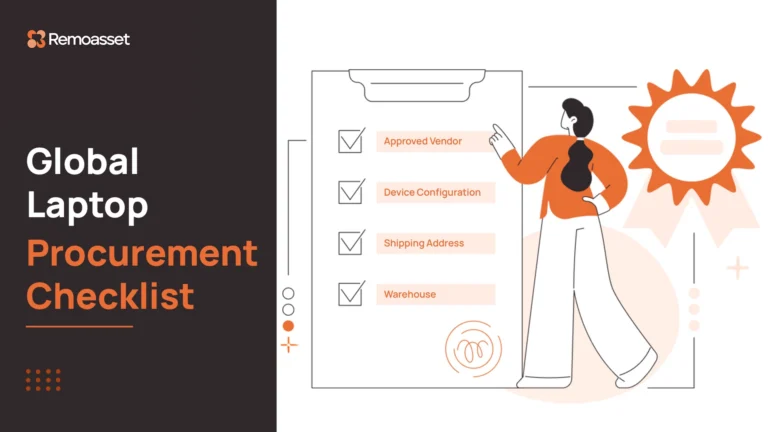
For example, an organization might define standard configurations per role, approved operating systems, security requirements, MDM enrollment requirements, budget limits, warranty expectations, and an exception approval process. When an employee joins in a particular country, the device is sourced locally according to those standards.
Centralized control determines what should happen. Local execution determines how it happens in that market. This is not a compromise between the two extremes — it is a different operating model entirely.
Laptop Sourcing Should Connect to the Rest of the Lifecycle
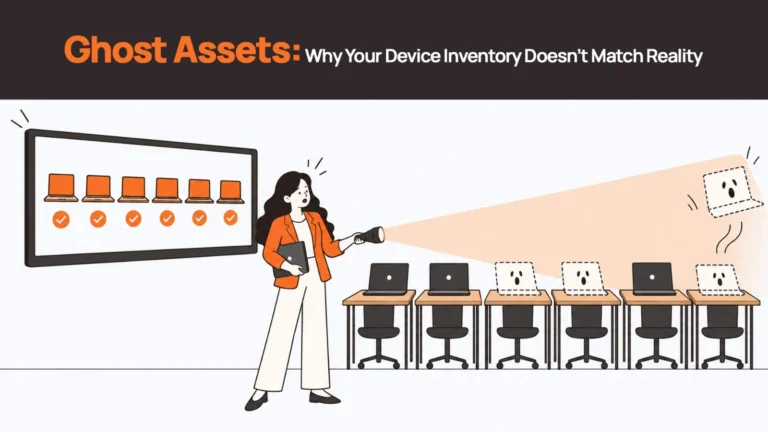
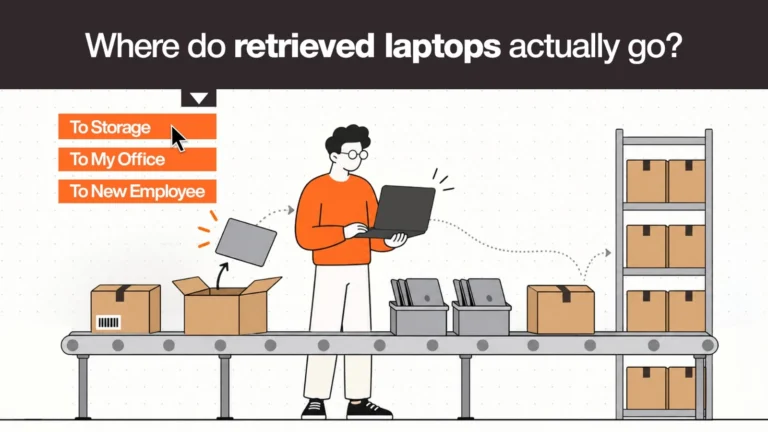
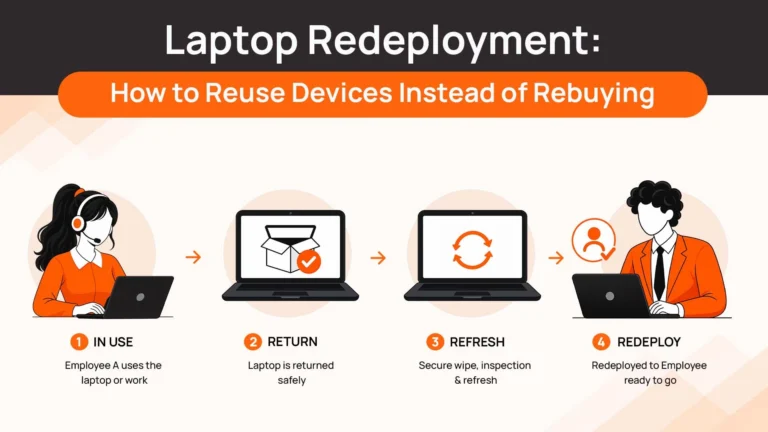
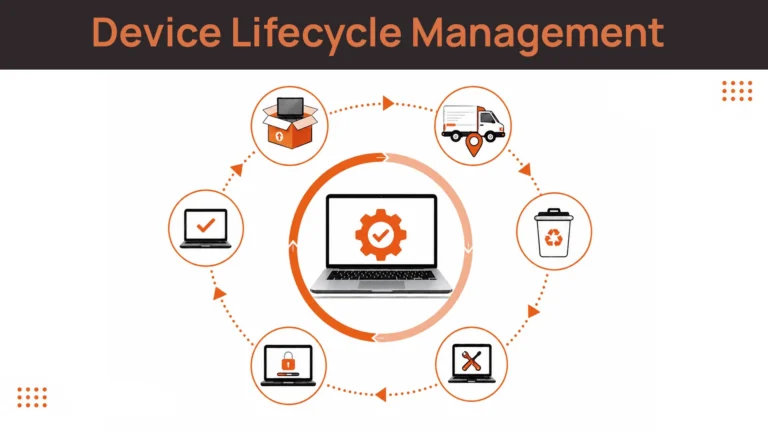
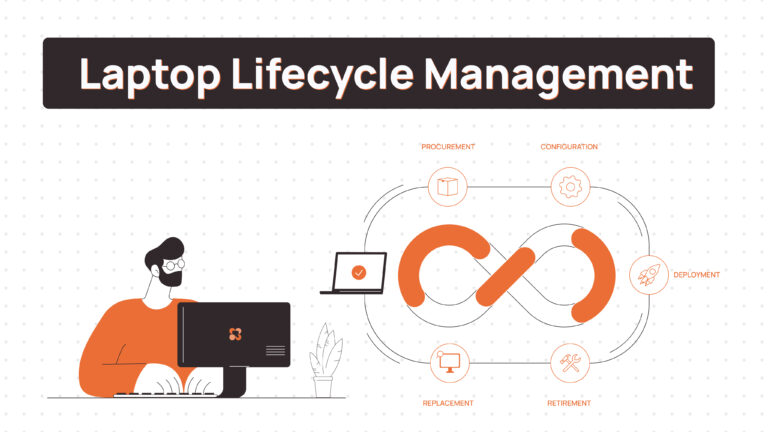
Sourcing is the beginning of the device lifecycle, not the end of the procurement decision. Where a laptop comes from affects everything that happens afterward: whether it can be enrolled into the company’s management system before it ships, whether its serial number enters the asset record, whether it can be retrieved when the employee leaves, whether it can be repaired locally, whether it can be redeployed to another employee in the same country.
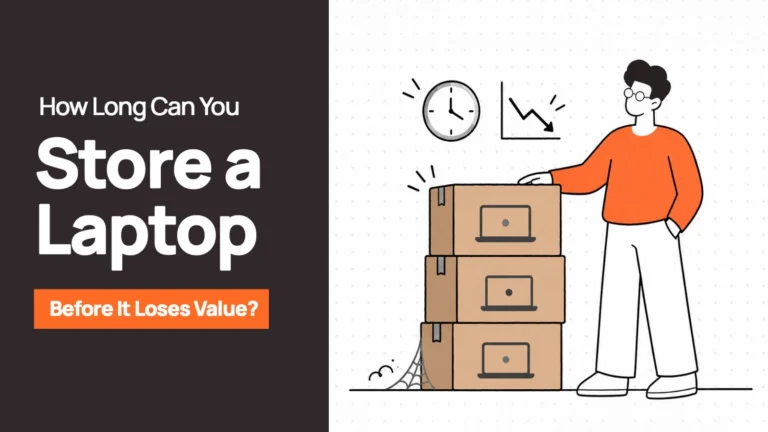
The cheapest way to acquire a laptop is not necessarily the cheapest way to manage it for three or four years. Sourcing should be evaluated alongside how devices are standardized across roles, and the retrieval question should be considered before the first device is delivered. A sourcing strategy that makes deployment easy but retrieval difficult has only solved half the problem.
Where Remoasset Fits
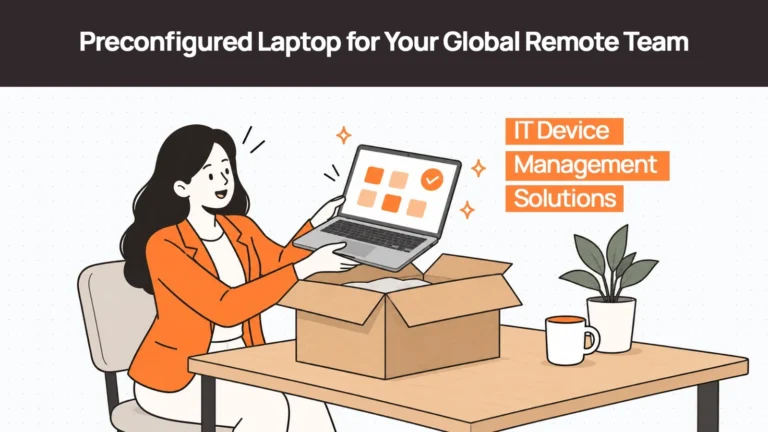
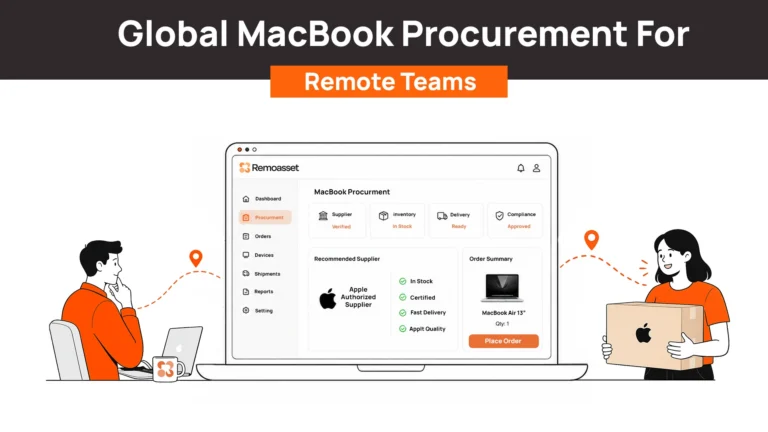
Remoasset takes the centralized-control, local-execution approach to global laptop sourcing. Instead of requiring companies to ship every device from one central warehouse, it sources laptops locally in 80+ countries while maintaining one centralized process for hardware standards, procurement, asset visibility, and lifecycle operations.
The benefit is not simply avoiding international shipping. It is reducing the number of disconnected decisions IT has to make every time someone joins the company. The same device record continues through deployment, management, retrieval, and the device’s eventual next step — rather than disappearing from the procurement process once the employee receives it.
For organizations hiring across multiple countries, that creates a more practical balance: centralized governance without forcing every device through the same physical supply chain. Book a demo to see how Remoasset sources locally in 80+ countries under one central policy and catalog.
Rethinking Where Your Laptops Come From
Laptop sourcing is often decided accidentally. The first few employees are equipped using whatever process is easiest at the time, and that process quietly becomes the company’s standard. The model that works for five employees in one country may become expensive and difficult to operate when those employees become 500 people across 20 countries.
Central warehouse shipping offers control, but cross-border logistics introduce delays and additional complexity. Local sourcing removes those physical barriers, but without centralized governance it creates vendor and hardware fragmentation. Stipends simplify the process further, but give up the control that company-owned device programs are designed to provide.
For distributed teams, the more scalable answer is often to separate control from execution. Keep the standards, policies, approvals, and asset records centralized. Let sourcing, delivery, and eventually retrieval happen as locally as the market requires. That way, the company does not have to choose between a globally consistent IT strategy and a locally practical employee experience. It can have both.