
Hello Retriever is a solid starting point for companies looking to streamline device recovery workflows. It solves a very specific problem coordinating laptop returns during employee offboarding and does it efficiently for teams operating within supported regions.
But retrieval is rarely the only challenge.
As companies scale across multiple countries, device operations become significantly more complex. Teams start dealing with procurement delays, inconsistent delivery timelines, lack of visibility into assets, repair coordination issues, and inefficient reuse processes. Retrieval becomes just one piece of a much larger system.
This is where most teams begin searching for Hello Retriever alternatives.
To build this guide, we analyzed leading tools using product documentation, pricing pages, verified G2 and Capterra reviews, Reddit discussions, and real-world usage patterns across distributed teams.
Each platform is evaluated across two critical dimensions:
- How effectively it handles device retrieval workflows
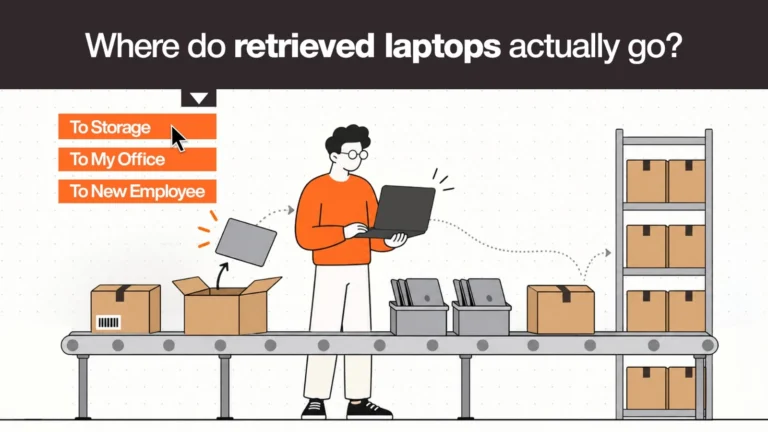
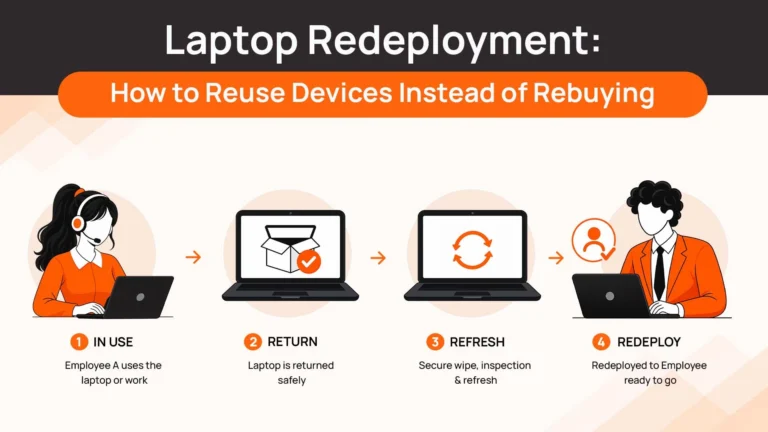
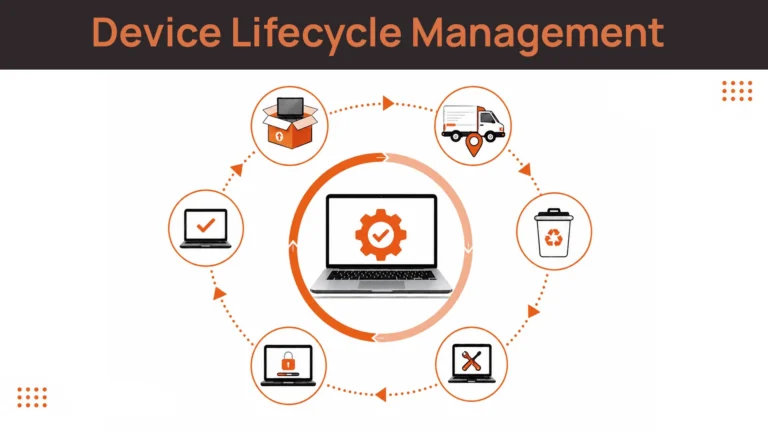
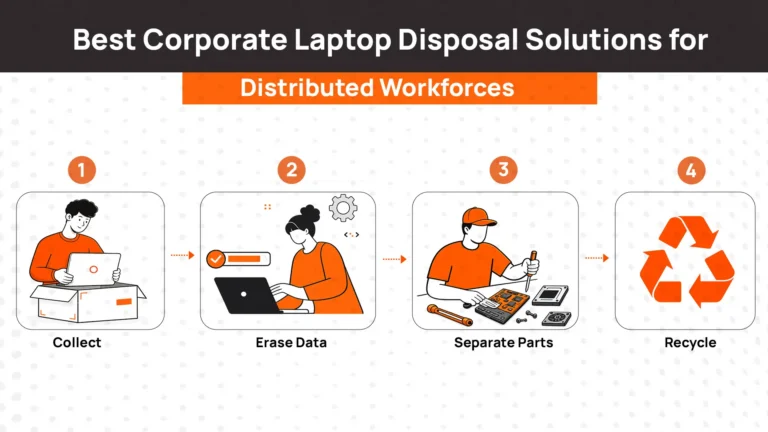
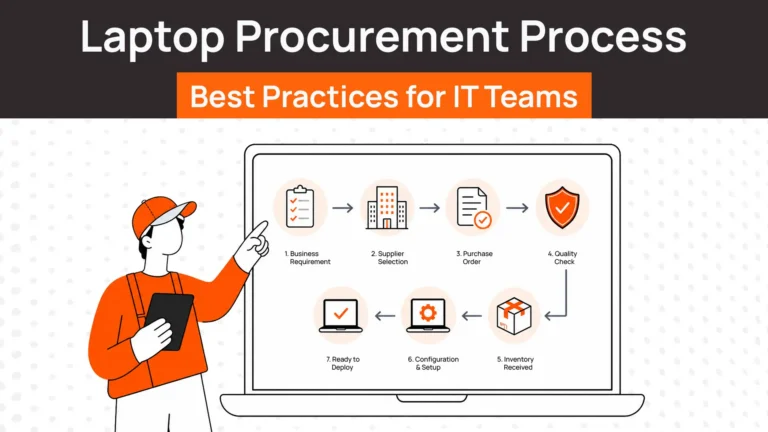
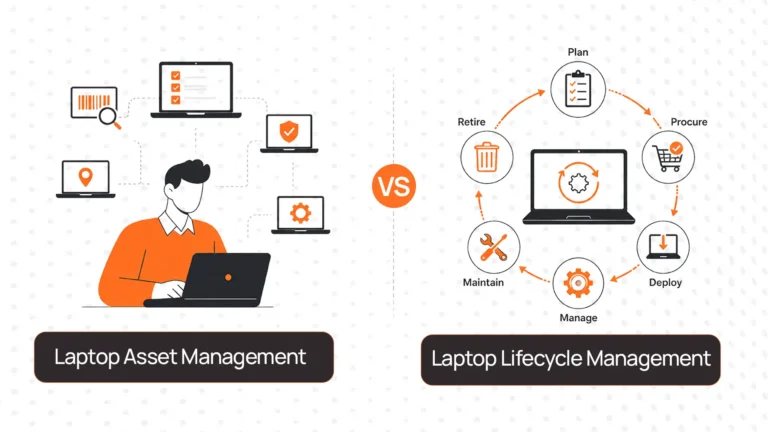
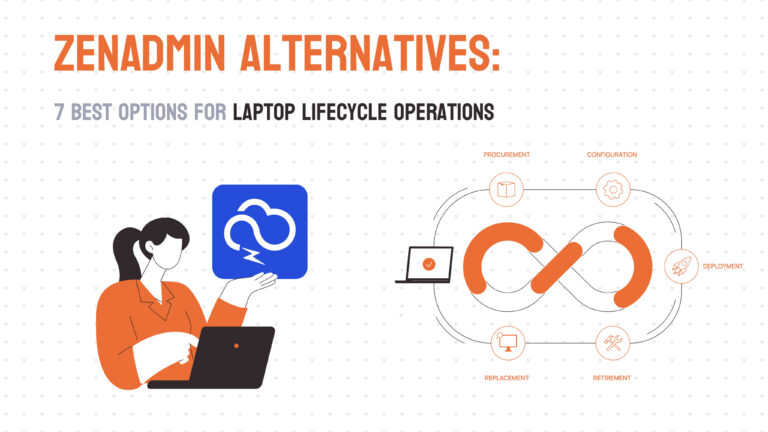
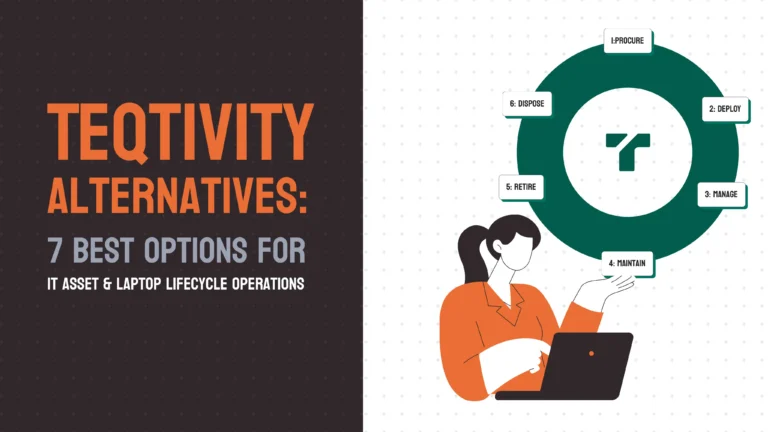
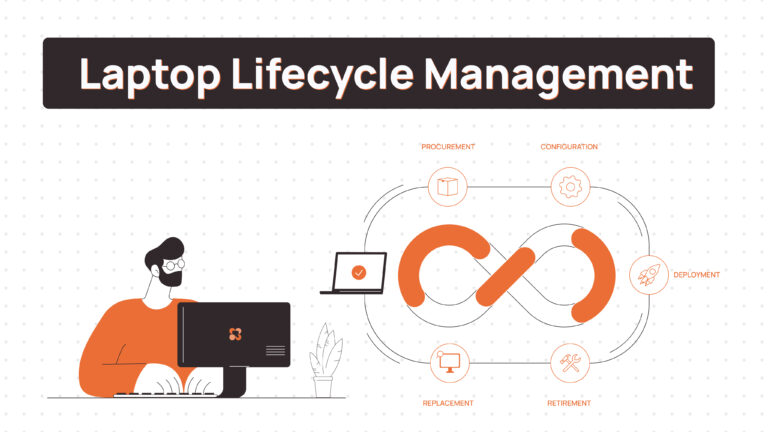
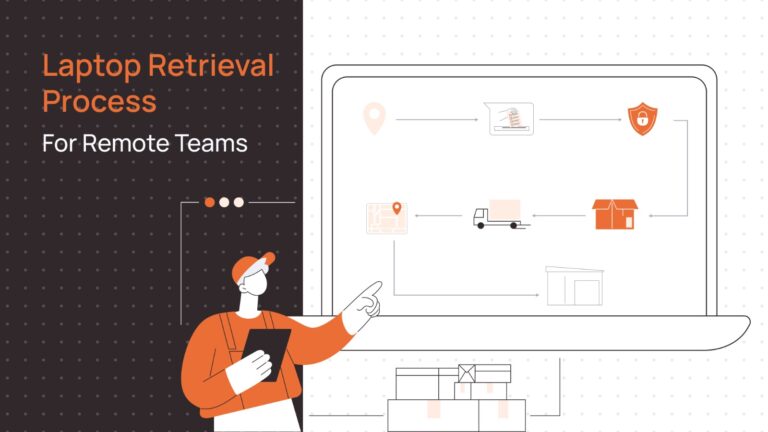
- Whether it supports the broader laptop lifecycle — procurement → delivery → retrieval → reuse
The right tool depends on how far your needs extend beyond retrieval.
What is Hello Retriever? (And What It Actually Does Well)
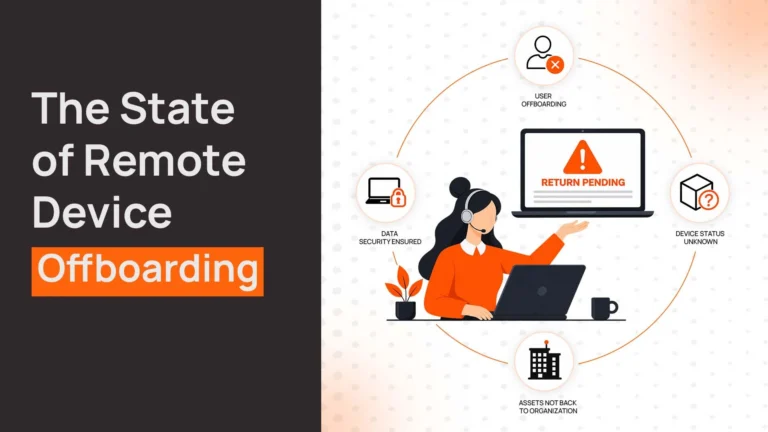
Hello Retriever is a device retrieval platform designed to help companies recover laptops and IT equipment from employees, particularly during offboarding workflows.
At its core, it focuses on:
- Coordinating device pickups across locations
- Managing return logistics
- Reducing manual follow-ups between HR, IT, and employees
For companies operating in regions like the US, UK, and Canada, it simplifies retrieval workflows that would otherwise require spreadsheets, emails, and manual coordination.
Read Also: Laptop Asset Management Software
Where Hello Retriever Performs Well
The biggest strength of Hello Retriever lies in its ability to standardize retrieval operations.
Instead of chasing employees for device returns, IT teams can initiate structured workflows that handle communication, scheduling, and tracking in a consistent manner. This reduces operational overhead and ensures higher recovery rates compared to manual processes.
Its pricing model is also straightforward. A per-return fee structure makes it easy for smaller teams to adopt without committing to long-term contracts.
Where Limitations Start to Appear
The limitations are not flaws, they are design boundaries.
Hello Retriever is built specifically for retrieval workflows, not the full lifecycle.
That means:
- Procurement must be handled separately
- Device delivery and onboarding workflows sit outside the platform
- Storage, refurbishment, and reuse require additional systems
- Global coverage is limited, requiring manual coordination in many regions
For teams operating in one or two regions, this may be sufficient.
For global teams, these gaps become operational bottlenecks.
Why Teams Look for Hello Retriever Alternatives
1. Geographic Limitations
One of the most commonly cited challenges is limited coverage.
While Hello Retriever works well in regions like the US, UK, and Canada, teams operating in APAC, LATAM, or emerging markets often need to rely on manual processes or additional vendors.
This creates fragmentation in operations and reduces consistency across regions.
2. Retrieval-Only Scope
Hello Retriever focuses exclusively on retrieving devices.
However, modern teams require:
- Device procurement for new hires
- Delivery coordination across countries
- Storage and redeployment workflows
Without these, teams end up managing multiple vendors and systems, increasing operational complexity.
3. Limited Device Scope
The platform primarily supports laptops and monitors.
Devices like:
- Tablets
- Mobile phones
- Peripherals
often fall outside its scope, requiring separate handling.
4. Cost at Scale
At approximately $95 per return, costs scale linearly with usage.
For example:
- 50 retrievals/month = $4,750/month
- 100 retrievals/month = $9,500/month
At higher volumes, subscription-based or lifecycle platforms often become more cost-efficient.
5. Lack of Native Automation
Retrieval workflows typically need to be initiated manually or connected through third-party tools like Zapier.
This creates friction, especially for teams looking to automate offboarding workflows directly from HR systems.
How We Evaluated Hello Retriever Alternatives
We used a structured evaluation framework to ensure consistency and real-world relevance.
| Criteria | Why It Matters |
| Global coverage | Key limitation of retrieval-only tools |
| Lifecycle completeness | Procurement + delivery + retrieval + reuse |
| Pricing model | Cost efficiency at scale |
| Automation & HRIS integration | Reduces manual workflows |
| Data security & compliance | Critical for offboarding workflows |
| Verified user reviews | Real-world performance validation |
7 Best Hello Retriever Alternatives in 2026
| Platform | G2 Rating | Countries Supported | Procurement | HRIS Trigger | Pricing Model | Best For |
| Hello Retriever | NA | US / CA / UK | ✗ | Via Zapier | ~$95 per return | Domestic retrieval workflows for US/UK teams |
| RemoAsset | 4.7/5 | 80+ | ✓ | ✓ Native | Pay-as-you-go / subscription-based | Global teams needing full lifecycle (procure → deliver → retrieve → reuse) |
| Workwize | 4.4/5 | 100+ | ✓ | ✓ Native | ~$15–20 per employee/month | Mid-market teams needing structured lifecycle workflows |
| GroWrk | 4.4/5 | 150+ | ✓ | ✓ Native | Platform fee + per-device | Enterprises with global device operations |
| Firstbase | 4.8/5 | 150+ | ✓ | ✓ Native | Per-seat / custom pricing | Companies prioritizing onboarding + compliance |
| Allwhere | 4.6/5 | ~25–30 | ✓ | Via HRIS integrations | Per-device + minimums | Regional teams (US/EU/LATAM/ANZ) with bulk offboarding needs |
| Reready | NA | ~40–60 | ✓ | ✓ Native | Custom / project-based | LATAM + US operations needing fast local execution |
| Hofy | NA | 100+ | ✓ | ✓ Native | Subscription + per-device (custom) | Global onboarding and employee equipment provisioning |
1. RemoAsset: Best End-to-End Laptop Lifecycle Alternative
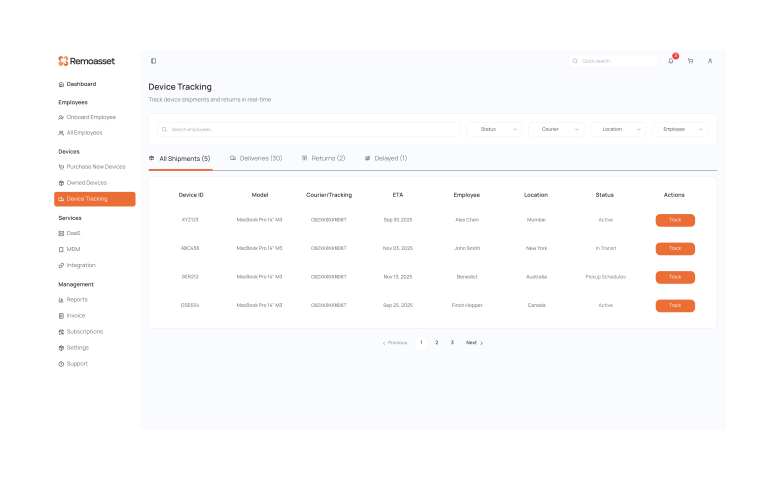
RemoAsset is built around a fundamentally different approach compared to retrieval-only tools. Instead of solving just the recovery stage, it manages the entire lifecycle of a device, from procurement to reuse.
This includes sourcing devices locally in different countries, delivering them directly to employees, tracking their usage, retrieving them during offboarding, and preparing them for redeployment.
This lifecycle-first approach eliminates the need to coordinate multiple vendors or systems.
Key Features
- Global device procurement across regions
- Structured retrieval workflows with tracking
- Centralized storage and refurbishment
- Device redeployment and reuse management
- End-to-end lifecycle visibility
Pros
- Eliminates vendor fragmentation across lifecycle stages
- Reduces device loss and improves recovery rates
- Optimizes cost through reuse instead of repurchase
Cons
- More comprehensive than basic retrieval tools
- May be unnecessary for teams with very simple needs
Best For
Companies managing distributed teams across multiple countries who want a single system for procurement, delivery, retrieval, and reuse.
Checkout: Laptop Procurement & Retrieval Worldwide
2. Workwize
Workwize focuses on combining device provisioning with lifecycle management, offering a structured approach for onboarding and offboarding workflows.
Unlike retrieval-only tools, it supports procurement and delivery, making it a more complete solution for employee device operations.
Key Features
- Device procurement and provisioning workflows
- Employee onboarding kit management
- Device tracking dashboards
- Retrieval coordination
Pros
- Strong onboarding experience
- Good integration with HR workflows
- Subscription-based pricing improves predictability
Cons
- Limited flexibility in customization
- Less depth in reuse and refurbishment workflows
Best For
Mid-sized teams looking to improve onboarding and provisioning processes alongside retrieval.
Related Read: Best Workwize Alternatives & Competitors
3. GroWrk
GroWrk positions itself as a global IT asset platform with strong logistics capabilities and wide geographic coverage.
It supports procurement, delivery, and retrieval across a large number of countries, making it suitable for enterprise-scale operations.
Key Features
- Global procurement and shipping
- Device retrieval workflows
- Asset tracking
- Vendor coordination
Pros
- Extensive global coverage
- Structured operational workflows
- Enterprise-ready capabilities
Cons
- Higher complexity and cost
- May be overkill for smaller teams
Best For
Large organizations managing device fleets across multiple continents.
Related Read: Best Growrk Alternatives & Competitors
4. Firstbase
Firstbase focuses heavily on employee onboarding and equipment provisioning, offering a strong experience for distributed teams.
It combines logistics, device delivery, and recovery into a structured system.
Key Features
- Device provisioning and delivery
- Offboarding and retrieval workflows
- Inventory management
- Compliance-focused processes
Pros
- Strong onboarding experience
- High recovery success rates
- Well-defined operational processes
Cons
- Less flexibility for custom workflows
- Higher cost at scale
Best For
Companies prioritizing employee experience and structured onboarding processes.
5. Allwhere
Allwhere is designed for companies managing distributed teams across specific regions, offering logistics-focused device operations.
It works well for bulk offboarding scenarios and region-specific operations.
Key Features
- Device shipping and retrieval
- Inventory tracking
- Regional logistics support
Pros
- Strong execution in supported regions
- Efficient for bulk device operations
Cons
- Limited global coverage
- Less lifecycle depth
Best For
Teams operating in specific regions with high offboarding volumes.
6. Hofy
Hofy focuses on device provisioning and employee experience, helping companies deliver equipment to remote teams globally.
It emphasizes onboarding workflows more than lifecycle management.
Key Features
- Device provisioning and delivery
- Employee equipment kits
- Global vendor network
Pros
- Strong onboarding experience
- Wide global reach
- Easy to use
Cons
- Limited retrieval depth
- No complete lifecycle coverage
Best For
Companies focused on onboarding remote employees quickly and efficiently.
7. Reready
Reready specializes in regional device operations, particularly in LATAM and emerging markets.
It offers strong execution capabilities in regions where global platforms may struggle.
Key Features
- Regional procurement and delivery
- Device retrieval
- Local logistics expertise
Pros
- Strong regional execution
- Faster turnaround in specific markets
Cons
- Limited global scalability
- Requires additional tools for full lifecycle
Best For
Teams operating heavily in LATAM or emerging markets.
Which Hello Retriever Alternative Should You Choose?
The right alternative depends on what problem you’re actually trying to solve.
If you only need basic retrieval workflows
→ Hello Retriever remains a valid option
It simplifies recovery but does not extend beyond that.
If your focus is onboarding and provisioning
→ Hofy or Workwize
These tools improve delivery and employee experience but do not fully cover lifecycle operations.
If you operate at enterprise scale globally
→ GroWrk or Firstbase
They provide structured workflows and wide coverage, but often come with higher complexity and cost.
If you need regional efficiency and cost control
→ Allwhere or Reready
Best suited for specific geographies rather than global operations.
If you need full lifecycle management (most critical for scaling teams)
→ RemoAsset
It connects procurement, delivery, retrieval, storage, and reuse into a single system — removing operational overhead rather than adding another tool.
Finding the Right Fit for Your Laptop Operations
Hello Retriever solves a real problem that is device retrieval. For domestic teams, it works well.
But as operations expand globally, retrieval alone is not enough.
Procurement needs coordination. Delivery needs consistency. Devices need to be tracked, recovered, stored, and reused efficiently.
The tools in this list solve different parts of that problem:
- Hofy and Workwize improve onboarding workflows
- GroWrk and Firstbase enable global scale
- Allwhere and Reready optimize regional execution
If your goal is to connect all these stages into a single system, Laptop Lifecycle Management platforms like RemoAsset are built around that lifecycle approach.
See how RemoAsset compares → Book a Demo