You’re managing remote employees across 15 countries. An engineer in Singapore quits. HR sends the offboarding checklist. IT disables accounts. The laptop? Still in his apartment. You email him to return it. He says sure. Three weeks pass. Another email. He’s traveling. You escalate. Six months later, the device is written off.
That scenario repeats constantly. The problem isn’t just one lost laptop, it’s the pattern. According to Gartner, only about 30-50% of laptops are returned on time from remote employees. Some high-turnover industries see return rates as low as 50%.
This guide explains how international laptop retrieval services solve this problem and which providers actually work.
The Problem with Laptop Retrieval in Remote Teams
The problems with laptop retrieval services often start appearing at scale at an international level. Here are the major ones:
Cost of unreturned devices
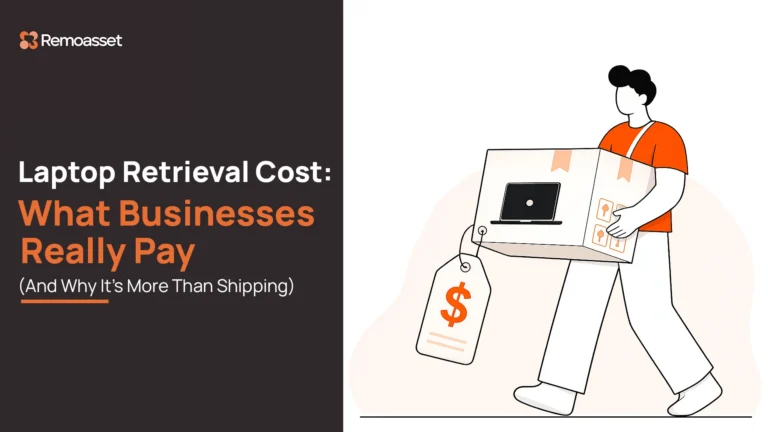
A missing MacBook isn’t just $2,000 in hardware. Its software licenses are still assigned to the device, potential data exposure, and replacement costs when you need that capacity for someone else. Multiply this across dozens of exits annually and losses add up fast.
International logistics complexity
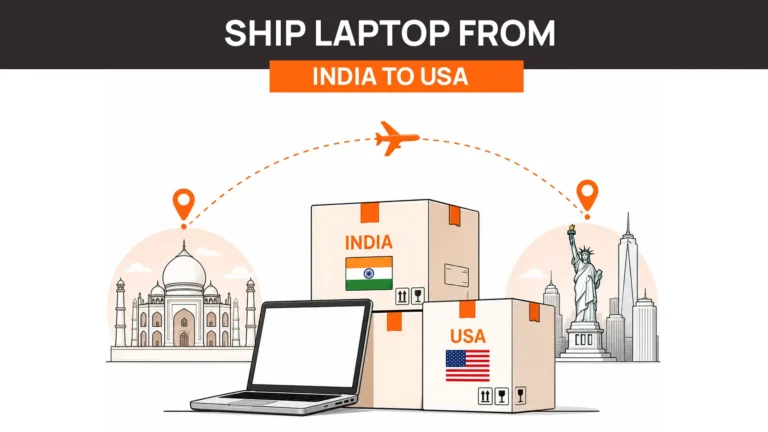
Domestic laptop returns are straightforward. Send a FedEx label, done. International returns involve customs documentation, regional carrier selection, import/export regulations, and local address formats. An employee in Brazil can’t just drop a laptop at FedEx. You need local logistics partners who understand Brazilian postal systems and customs procedures.
Stubborn employees
Departed employees, especially terminated ones rarely prioritize returning company property. They’re dealing with job searches, life changes, or just don’t care. Without systematic follow-up and enforcement, devices disappear.
Security exposure
Every day a laptop sits unreturned is a day sensitive data exists outside your control. Physical recovery closes the security loop.
Manual coordination overhead
Without dedicated retrieval services, someone on your team is researching shipping options, generating labels, tracking packages, following up with employees, and coordinating with finance on write-offs. That’s hours per departure that IT and HR teams don’t have.
Related Read:
- Laptop Asset Management Software
- Best Laptop as a Service (LaaS) Providers
- Best Laptop Return Services for Remote Teams
What Is an International Laptop Retrieval Service?
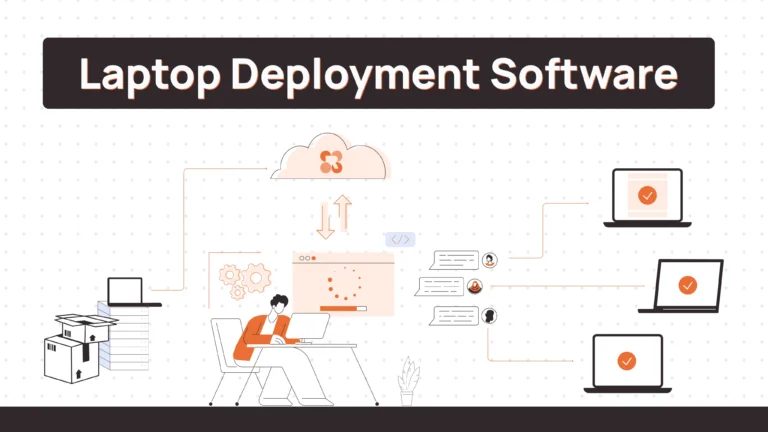
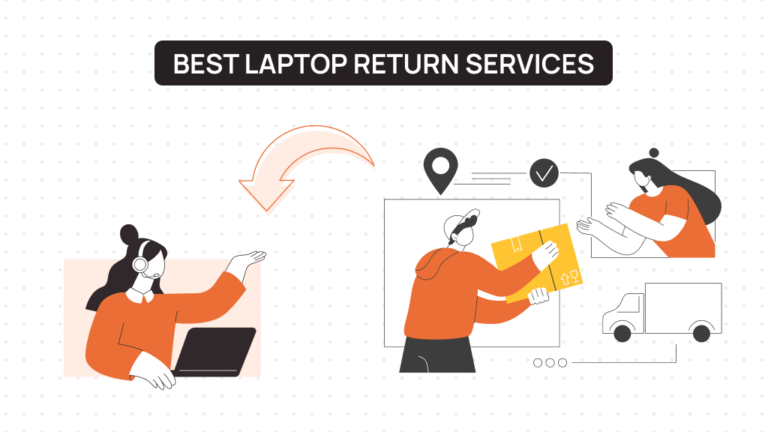
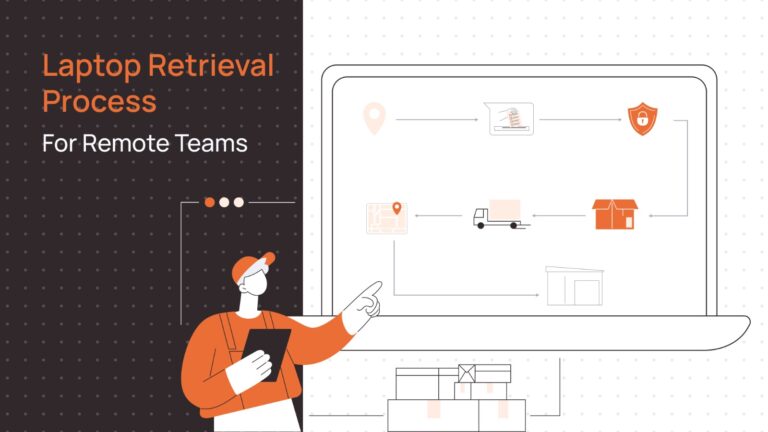
An international laptop retrieval service handles the logistics of recovering IT equipment from employees anywhere in the world. Instead of your team managing shipping labels, customs forms, and employee follow-up, the service provides end-to-end coordination.
How it works:
- Request submitted: Your team submits a retrieval request with employee location and device details
- Kit shipped: The service sends a prepaid return kit with padded box, shipping label, instructions to the employee’s address
- Employee packs and ships: Clear instructions guide the employee through packing. Prepaid label covers all shipping costs
- Automated reminders: If the employee delays, the service sends reminder emails escalating over time
- Real-time tracking: You see exactly where the device is from pickup through delivery
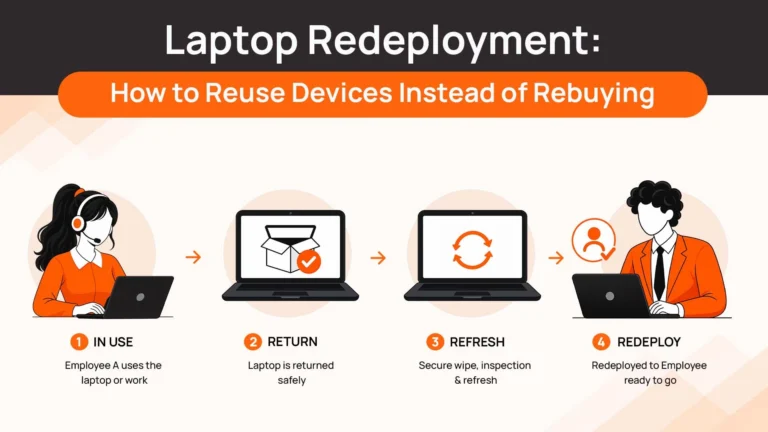
- Device received and processed: Once returned, the device is inspected, data-wiped if needed, and either stored, redeployed, or disposed of
Why Traditional Shipping Methods Fail
Before we tell you the upside of using an international laptop retrieval service, let’s take a look at the most common ways in which traditional shipping fails.
No specialized packaging
FedEx and UPS sell boxes, but not laptop-specific padded kits. Employees improvise with newspaper and hope. Devices arrive damaged or don’t arrive at all.
Employee confusion
“Ship it back to us” sounds simple until the employee asks: Which carrier? What address? Who pays? How do I pack it? Confusion creates delays.
No follow-up system
You send one email asking for the laptop back. The employee ignores it. You send another. They promise to do it. Nothing happens. You lack systematic escalation.
International logistics difficulties
DHL works differently in Germany than in Indonesia. Customs forms vary by country. Carrier availability changes by region. Your team doesn’t know these details. Retrieval services do.
No chain of custody
With DIY shipping, you can’t prove the device was wiped, who handled it, or when it arrived. Compliance audits require documentation traditional shipping doesn’t provide.
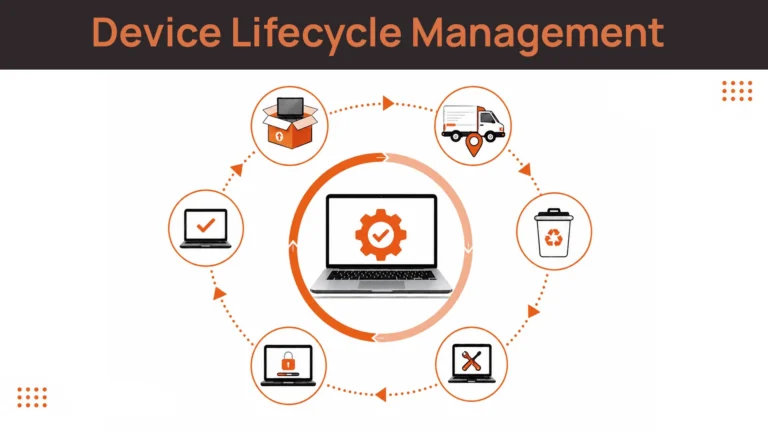
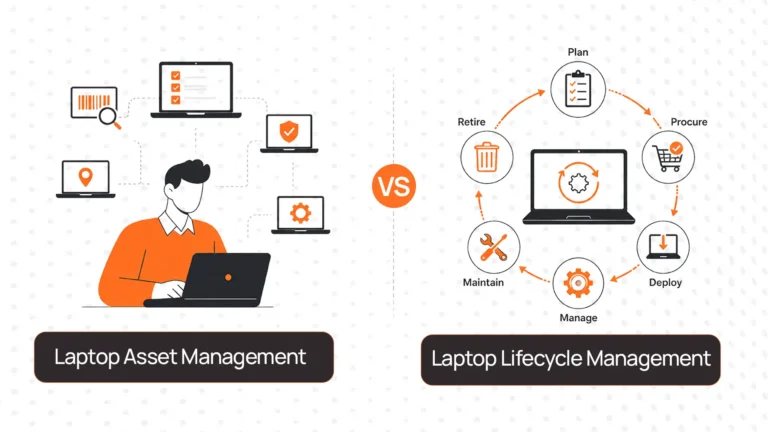
Laptop Retrieval vs Device Lifecycle Management
Not sure which approach you need? Use this table to understand the key differences and decide based on your operational reality.
| Factor | Laptop Retrieval Services | Device Lifecycle Management Platforms |
| Primary Function | Get devices back when employees leave | Manage entire device journey from purchase to disposal |
| What They Handle | Send boxes, track returns, confirm receipt, basic storage | Procurement, inventory tracking, deployment, retrieval, refurbishment, redeployment, disposal |
| Integrations | Limited or none | HRIS, finance systems, MDM, procurement tools |
| Visibility | Device location during return only | Real-time visibility: where every device is, who has it, condition, deployment date, retrieval timeline |
| Problem Solved | Employees leave, laptops disappear | Managing assets across spreadsheets and email—lifecycle problem, not just retrieval |
| Best For | 50 devices, low turnover, single/few countries | 100+ devices, international teams, frequent turnover, need for redeployment |
| When to Choose | Your only problem is recovering devices; you’re fine managing procurement, deployment, and reuse separately | You’re managing assets across spreadsheets, losing visibility, or spending hours coordinating device logistics |
The decision point: If you’re managing assets across spreadsheets and email, you have a lifecycle problem. Retrieval services won’t fix that. You’ll get devices back but still won’t know where all equipment is, when to retrieve it, or how to redeploy efficiently.
What to Look for in a Laptop Retrieval Service
When making choices for your IT team, you need to know what exactly you should look for before locking down on a provider. Here are the important criterias you can’t ignore:
Global coverage
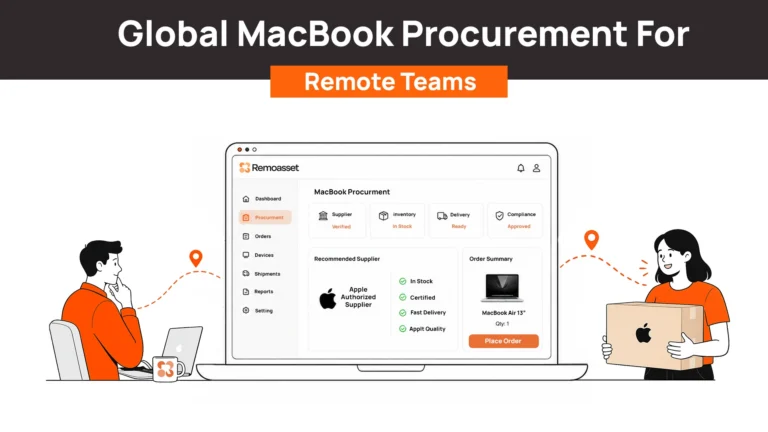
Operates in all countries where you have employees. Not just claims coverage but actual local logistics partnerships. Learn more on global laptop procurement and retrieval
Retrieval success rates
Above 90% on-time return rate. Anything lower means you’re still losing devices regularly.
Security and compliance
Certified data wiping (NIST 800-88 or equivalent), chain-of-custody documentation, tamper-evident packaging, audit trail for compliance.
Automation
Integrates with your HRIS so terminations trigger retrievals automatically. Sends reminder emails without manual intervention.
Employee experience
Clear instructions, responsive support if employees have questions, friction-free process that doesn’t punish departing workers.
Pricing model
Transparent per-retrieval fees or subscription pricing. No hidden costs for international shipments or expedited returns.
Post-retrieval handling
Options for device storage, refurbishment, redeployment, or certified recycling. Not just “we got it back”—what happens next?
Related Read: How to Manage Company Laptops
Best International Laptop Retrieval Services
If you are looking for a reliable international laptop retrieval service provider, these are your best option right now:
1. RemoAsset
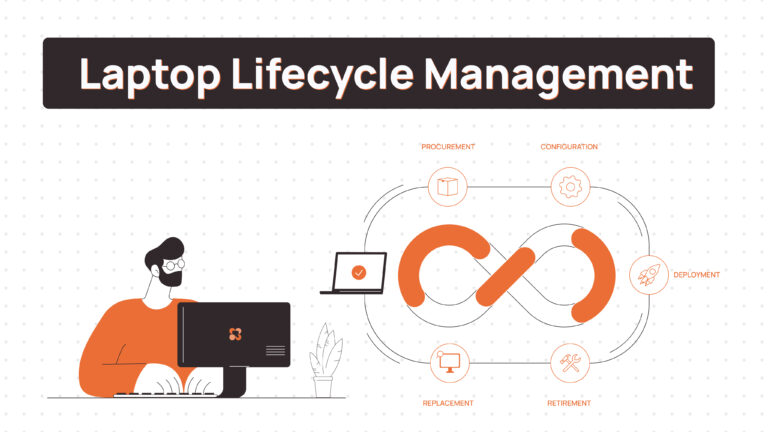
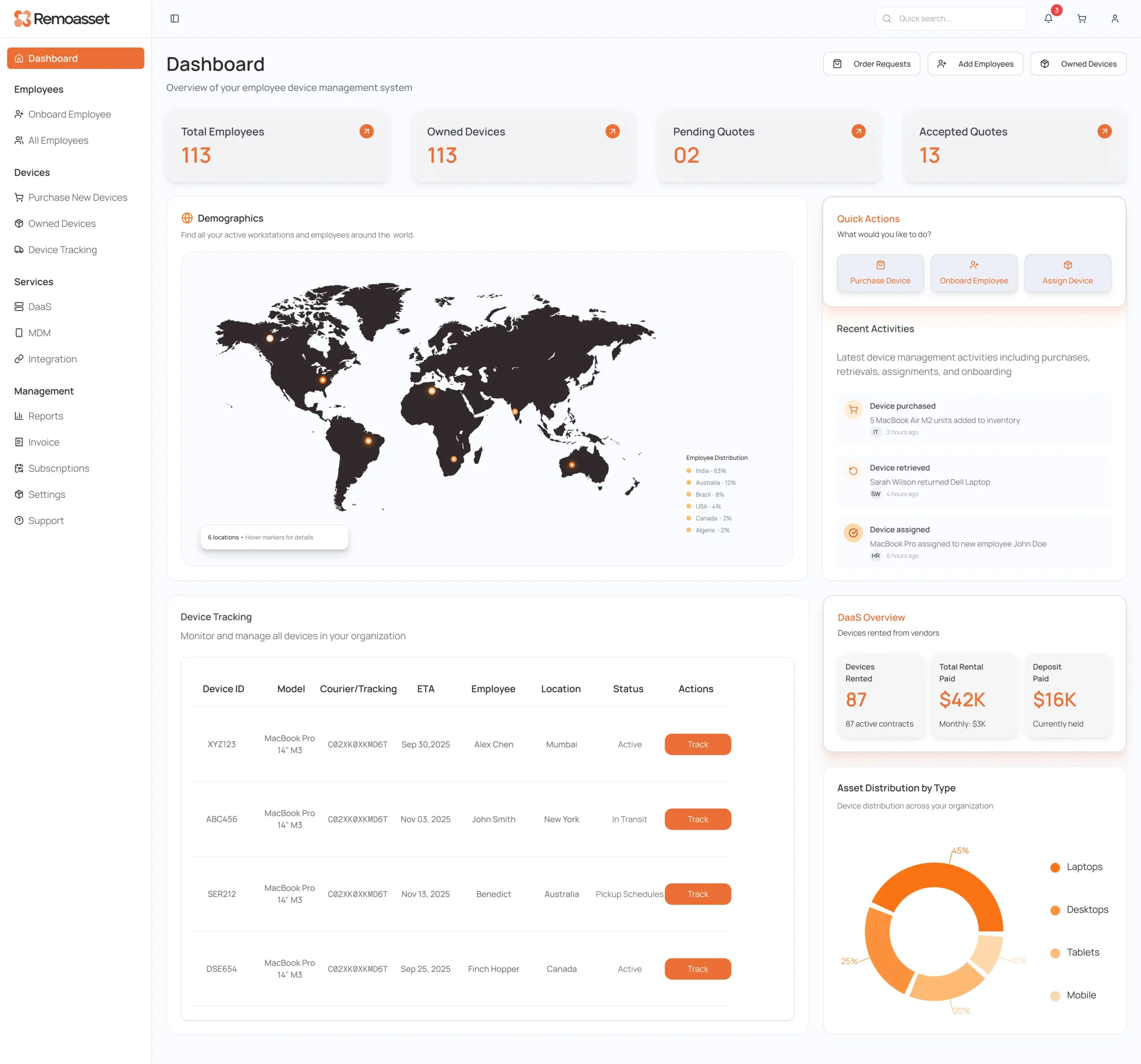
RemoAsset handles international laptop retrieval as part of full device lifecycle management. The platform manages procurement, deployment, tracking, retrieval, refurbishment, and redeployment globally.
Key Features
- Automated retrieval workflows triggered by HRIS integration
- Global logistics coverage across 80+ countries
- Certified data wiping with compliance documentation
- Real-time tracking and chain-of-custody records
- Device storage, refurbishment, and redeployment infrastructure
Best For
Companies managing 50+ devices across multiple countries who need visibility across the full device lifecycle. Organizations serious about device reuse to reduce procurement costs.
Pricing
Custom pricing based on device count and lifecycle services used. More than retrieval-only services, but you’re consolidating multiple functions.
2. Retriever
Retriever offers straightforward laptop and monitor retrieval focused on the US, Canada, UK, and major EU markets. Simple web interface, fast kit delivery (24-48 hours), and basic tracking.
Key Features
- Padded laptop boxes with prepaid labels
- Automated employee reminders
- Real-time shipment tracking
- Optional device refurbishment or recycling
- Enterprise API for bulk retrievals
Best For
US and Europe-focused companies needing simple, reliable retrieval without full lifecycle management. Teams that want pay-per-use pricing without subscription commitments.
Pricing
Starts at $95 per laptop retrieval. Monitor returns from $195. Check out their Pricing page for more details.
3. Workwize
Workwize provides IT asset lifecycle management including global retrieval services across 100+ countries. The subscription-based model covers unlimited retrievals, procurement, and disposal.
Key Features
- Zero-touch retrieval with prepaid kits worldwide
- Multi-channel employee communication
- NIST 800-88 compliant data wiping
- Asset redeployment and resale support
- HRIS integrations (BambooHR, Workday, etc.)
Best For
Mid-size to enterprise companies (50-500 employees) managing full IT asset lifecycle. Organizations wanting subscription-based predictability instead of per-device costs.
Pricing
Subscription starts at $8 per seat/month plus platform fee. Check their Pricing page for the most updated information.
Related Read: Best Workwize Alternatives & Competitors
4. GroWrk
GroWrk specializes in global IT asset logistics across 150+ countries with focus on international complexity. Handles deployment, retrieval, storage, and recycling as a unified workflow.
Key Features
- Local logistics partnerships in 150+ countries
- Prepaid return kits with real-time tracking
- Certified data wiping and environmental compliance
- 24/7 platform access and support
- AI-driven asset insights
Best For
Enterprises with employees in 20+ countries dealing with fragmented international logistics. Companies wanting one vendor managing global operations end-to-end.
Pricing
Custom enterprise pricing. You can contact for quote.
Read Also: Best Growrk Alternatives & Competitors
5. Allwhere
Allwhere emphasizes employee experience in the retrieval process. Clear communication, simple instructions, and respectful approach to offboarding. Global coverage with average retrieval time under one week in the US.
Key Features
- Employee-friendly communication and instructions
- Global return logistics with real-time tracking
- HRIS integrations (BambooHR, Okta, Justworks)
- Priority customer support
- Custom retrieval timelines available
Best For
Companies that care about employer brand through the offboarding process. Teams where voluntary compliance is generally high and you need smooth processes to support it.
Pricing
Custom pricing. Contact for quote.
Related Read: Best Allwhere Alternatives
Comparison Table of Top International Laptop Retrieval Services
This table helps you get a bird’s eye view of the best international laptop retrieval services you can choose from:
| Provider | Global Coverage | Retrieval Model | Lifecycle Support | Security Features |
| RemoAsset | 80+ countries | Full lifecycle platform | Procurement, deployment, retrieval, refurbishment, redeployment | NIST 800-88 data wiping, chain of custody, compliance docs |
| Retriever | US, Canada, UK, EU | Pay-per-retrieval | Retrieval only, optional recycling | Basic tracking, optional refurbishment |
| Workwize | 100+ countries | Subscription (unlimited) | Full lifecycle with redeployment | NIST 800-88, compliance certs |
| GroWrk | 150+ countries | Subscription or custom | Full lifecycle with AI insights | Certified wiping, environmental compliance |
| Allwhere | Global | Custom per-retrieval | Limited redeployment | Standard wiping, tracking |
How to Choose the Right Laptop Retrieval Service
Use this decision matrix to match your company profile with the right provider. Find your situation in the left column, then follow the recommendations across.
| Your Situation | Best Fit | Avoid | Why |
| Small teams | Retriever | RemoAsset, GroWrk, Workwize | Per-device pricing makes sense at low volume. Lifecycle platforms have implementation overhead that exceeds value at this scale. |
| Startups | Workwize or Allwhere | Retrieval-only long-term | Use simple retrieval if that’s your primary need. Use RemoAsset if you want to avoid switching providers as you scale. |
| Enterprises | RemoAsset or GroWrk | Retrieval-only vendors | Use RemoAsset for full lifecycle control and device redeployment. Use GroWrk if international logistics. |
| Security-sensitive / Highly regulated | RemoAsset, GroWrk, or Workwize | Simple retrieval services | You need verified data wiping (NIST 800-88), compliance reporting, audit trails, and chain-of-custody documentation. |
| Sustainability-focused | RemoAsset, GroWrk, or Workwize | Vendors without certified recycling | Verify refurbishment and recycling processes. These providers offer systematic reuse and certified recycling with ESG documentation. |
Stop Chasing Laptops. Start Managing Device Lifecycles.
Most companies over 50 employees managing international teams need lifecycle platforms. The question isn’t whether to use a retrieval service. It’s whether you need retrieval as a standalone function or as part of systematic lifecycle management.
RemoAsset handles both. When an employee leaves, retrieval triggers automatically through HRIS integration. The device gets tracked from pickup through data wipe to redeployment. You see real-time status across your entire device inventory.
Beyond retrieval, RemoAsset manages procurement, deployment, refurbishment, and disposal globally. One platform replaces the spreadsheets, manual coordination, and fragmented tools currently slowing your team down. If you’re managing 100+ devices internationally and tired of reactive asset management, RemoAsset turns device logistics from a recurring crisis into a controlled system.