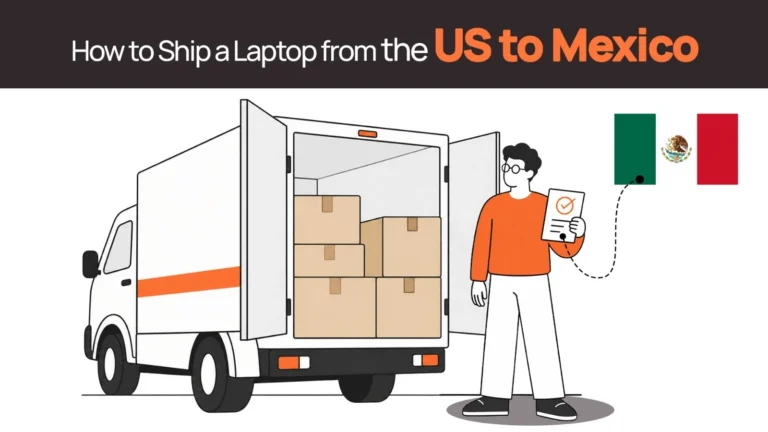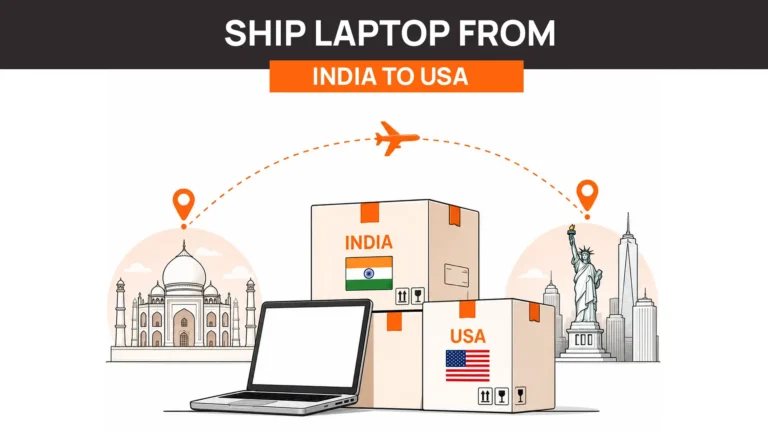


International laptop retrieval stalls in a predictable set of countries, and almost always for the same underlying reason: the border. Export paperwork, recipient tax IDs, used-goods import restrictions, and customs regimes that change without much notice all sit at the point where a device crosses from one country into another, not in the employee’s willingness to send it back. Keep the device inside the country it’s already in, and most of this friction disappears before it starts.
What Makes a Country Hard for International Laptop Retrieval
A handful of factors show up again and again. Courier pickup coverage thins out fast once you’re outside major metro areas, and a carrier that handles São Paulo smoothly may not reach a smaller city at all. Export paperwork that’s simple for a business becomes a real obstacle for an individual employee filling it out alone.
Tax ID requirements on the waybill — a CPF, a CUIT, a PAN — stop a shipment cold if nobody collected that information in advance. Used and refurbished electronics face different, often stricter, import rules than new ones in many destinations.
Customs regimes change: a courier threshold or tax rate that was accurate six months ago may not be now. And a small number of countries are off-limits entirely because of sanctions, which is its own category covered separately below.
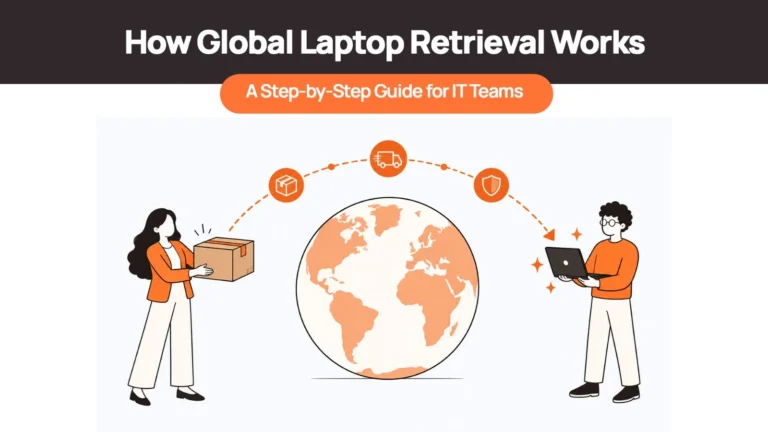
The step-by-step mechanics of retrieval itself — triggering, locking, tracking, wiping — are covered in our companion guide on how global laptop retrieval works.
| Related Reads |
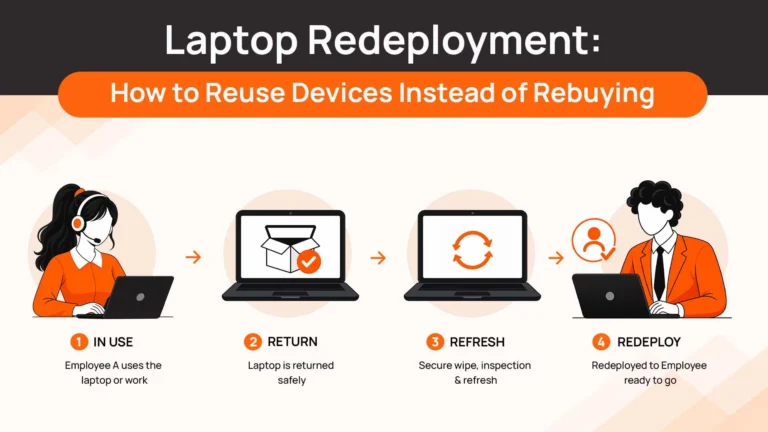
| → Laptop Redeployment Guide What to do with a retrieved device once it’s back in circulation — or staying in-country. |
| → Secure Asset Retrieval How Remoasset manages the end-to-end retrieval process, including hard-to-reach locations. |
| → Data Wiping and Secure Erasure Ensuring a retrieved device is fully sanitised regardless of where it was collected from. |
| → Corporate Laptop Disposal End-of-life options for devices that won’t be redeployed after retrieval. |
| → Where Do Retrieved Laptops Go? The downstream lifecycle of a laptop after a successful retrieval. |
The Hardest Countries to Retrieve Laptops From
1. Brazil
Brazil’s difficulty sits almost entirely at customs. Courier shipments, including returns, are generally cleared under Brazil’s simplified courier tax regime rather than the standard tariff schedule, which can apply a flat tax rate regardless of what the device’s actual duty-free classification would otherwise be.
The recipient or sender needs a CPF or CNPJ on file for the shipment to clear at all. Used electronics face additional scrutiny on declared value, since customs expects a depreciated figure, not the original purchase price. Laptops with Wi-Fi also fall under ANATEL’s telecom equipment rules, though a device imported for one person’s own use generally qualifies for a lighter “own use” pathway rather than full commercial certification.
How to handle it: collect the CPF or CNPJ before initiating any return, declare an honest depreciated value, and default to keeping the device in Brazil rather than shipping it out, which avoids this entire set of problems. For more detail on how the inbound side of this works, see our guide to shipping a laptop from the US to Brazil — the same customs mechanics apply in reverse.
2. Argentina
Argentina’s courier rules changed again in mid-2026. As of General Resolution No. 5883/2026, ARCA (Argentina’s customs and tax authority) removed the previous USD 3,000 value limit on courier exports and introduced simplifications around the USD 400 duty exemption for qualifying imports. Recipients must be at least 16 years old and meet domicile requirements published on ARCA’s international shipments portal. Separately, General Resolution No. 5884/2026 covers postal shipments specifically, capping personal-use postal items at US$3,000 FOB and a maximum of three units of the same item.
How to handle it: confirm current courier regime terms before each shipment rather than relying on a saved reference, and keep the recipient’s CUIT or CUIL on file in advance. Local, in-country retrieval in Argentina sidesteps the export side of this entirely.
3. India
India reclassified laptops, tablets, and PCs (HSN 8471) from “Free” to “Restricted” import status in 2023, meaning commercial imports now generally require a DGFT authorisation. The important exception: import of a single laptop, tablet, or PC through post or courier is specifically exempted from that licensing requirement, which covers the typical one-employee, one-device retrieval case. Within India, moving goods above ₹50,000 in value generally requires an e-way bill under GST rules, which can apply to domestic legs of a retrieval even when the device isn’t crossing an international border.
How to handle it: cite the single-unit courier exemption explicitly in shipping documentation if a courier or customs agent flags it, and confirm whether an e-way bill is needed for any domestic movement above the threshold. Local retrieval in India avoids the international leg of this question altogether.
4. Indonesia
Indonesia’s most commonly cited friction point, IMEI registration, is worth a correction most guides get wrong: IMEI registration applies to devices with cellular connectivity (an IMEI number), which covers phones and LTE-equipped devices, not standard Wi-Fi-only laptops, since those don’t have an IMEI at all. The more relevant requirement for Indonesia is the PEB (Pemberitahuan Ekspor Barang) export declaration for formal commercial export movements, and general electronics export documentation that DHL’s own Indonesia guidance outlines for outbound electronics shipments.
How to handle it: confirm whether the specific device actually has cellular capability before assuming IMEI rules apply, and prepare standard export documentation (commercial invoice, packing list) for anything leaving the country formally. See also our remote device offboarding checklist for the documentation steps that apply across all international retrievals.
5. The Philippines
The Philippines requires an Export Declaration from the Bureau of Customs for shipments above a low value threshold, which most laptop returns exceed given typical device values. Pickup coverage also varies meaningfully by location: metro Manila is well served by major couriers, while provincial and island locations can have limited or inconsistent coverage — a genuine geography problem on top of the paperwork one.
How to handle it: confirm courier coverage for the specific city or province before committing to a pickup date, and prepare the export declaration in advance rather than after a shipment is already booked.
6. Parts of Sub-Saharan Africa
Difficulty here is less about a single customs rule and more about physical logistics: residential pickup coverage from major international couriers is inconsistent outside large cities in several countries, and address systems that don’t map cleanly to standard courier databases can turn a routine pickup into several rounds of back-and-forth just to confirm a location.
What usually goes wrong: booking a standard international courier pickup the same way it would work in a major market, without first confirming that the carrier actually reaches the employee’s specific address.
How to handle it: confirm pickup coverage for the exact address before scheduling anything, and build in extra lead time as a default rather than an exception.
Countries Where You Should Stop and Call Legal First
A small number of jurisdictions aren’t a logistics problem — they’re a compliance one. Major couriers, including DHL, FedEx, and UPS, suspended commercial and parcel services to Russia and Belarus following the sanctions imposed since 2022, and those suspensions remain in effect.
The practical rule here: if an employee is in a sanctioned or export-restricted jurisdiction, don’t attempt physical retrieval on your own. Lock the device remotely if it’s reachable, document the situation, and involve legal and compliance before any shipment is arranged.
| ⚠ Legal Warning: Sanctioned Jurisdictions Russia, Belarus, and other OFAC-listed jurisdictions are not a logistics problem to solve independently. Courier suspensions and export control rules both apply — and violations carry significant legal and financial risk. If an employee is in a sanctioned jurisdiction: lock the device remotely if reachable via MDM, document the situation clearly, and involve your legal and compliance team before any action is taken. This is not legal advice. Sanctions and export control rules are specific to the country, the device, and the circumstances, and need a qualified review before any action. |
Difficulty at a Glance
| Country | Main friction | What to prepare | Best approach |
|---|---|---|---|
| Brazil | Courier tax regime, CPF/CNPJ requirement, ANATEL | Recipient’s CPF/CNPJ, honest depreciated value | Keep in-country |
| Argentina | Frequently changing courier/postal regime (ARCA, 2026) | Current regime terms, CUIT/CUIL | Keep in-country |
| India | Restricted import classification (single-unit exemption applies) | Citation of the single-laptop courier exemption | Ship out or keep in-country |
| Indonesia | PEB export declaration (not IMEI, for most laptops) | Standard export documentation | Ship out with documentation |
| Philippines | Export Declaration requirement, uneven provincial coverage | Export Declaration, confirmed courier coverage | Keep in-country |
| Parts of Sub-Saharan Africa | Residential pickup coverage, address matching | Confirmed address and carrier coverage | Case by case |
| Russia, Belarus, OFAC-listed jurisdictions | Courier suspensions, export controls | Legal/compliance review before any action | Legal review first |
These rules were checked in October 2026 and change more often than most IT teams expect. Confirm current requirements before relying on this table for an actual shipment.
How to Handle Retrievals in Difficult Countries
A few practices apply across every country on this list, not just the hardest ones.
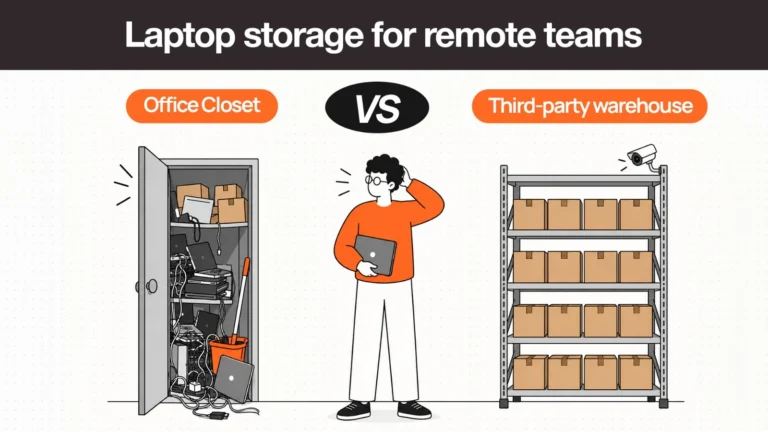
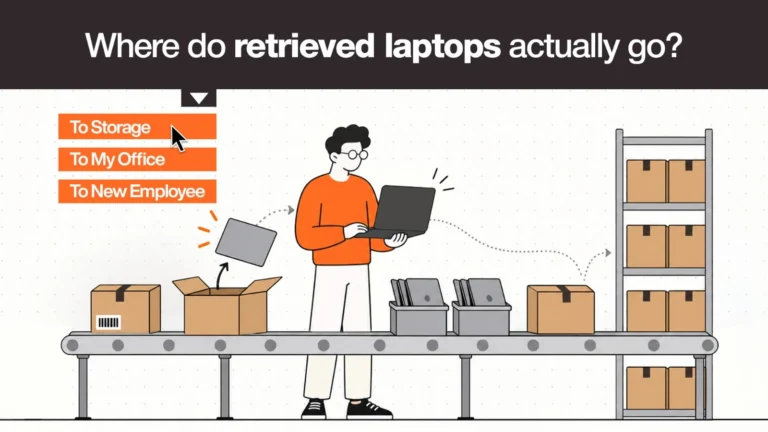
Decide the device’s eventual destination before the employee’s exit is even finalised, not after a shipment has already stalled. Default to keeping the device in-country via local storage wherever possible, since that removes export paperwork, tax ID requirements, and used-goods restrictions from the equation entirely.
Collect tax IDs and confirm addresses at the point of onboarding, not during offboarding when there’s no time buffer left. Use instructions in the employee’s own language where you can, since a confusing return process in an unfamiliar language is its own source of delay.
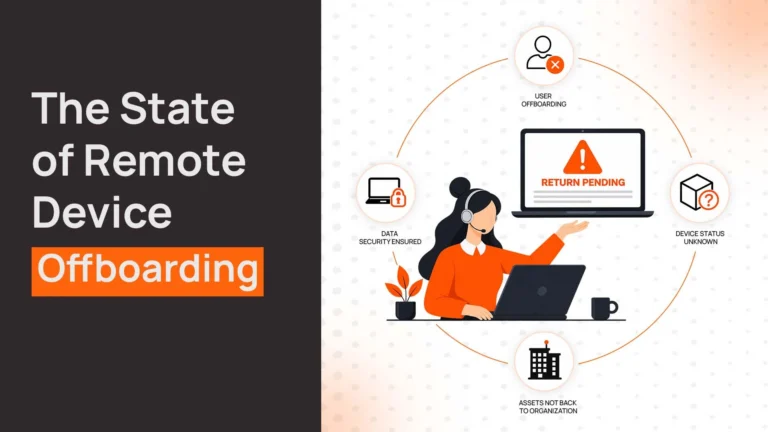
Lock the device and confirm encryption is active before pickup is even scheduled, through MDM. And track every shipment to its first carrier scan specifically, since a device that’s “been picked up” on paper but hasn’t actually scanned in anywhere is the earliest reliable sign something has stalled.
This is the same logic behind local, in-country pickup generally: the countries on this list are hard largely because of what happens at a border, and a retrieval that never reaches one skips most of these problems by default.
The Border Is the Problem, Not the Country
Every country on this list is difficult for a specific, nameable reason sitting at its border: a tax ID requirement, an export declaration, a courier regime that changed twice in a year. None of it is really about the employee or the device itself. The single most useful decision an IT team can make is where that device ends up — in-country or shipped home — and making that call before an exit happens rather than during one.
One thing worth doing this week: list the countries where you actually have employees, mark which ones warrant a default keep-in-country rule based on what’s above, and start collecting tax IDs for those countries now rather than at the point of the next offboarding.
Running that rule consistently across Brazil, Argentina, India, and everywhere else on this list is the actual problem Remoasset solves. Local pickup and in-country handling means a CPF, a CUIT, or a single-unit courier exemption isn’t something IT has to remember case by case — it’s built into how retrieval already runs in that country. The device stays out of customs by default, not by exception, which is why the countries on this list stop being the hardest ones once retrieval is handled this way.
FAQs
Why is laptop retrieval from Brazil difficult?
Mainly customs. Courier returns generally clear under Brazil’s simplified courier tax regime rather than the standard tariff schedule, a CPF or CNPJ is required on the shipment, and Wi-Fi devices fall under ANATEL’s telecom rules, though a lighter “own use” pathway usually applies for a single returning device.
Can you ship a used laptop out of Argentina?
Yes, but Argentina’s courier and postal export rules have changed more than once in 2026 alone. Confirm the current value limits and documentation requirements with ARCA’s international shipments resources before each shipment rather than relying on older guidance.
Do you need an e-way bill to move a laptop in India?
Potentially, for the domestic leg: GST rules generally require an e-way bill for goods movements above ₹50,000 in value. Separately, a single laptop returning through courier is specifically exempted from India’s restricted-import licensing requirement.
Which countries do couriers not pick up from?
No country is universally excluded, but coverage varies significantly below the major-city level in several regions, including parts of Sub-Saharan Africa and provincial areas of archipelago countries like the Philippines and Indonesia. Confirm coverage for the specific address, not just the country.
What to do if an employee is in a sanctioned country?
Stop before arranging any physical shipment. Lock the device remotely if reachable, document the situation, and involve legal and compliance — since courier suspensions and export controls both apply to Russia, Belarus, and other OFAC-listed jurisdictions. This isn’t a logistics problem to solve on your own.
Should you ship a laptop back to headquarters from a difficult country?
Usually not by default. Most of the friction in these countries sits at the export or import step specifically, so keeping the device in-country for storage or local redeployment avoids that step entirely in most cases.