As organisations scale hybrid teams and cloud services faster than ever, IT estates become larger and more fragmented. The result is a surge in unused, lost or non-compliant IT assets that inflate costs and increase security risk. Spreadsheet tracking no longer works. Modern IT teams need a single platform to discover, track, secure and optimise hardware and software across locations.
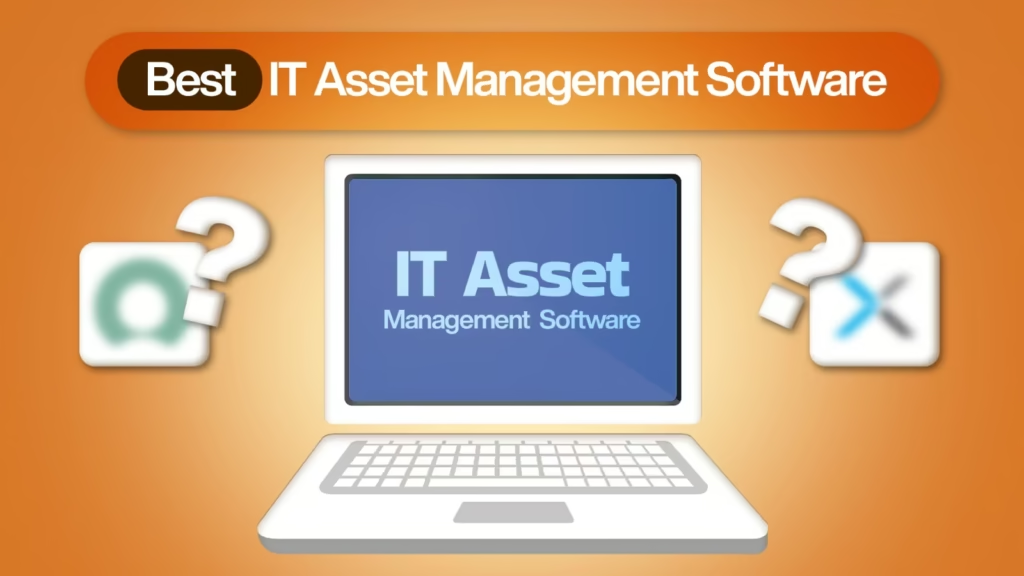
If you are evaluating the best IT asset management software, this guide compares the leading tools in 2026, explains what ITAM software actually does, lists measurable business outcomes, outlines must have features and shows how RemoAsset positions itself as the modern ITAM platform for distributed workforces with automation, zero touch provisioning and global sourcing plus recovery. Throughout the article you will find practical buying criteria, a comparison table and short vendor evaluations so you can choose the right fit.
A useful industry benchmark: many organisations report significant inaccuracies in their asset records. Estimates vary, but multiple sources indicate that between 10 and 30 percent of fixed IT assets are ghost assets or otherwise unaccounted for. Proper ITAM reduces that leakage and recovers both financial and security value.
What Is IT Asset Management Software?
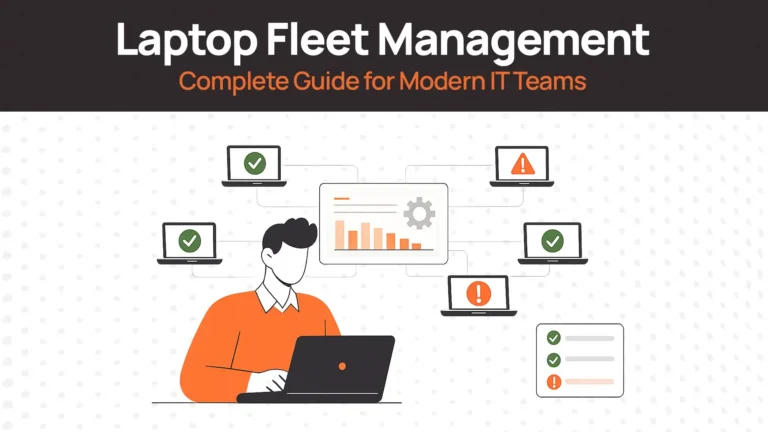
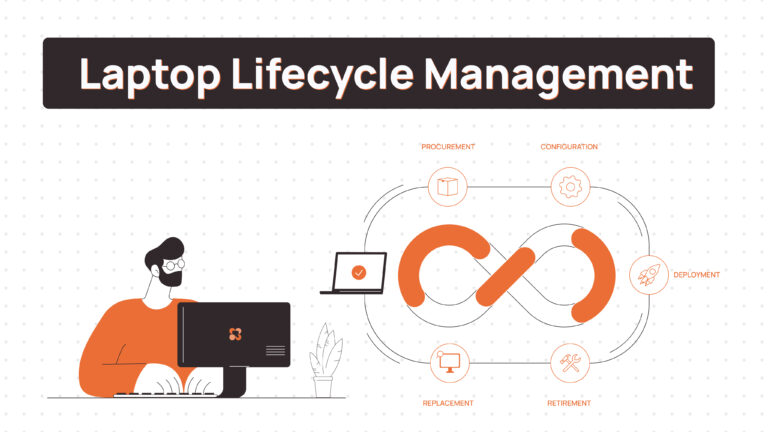
IT Asset Management software, or ITAM, gives organisations lifecycle visibility for technology assets from procurement to disposal. A modern ITAM platform centralises the asset database, automates discovery, tracks ownership and location, monitors warranties and licences, and integrates with ITSM, MDM and HR systems to enforce policies and automate workflows. The goal is to reduce wasted spend, improve compliance and speed operational tasks such as onboarding, patching and retirement.
Types of assets ITAM tools track
- Hardware: laptops, desktops, servers, networking equipment, mobile devices.
- Software and cloud: licences, subscriptions and SaaS entitlements.
- Security assets: certificates, keys and security appliances.
- Non IT but related items: peripherals, office equipment and leased assets.
An effective ITAM program treats assets as financial items, operational items and security items. Good software lets you manage all three perspectives in one place.
Benefits of IT Asset Management Software
Organisations adopt ITAM tools to convert asset data into measurable business outcomes:
- Reduce spend on unused or duplicate devices and licences. Automated discovery reveals unused software and orphaned devices so you can reclaim licences and reduce renewals.
- Faster onboarding and day one productivity. Zero touch provisioning and prebuilt workflows get new hires productive immediately.
- Eliminate shadow IT and close compliance gaps. ITAM combined with discovery and SaaS spend monitoring reduces unapproved apps and audit risk.
- Optimal refresh cycles. Data driven refresh planning balances cost and performance.
- Stronger forecasting and budgeting. Reports on depreciation, warranty expiry and replacement cost feed procurement and finance.
All of those outcomes lower total cost of ownership, reduce security exposure and make audits simpler.
9 Best IT Asset Management Software (2026 comparison)
Below is an introductory sentence followed by a compact comparison table. After the table you will find deeper vendor summaries with key features, pros and cons, pricing notes and best fit guidance. RemoAsset is featured as the hero product with expanded detail.
Top 9 IT Asset Management Software: Comparison Table
| Vendor | Strength / Focus | Best for |
|---|---|---|
| RemoAsset | End to end lifecycle for distributed workforces, zero touch provisioning, retrieval + recovery | Remote first, global companies that need procurement to disposal in one platform |
| Zluri | SaaS discovery and optimisation with ITAM integration | SaaS heavy companies focused on licence optimisation |
| Deel | Global payroll and contractor lifecycle with asset provisioning add-ons | Companies with contractors and global payroll needs |
| GroWrk | ITAD and device recovery focus plus lifecycle services | Organisations prioritising recovery and ITAD |
| Workwize | Regional retrieval logistics, strong EU coverage | Europe centric distributed teams |
| AssetPanda | Highly customisable tracking and mobile workflows | Field teams and organisations wanting mobile-first asset capture |
| SolarWinds | Network aware discovery and integration with ITSM | Teams needing strong discovery and ticket integration |
| ManageEngine | Affordable, flexible deployment and discovery | Midmarket organisations seeking on-prem or cloud options |
| ServiceNow | Enterprise CMDB and ITAM in an integrated ITSM platform | Large enterprises needing deep process automation and governance |
RemoAsset
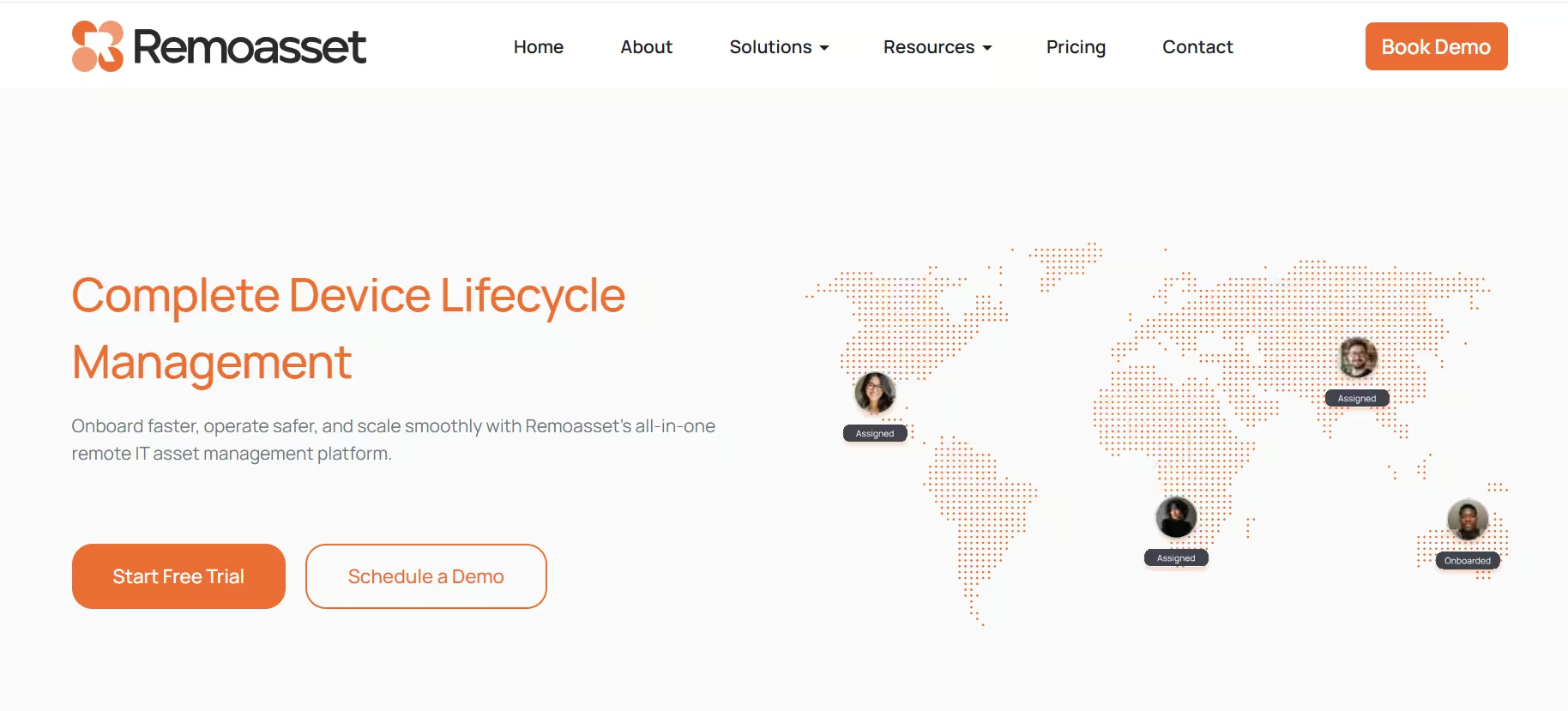
RemoAsset is built from the ground up for the challenges of remote and hybrid work. The platform unifies procurement, zero touch provisioning, endpoint monitoring, retrieval and certified disposal into a single lifecycle workflow. RemoAsset focuses on global sourcing, last mile logistics and automated retrieval so organisations recover value and stay audit ready.
Key features
- Centralised procurement and vendor management across regions.
- Zero touch provisioning so devices enrol automatically with MDM and security agents on first boot.
- Real time tracking and geo visibility for hardware in transit and in use.
- Automated offboarding and retrieval workflows with prepaid return kits.
- Integrated ITAD partners and certified data destruction with chain of custody.
- Reporting on residual value, repairability and e waste diverted.
Pros & Cons
Pros: end to end lifecycle, strong logistics focus, automation for distributed teams, retrieval and disposal integrated.
Cons: newer than legacy enterprise platforms for very large use cases.
Pricing
Custom enterprise pricing. Offers subscription plans that combine procurement, management and retrieval services. Contact sales for a tailored quote.
Best for
Remote first companies, scale ups and enterprises that prioritise automation, global sourcing and device recovery.
Zluri
Zluri focuses on SaaS discovery and management but also offers ITAM capabilities by combining SaaS intelligence with hardware inventory. It is strong for companies with heavy SaaS stacks that want visibility into software spend and usage.
Pros: Great SaaS optimisation, license reclamation, strong integrations.
Cons: Hardware lifecycle features not as comprehensive as dedicated ITAM vendors.
Deel
Deel is best known for payroll and contractor management. In 2026 many workforce platforms offer asset provisioning add ons to manage devices for contractors, tying procurement to contract lifecycle. Deel suits organisations that run large contractor programmes.
GroWrk & Workwize
GroWrk and Workwize are worth considering when retrieval, last mile logistics and regional pickup speed are priorities. These vendors combine ITAD and retrieval workflows with asset inventories. For Europe centric teams Workwize offers fast local pickup. GroWrk focuses on end to end recovery services. Want to checkout more Growrk alternatives & competitors, you can checkout our blog on that.
AssetPanda
AssetPanda is highly customisable and mobile friendly. It is useful for organisations that need field capture, maintenance logs and barcode scanning on the go. Custom workflows are easy to build but initial setup may require configuration effort.
SolarWinds
SolarWinds provides robust discovery and integration with ticketing. It is strong for teams that want automated network aware discovery, configuration and asset history linked to incidents. SolarWinds is a good fit for IT teams who need deep visibility into both asset hardware and networked services.
ManageEngine (AssetExplorer)
ManageEngine offers a flexible deployment model with both on prem and cloud options. It supports automated discovery, lifecycle control and warranty tracking at an accessible price point. ManageEngine is a common choice for midmarket organisations and those needing local support.
ServiceNow ITAM
ServiceNow provides enterprise grade ITAM integrated into a CMDB and full ITSM platform. It is ideal for large organisations that need rigorous governance, complex process automation and deep audit trails. ServiceNow is a premium solution with enterprise scale, but it carries higher implementation and licensing costs.
Must Have Features for IT Asset Management Software
When evaluating ITAM platforms, ensure the product scores well across these core capabilities:
Asset discovery and centralised database
Automated discovery is fundamental. The platform should discover networked hardware, mobile devices and ideally combine agent and agentless methods to build a central source of truth. Accurate discovery eliminates ghost assets.
Real time tracking and geo-visibility
Geo location, transport tracking and last known user help you locate devices, accelerate retrieval and reduce losses.
Licence and warranty monitoring
Track licence entitlements, renewal dates and warranty status. Alerts prevent unexpected expiration and unnecessary spend.
Device health analytics
Monitor device health metrics, battery status, storage usage and patch posture to prioritise replacements and reduce downtime.
Automated reporting and audits
Export audit ready reports for finance and compliance with serial number level proof, depreciation schedules and disposition certificates.
Secure offboarding and recovery workflows
Automated offboarding triggers retrieval workflows, remote wipe or lock, and chain of custody documentation for ITAD. Integration with HRIS and MDM is critical.
Key Considerations When Choosing ITAM Software
These selection criteria separate a tactical choice from a strategic platform:
- Global coverage and logistics
If your workforce spans countries, check whether the vendor supports regional procurement, local warranties and global retrieval logistics. - Integrations
Native integration with Mobile Device Management, HRIS, SSO and procurement systems reduces manual effort and increases reliability. - Audit ready compliance tracking
The platform should produce certificates and chain of custody logs for disposal and support regulatory needs such as SOC 2, ISO 27001 and GDPR. - Scalability and automation
Evaluate how the tool automates repetitive tasks: provisioning, stock replenishment, patch checks and retrieval scheduling. - Transparent pricing and total cost of ownership
Look beyond per seat pricing to include costs for integrations, logistics, ITAD and professional services.
Why Global Enterprises Choose RemoAsset for IT Asset Management
RemoAsset is designed for enterprises that need a single platform to procure, provision and recover devices across regions. Key differentiators include:
- End to end lifecycle management. RemoAsset handles procurement, zero touch provisioning, asset telemetry, retrieval and ITAD certification within one workflow. This reduces vendor sprawl and the coordination overhead that creates gaps.
- Strong logistics and recovery capability. For global workforces the last mile matters. Integrated retrieval and certified disposal mean organisations recover residual value and reduce e waste while maintaining audit proof.
- Automation that saves time. HRIS or ticket triggers can auto reserve devices, create procurement POs and schedule returns. Automation cuts manual work and reduces time to productivity.
- Audit and compliance readiness. RemoAsset stores a chain of custody records and certificates of destruction so auditors can verify controls for security and data privacy.
- Designed for remote first operations. RemoAsset focuses on remote employee realities such as regional warranty differences, local tax implications and temporary rentals for contractors.
Taken together these factors make RemoAsset a compelling choice for organisations prioritising global deployment, retrieval and automation.
Implementation Checklist for Buying ITAM Software
Use this checklist to evaluate vendors and plan your rollout:
- Confirm support for automated discovery methods for your environment.
- Verify integrations with MDM, HRIS and procurement systems.
- Ask for references in your industry and similar scale.
- Validate global logistics support and ITAD partnerships.
- Request sample audit reports, chain of custody and certificate formats.
- Test zero touch provisioning in a pilot cohort.
- Measure onboarding time before and after the pilot.
- Review pricing for hidden logistics, professional services and data exports.
- Ensure data residency and compliance controls meet your policies.
A structured procurement process reduces the likelihood of rework and delivers faster ROI.
Final Recommendation and Buying Path
For teams choosing the best IT asset management software in 2026, start with a scoped pilot that covers a small but representative set of locations and asset types. Use pilot metrics such as days to activation, asset recovery rate, and licence reclamation to build the business case. Prioritise solutions that combine discovery, automation and retrieval. If your environment is distributed, emphasise logistics and ITAD integrations when comparing vendors.
RemoAsset stands out when your priority is an integrated lifecycle approach that treats procurement and recovery as a single managed flow. If you need enterprise CMDB depth and heavy process automation across dozens of ITSM modules, ServiceNow is often the right choice. If your primary problem is SaaS sprawl choose a platform such as Zluri to optimise licence costs. For midmarket budgets ManageEngine or SolarWinds provide strong discovery and lifecycle features at a lower cost of entry.
Conclusion
The right ITAM platform reduces cost, improves compliance and turns asset data into actionable intelligence. In 2026 the market has matured: leaders offer discovery, telemetry, licence management and procurement integrations while newer entrants differentiate on global sourcing, device retrieval and zero touch provisioning. Choose based on your scale, global footprint and the business outcomes you need to deliver.
If your organisation runs remote first or hybrid teams and you want end to end lifecycle control with procurement, zero touch provisioning and integrated retrieval, book a demo with RemoAsset to see how an integrated platform can reduce lost devices, speed onboarding and simplify compliance.