When a company has 20 employees in one office, buying laptops is fairly straightforward. The IT team chooses a standard configuration, gets a quote from an OEM or reseller, places the order and distributes the devices.
At 500, 1,000 or several thousand employees spread across multiple countries, the question changes.
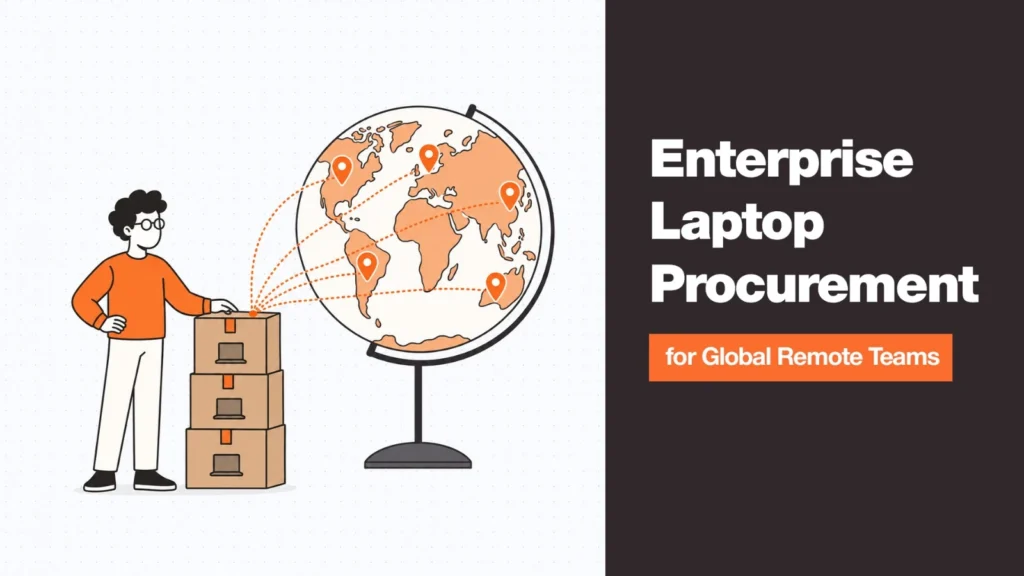
You are no longer asking, “Where can we buy laptops?” You are asking how to source hundreds or thousands of devices consistently across different markets, currencies, tax systems, delivery networks and vendor relationships without creating a separate procurement process for every country.
That is where enterprise laptop procurement gets complicated.
Large organizations typically buy through one of three channels: OEM enterprise programs, VARs and resellers, or managed device lifecycle platforms. Each model has a legitimate place in an enterprise IT strategy. The right choice depends on where your employees are located, how predictable your demand is, how much procurement and logistics work your internal team can absorb, and whether you need services beyond simply buying the hardware.
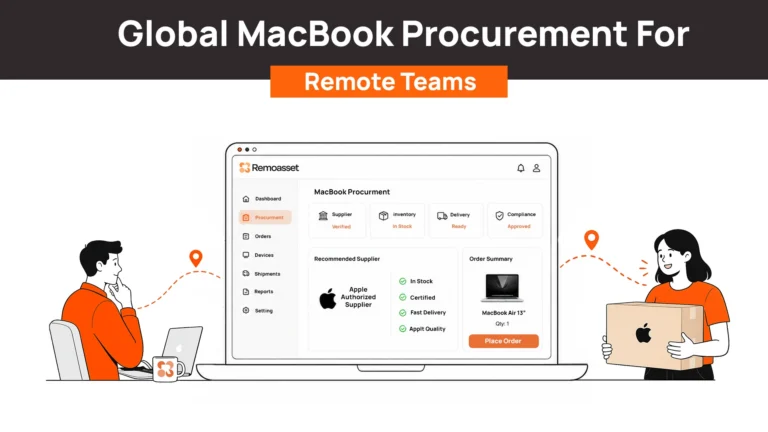
If your organization primarily deploys Apple devices, the purchasing considerations are more Mac-specific. We cover that separately in our guide to MacBook procurement for businesses.
For a broader, multi-OS enterprise fleet, here is how the major sourcing models compare.
The Three Real Channels at Enterprise Scale
Enterprise laptop procurement generally falls into three models.
1. Buying directly from OEM enterprise programs
The most direct option is to establish enterprise purchasing relationships with manufacturers such as Dell, Lenovo, HP or Apple. Instead of buying through a retail or consumer channel, the organization works with the OEM’s business or enterprise sales organization. Depending on the account, this can involve negotiated pricing, volume commitments, standardized configurations and account-level support.
This model works particularly well when requirements are relatively predictable — for example, an organization purchasing 1,000 Windows laptops annually across three standard configurations: standard employee, engineering or power-user, and executive.
If most of those employees are located in one or two countries, buying directly from the OEM can be highly efficient. The complication appears when that same organization starts hiring across 10, 15 or 20 countries. Availability, pricing, taxes, fulfillment, support arrangements and account structures can vary by country — meaning a strong OEM relationship can still leave you managing several local procurement processes around it. This is a core challenge in any global laptop procurement setup.
2. Working with VARs and resellers
The second model is the value-added reseller, or VAR. Companies such as CDW, Insight, SHI and Softchoice operate as intermediaries between technology manufacturers and enterprise buyers. The value proposition goes beyond simply reselling the laptop — depending on the provider and contract, the relationship may also include financing, configuration, imaging, deployment services, support and other IT services.
That additional layer can be valuable. If your IT team does not want to receive 500 laptops at a warehouse, configure them, label them, enroll them and arrange individual deliveries, a reseller providing some or all of those services can reduce operational overhead.
The trade-off is an additional commercial layer in the process. For a company operating in a limited number of markets, that may be perfectly reasonable. For a globally distributed organization, however, the question becomes whether the reseller can provide consistent coverage across all the countries where you hire. A strong VAR relationship in the US does not automatically solve procurement for an employee in Germany, Singapore or the UAE.
3. Using a managed device lifecycle platform
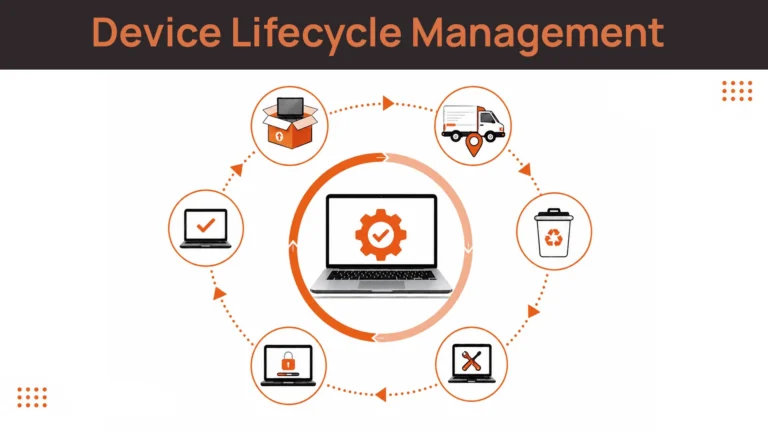
The third model is a managed procurement and device lifecycle management platform. Instead of structuring procurement primarily around one manufacturer or reseller, the platform manages sourcing as part of the wider device lifecycle — including local laptop sourcing, procurement, device configuration, delivery, asset registration, retrieval, storage and redeployment, and end-of-life processing.
The platform becomes the coordinating layer across markets, while hardware can still come from the appropriate OEM or local supplier for that market. This is particularly relevant when employees are distributed across many countries and the internal IT team wants one procurement process rather than a collection of country-specific relationships. It does not automatically make a managed platform better than OEM direct or a VAR — if you operate in two countries with predictable demand, adding another layer may create unnecessary complexity. The value becomes clearer as the geographic footprint expands, especially when you need to track and manage laptop asset management across multiple regions.
The Primary + Secondary Vendor Strategy
One of the most practical mistakes in enterprise laptop procurement is treating the decision as if a company needs to choose one purchasing channel and use it for everything. Large organizations often have more nuanced requirements.
A better structure is a primary + secondary vendor strategy. The primary vendor handles the majority of predictable laptop demand — whether that is an OEM, a VAR or a managed procurement provider. The secondary vendor exists for exceptions.
Those exceptions might include:
- High-performance workstations or ruggedized devices
- Specialized engineering configurations
- Executive hardware outside the standard catalog
- A country where the primary supplier has limited availability
- Urgent hiring requirements or temporary supply constraints
Consider an organization where 85% of employees use two standard laptop configurations. There is little reason to build the entire procurement process around the remaining 15% of unusual requirements. The primary supplier handles the predictable volume; the secondary channel handles genuine exceptions.
Standardize the predictable demand and create a controlled route for exceptions. The exact split will vary — the principle matters more than a fixed percentage.
This approach also provides operational resilience. If a particular configuration becomes temporarily unavailable in one market, the IT team does not have to redesign its entire procurement strategy — it already has another sourcing route available.
| Related Reads •Device Lifecycle Management Guide — How procurement fits into the full lifecycle — from sourcing to disposal •Laptop Asset Management Software — Tracking and managing hardware across countries and vendors •Remote Device Offboarding Guide — What happens after delivery — retrieval when employees leave •Laptop Redeployment Guide — Turning retrieved devices back into usable inventory •Zero-Touch Deployment Readiness Checklist — Pre-configuration and enrollment before devices reach employees |
What Changes When You Add More Countries?
The first few countries rarely expose the full complexity of global laptop procurement. At that stage, you might have one OEM account, one or two reseller relationships, a centralized IT team and a relatively predictable hiring plan.
Then the company expands. Suddenly, the procurement team may need to coordinate different suppliers, currencies, invoices, delivery addresses, taxes, lead times and support arrangements. A process that worked perfectly in one country can become difficult to manage when replicated across ten or more.
The issue is rarely the laptop itself. The issue is everything surrounding it. An IT team managing global procurement regularly has to answer:
- Who is buying the device? Is the employee ordering directly? Is a local IT team placing the order? Is headquarters purchasing centrally?
- Who is invoicing the company? Can the same vendor issue invoices across all required countries, or does every market require a separate supplier?
- Where is the device sourced? Is it shipped internationally from a central warehouse, or purchased locally in-country?
- Who prepares the device? Does the laptop arrive ready for MDM enrollment, or does an internal IT team configure it?
- What happens when the employee leaves? If retrieval and redeployment are handled by an entirely separate set of vendors, the organization still has a fragmented device lifecycle.
This is where a unified procurement model becomes useful — less about replacing OEMs or VARs and more about reducing the number of processes the internal team has to coordinate. For context on what structured retrieval looks like in practice, see our remote device offboarding guide.
Enterprise Laptop Procurement: OEM vs VAR vs Managed Platform
The table below compares the three sourcing models across the dimensions that matter most at scale.
| Factor | OEM Direct | VAR / Reseller | Managed Platform |
|---|---|---|---|
| Best for | Predictable volume and standardized hardware | Hardware plus additional IT services | Distributed teams requiring procurement and lifecycle coordination |
| Multi-country coordination | Often requires regional management per country | Depends heavily on the reseller’s geographic coverage | Designed around centralized coordination across markets |
| Pricing model | Negotiated OEM pricing based on volume commitments | Hardware plus reseller/service margin | Varies by sourcing and service model |
| Services layer | Primarily hardware and OEM support services | Often includes imaging, financing, deployment and support | Procurement, sourcing, deployment and retrieval/redeployment |
| Control over hardware | High — within the OEM’s product portfolio | High — across supported brands | Typically high, depending on local sourcing options |
| Internal coordination | Higher as country count increases | Moderate to high depending on coverage | Lower for teams outsourcing more of the process |
| Typical buyer | Enterprise IT with established OEM relationships | IT teams wanting hardware plus bundled services | Global IT/Ops teams managing a distributed workforce |
The table is a useful starting point, but the decision becomes clearer when you look at the actual shape of your organization.
So, Where Should an Enterprise Buy Its Laptops?
There is no universal answer. The operating environment matters more than the size of the laptop order by itself.
If you operate in one or two countries
An OEM-direct relationship may genuinely be the simplest option. If your demand is predictable, your configurations are standardized and your internal IT team can manage deployment and asset tracking, adding multiple procurement layers may not create enough value to justify the complexity.
If you need hardware plus IT services
A VAR can make sense when the organization wants more than hardware. If you need financing, imaging, configuration, deployment support or other services alongside the laptop purchase, a reseller may consolidate several requirements into one relationship. This is particularly useful when your geographic footprint is still relatively concentrated.
If employees are spread across many countries
This is where the procurement model deserves closer examination. The question becomes less about which company can sell you a laptop and more about which operating model can handle the process consistently. If your IT team is managing separate suppliers for different countries, manually coordinating orders, maintaining multiple invoice flows and separately arranging device retrieval when employees leave, the administrative cost of the procurement model can become significant.
A managed platform can provide another route: local sourcing in the relevant markets while giving the central team one process for managing the broader device lifecycle. For a company hiring across many countries, that consolidation can be more meaningful than a small difference in the unit price of a laptop.
What to Evaluate Before Choosing an Enterprise Laptop Vendor
Before signing an enterprise hardware agreement, look beyond the quoted laptop price. A useful evaluation should cover at least five areas.
1. Geographic coverage
“Global” can mean very different things in practice. Ask exactly where the vendor can source and deliver devices, and get specific about the countries where you actually have employees and where you expect to hire.
2. Standardization
Can you define a small set of approved configurations and have them consistently sourced? Standardization makes procurement easier, but only if the supplier can actually maintain availability across the markets you operate in.
3. Procurement visibility
Ask how orders, devices, serial numbers, invoices and delivery status are tracked. At enterprise scale, visibility becomes part of the procurement process itself — gaps here create reconciliation problems downstream.
4. Exception handling
Every organization has exceptions. Ask what happens when an employee needs a different device, when a particular configuration is unavailable or when a country falls outside the supplier’s normal coverage. A procurement strategy that works only when everything goes exactly according to plan will eventually create operational problems.
5. What happens after delivery?
Laptop procurement should not end when the employee receives the box. Consider what happens when the employee changes roles, moves countries or leaves the organization. Can the same operating model support laptop redeployment and disposal, or will your IT team need to establish another set of processes? That question can materially change the economics of the procurement decision.
The Real Question Is How Much Coordination You Want to Own
For enterprise IT teams, laptop sourcing is ultimately an operating-model decision. Buying directly from Dell, Lenovo, HP or Apple can be entirely appropriate. Working with a VAR can provide valuable services that an OEM relationship does not. A managed platform can make sense when the organization needs local sourcing and lifecycle coordination across a distributed workforce.
The mistake is assuming that the model that worked for two countries will continue working unchanged at 10, 20 or 30. As the geographic footprint grows, every additional vendor relationship introduces another process to manage — another invoice flow, SLA, escalation path and set of procurement rules.
That is why enterprise laptop procurement should be designed around the organization’s actual footprint, demand pattern and internal capacity.
For companies that have outgrown a single OEM account or a collection of regional reseller relationships, Remoasset provides local laptop sourcing across multiple countries under one procurement and device lifecycle process — without requiring a separate VAR relationship or OEM account per region. Book a Demo to see how the model works for distributed teams.
FAQs
Where do enterprises buy laptops in bulk?
Large organizations typically source laptops through three main channels: direct enterprise programs with OEMs such as Dell, Lenovo, HP or Apple; value-added resellers (VARs) such as CDW, Insight or SHI; or managed device lifecycle platforms that handle sourcing across multiple countries under one process. The best fit depends on the organization’s geographic footprint, demand predictability and how much procurement coordination the internal team wants to own.
What is the difference between buying direct from an OEM and using a VAR?
Buying directly from an OEM means negotiating pricing and configurations directly with the manufacturer. A VAR adds a services layer — typically including configuration, imaging, financing, deployment support and sometimes ongoing IT services — on top of the hardware purchase. OEM direct tends to be more efficient for organizations with predictable, standardized demand in a small number of markets. VARs can provide value when the organization needs services beyond the hardware itself.
How do large companies source laptops for employees in multiple countries?
At moderate geographic scale, organizations often extend their existing OEM or VAR relationships into additional countries — although this can require managing separate accounts or pricing structures per region. At larger scale, many organizations move toward a managed procurement model that coordinates local sourcing across countries under one process. This reduces the number of separate vendor relationships and invoice flows the internal IT team has to manage. For more context, see our global laptop procurement guide.
Is it better to use one vendor or multiple vendors for enterprise hardware?
Most large organizations benefit from a primary and secondary vendor structure rather than relying on a single source. The primary vendor handles the majority of predictable, standardized demand. A secondary channel covers exceptions — specialist devices, urgent requirements or countries where the primary supplier has limited availability. This provides both pricing efficiency through volume consolidation and operational resilience when supply is constrained.
What should an enterprise look for in a laptop procurement vendor?
Beyond quoted hardware pricing, the most important factors at scale are geographic coverage (can the vendor actually source and deliver in all the countries where you hire), standardization (consistent configurations across markets), procurement visibility (order tracking, serial number records, invoice management), exception handling capability, and what the vendor can support after delivery — retrieval, redeployment and end-of-life processing.