For many IT teams, ManageEngine is one of the first platforms considered when searching for IT Asset Management (ITAM) software. It is well known, feature-rich, and widely used in mid-market and enterprise environments. However, as companies shift toward remote and hybrid work, global hiring, and faster onboarding cycles, a growing number of teams are reassessing whether ManageEngine still fits their operational reality.
Searches for ManageEngine alternatives typically come from solution-aware buyers. These teams already understand ITAM fundamentals. What they are questioning is whether ManageEngine’s complexity, deployment model, and automation depth align with modern needs such as global device logistics, zero-touch provisioning, and lower operational overhead.
This guide is written specifically for teams evaluating ManageEngine competitors for IT Asset Management. It explains what ManageEngine does well, where it can fall short in distributed environments, how we evaluated alternatives, and which platforms stand out in 2026. The goal is not to dismiss ManageEngine, but to help you determine whether a more focused, automation-first ITAM platform like RemoAsset is a better fit.
What Is ManageEngine?
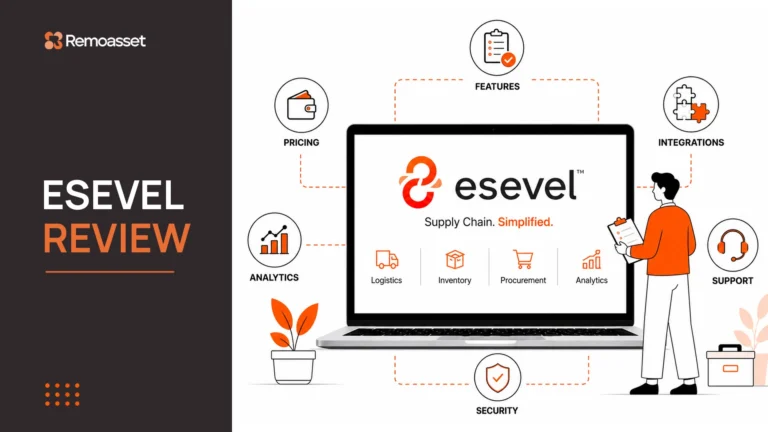
ManageEngine is an IT management software suite developed by Zoho. It offers a broad range of tools covering IT Asset Management, IT Service Management, endpoint management, network monitoring, and more. For ITAM specifically, ManageEngine provides asset discovery, lifecycle tracking, license management, and audit reporting.
ManageEngine ITAM is commonly deployed as part of a larger IT operations stack and is often used in environments that require tight control over infrastructure and compliance.
Typical ManageEngine customer profile
- Mid-market to large enterprises
- IT-heavy organizations with dedicated admin teams
- On-prem or hybrid infrastructure environments
- Teams already using ManageEngine ServiceDesk or endpoint tools
While powerful, ManageEngine’s breadth and architecture mean it is not always the most practical choice for every organization, especially those prioritizing simplicity, automation, and global device operations.
Key Features of ManageEngine
Asset Discovery
Automatically discovers hardware, software, and network assets across the environment. This is useful for organizations with complex internal networks.
Lifecycle Tracking
Tracks assets from procurement through deployment, maintenance, and disposal, helping with audits and asset accountability.
Software License Management
Monitors software usage and license compliance to reduce legal and financial risk.
ITSM Integration
Integrates tightly with ManageEngine ServiceDesk, enabling incident, change, and asset workflows in a single ecosystem.
Reporting and Audits
Provides detailed reports for compliance audits, asset utilization, and inventory tracking.
On-Prem and Cloud Deployment
Offers both cloud-hosted and on-premise options, appealing to organizations with strict infrastructure requirements.
These features make ManageEngine a strong suite for traditional IT environments, but not always the most efficient option for distributed teams.
ManageEngine Pricing
ManageEngine pricing varies significantly depending on:
- The specific product modules used
- Number of assets or endpoints managed
- Deployment model (cloud vs on-premise)
While entry pricing may appear competitive, total cost of ownership often increases as additional modules, infrastructure, and administrative overhead are factored in. This is one of the reasons teams begin exploring alternatives to ManageEngine.
Why Businesses Look for ManageEngine Alternatives
Complex setup and maintenance
On-premise or hybrid deployments require infrastructure management, updates, and ongoing maintenance that smaller or leaner IT teams may not want to manage.
Steep learning curve
The platform’s depth can be overwhelming for teams that want focused ITAM rather than a full IT operations suite.
Limited automation for remote device logistics
ManageEngine excels at internal asset tracking but is less optimized for global device procurement, shipping, and recovery workflows.
Weak global procurement and recovery support
Distributed teams often need localized sourcing, faster regional delivery, and structured offboarding recovery, which are not core strengths.
High total cost of ownership at scale
Licensing, infrastructure, and administrative effort add up as asset counts grow.
Overkill for focused ITAM needs
Some organizations only need strong ITAM, not an extensive ITSM ecosystem.
These challenges are frequently discussed in buyer research, peer forums, and evaluations of ManageEngine competitors.
How We Selected ManageEngine Alternatives
To ensure a fair and practical comparison, each alternative was evaluated using the following criteria:
- Core IT Asset Management capabilities
- Automation depth and operational efficiency
- Support for remote and hybrid workforces
- Integrations with HRIS, MDM, SSO, and security tools
- Scalability and future readiness
- Pricing transparency and total cost of ownership
This ensures the tools listed below are relevant for modern IT teams, not just feature-rich on paper.
9 Best ManageEngine Alternatives in 2026
Below is a high-level comparison of leading ManageEngine alternatives before detailed reviews.
Top 9 ManageEngine Alternatives in 2026
| Platform | Core Strength | Global Coverage | Automation Level | HRIS / MDM Integrations |
|---|---|---|---|---|
| RemoAsset | End-to-end lifecycle automation | Strong | High | Strong |
| GroWrk | Asset recovery focus | Moderate | Medium | Limited |
| Zluri | SaaS and license visibility | Global | Medium | Strong |
| SolarWinds | Network-centric ITAM | Global | Medium | Moderate |
| Asset Panda | Custom asset tracking | Global (software) | Low | Limited |
| UpKeep | Maintenance-focused asset ops | Regional | Medium | Limited |
| Alloy Software | ITSM + ITAM workflows | Moderate | Medium | Moderate |
| ServiceNow ITAM | Enterprise governance | Global | High | Strong |
| IBM Maximo | Asset-heavy enterprise ops | Global | High | Limited (IT-focused) |
1. RemoAsset
RemoAsset is a modern IT Asset Management platform purpose-built for distributed and fast-scaling teams. Unlike traditional suites, it focuses on automating the entire hardware lifecycle, from procurement and zero-touch provisioning to real-time tracking and secure recovery.
Key Features
- Automation-first IT asset lifecycle management
- Zero-touch device provisioning with built-in security controls
- Global sourcing, delivery, and recovery workflows
- Real-time asset visibility across users and regions
- Automated offboarding with pickup and certified data wiping
- Transparent, modular pricing
Pros & Cons
Pros
- Designed for remote-first and hybrid teams
- Significantly reduces manual IT workload
- Strong global logistics and recovery capabilities
- Predictable costs at scale
Cons
- Best suited for teams ready to modernize lifecycle processes end to end
Pricing
Usage-based, transparent pricing aligned to device volume and enabled services.
Best For
Organizations managing distributed hardware fleets that need automation, visibility, and global execution without enterprise-suite complexity.
RemoAsset vs ManageEngine
| Aspect | RemoAsset | ManageEngine |
|---|---|---|
| Deployment model | Cloud-native | Cloud or on-prem |
| Lifecycle automation | End-to-end | Partial |
| Global logistics | Built-in | Limited |
| Ease of use | High | Moderate to complex |
| Total cost of ownership | Predictable | Can increase at scale |
Conclusion
For teams focused on automation, remote operations, and global scalability, RemoAsset offers a more streamlined and modern alternative to ManageEngine.
2. Growrk
Growrk is primarily positioned around IT asset recovery and offboarding. It is often adopted by teams that already manage procurement and MDM elsewhere but struggle with unreturned devices, delayed pickups, or inconsistent ITAD handling.
While Growrk includes asset tracking and limited lifecycle features, its operational strength is concentrated at the end of the employee lifecycle.
How Growrk Is Typically Used
- Devices are tracked during employment, often in parallel with another ITAM or MDM tool
- Offboarding triggers recovery workflows coordinated through Growrk
- ITAD and disposal are handled through partner networks
Where Growrk Excels
- Structured device retrieval and ITAD processes
- Useful for reducing write-offs from unreturned hardware
- Clear focus on offboarding execution
Limitations
- Limited automation during onboarding and active employment
- Provisioning and tracking often remain manual or external
- Not designed for high-volume, fast-paced onboarding
Best For
Organisations that already have procurement and MDM in place but need stronger recovery and offboarding execution.
3. Allwhere
Allwhere focuses primarily on international device shipping and logistics. It solves the problem of getting hardware into the hands of employees in different countries rather than managing the full asset lifecycle.
How Allwhere Is Typically Used
- Devices are ordered centrally and shipped internationally
- Basic assignment and tracking data is maintained
- Recovery, redeployment, and disposal are often handled separately
Where Allwhere Excels
- Broad international delivery coverage
- Faster global shipping compared to manual logistics coordination
Limitations
- Limited lifecycle intelligence once the device is in use
- Minimal automation beyond delivery
- Recovery and ITAD require additional tools or vendors
Best For
Companies whose primary bottleneck is international delivery, not lifecycle management or automation.
4. Deel
Deel is fundamentally a global payroll and contractor management platform. Device provisioning exists as a supporting feature tied to employment and contract workflows rather than as a standalone IT asset management capability.
How Deel Handles Devices
- Devices are associated with employee or contractor contracts
- Provisioning is triggered through HR workflows
- Ongoing device tracking, recovery, and redeployment are limited
Where Deel Excels
- Strong alignment between HR, payroll, and equipment provisioning
- Useful for contractor-heavy organisations
Limitations
- Not an ITAM or MDM platform
- Limited lifecycle visibility and recovery automation
- Requires external tools for tracking and security enforcement
Best For
Companies already standardized on Deel that need light device provisioning linked to global hiring.
5. Firstbase
Firstbase focuses on employee equipment onboarding and first-day readiness. Its value lies in improving the new hire experience rather than managing devices across their full lifecycle.
How Firstbase Is Typically Used
- Pre-configured equipment kits are shipped to new hires
- Limited tracking after delivery
- Basic recovery support during offboarding
Where Firstbase Excels
- Simple and smooth onboarding experience
- Easy for HR and People Ops teams to manage
Limitations
- Weak lifecycle visibility after onboarding
- Limited recovery, redeployment, and analytics
- Not designed for large-scale or global operations
Best For
Early-stage or mid-sized teams prioritising onboarding experience over long-term lifecycle optimisation.
6. Retriever
Retriever is a specialised device retrieval service rather than a full ITAM platform. It is most commonly used as an add-on to existing asset management systems.
How Retriever Fits Into an IT Stack
- Integrated during offboarding only
- Coordinates regional pickups and returns
- Relies on other systems for asset tracking and provisioning
Where Retriever Excels
- Reliable pickup execution
- Helps reduce device write-offs
Limitations
- Narrow functional scope
- No provisioning, tracking, or lifecycle automation
Best For
Teams with an existing ITAM platform that need better recovery execution without replacing their stack.
7. Asset Panda
Asset Panda is a general-purpose asset tracking platform used across IT and non-IT assets. Its strength lies in configurability rather than automation or logistics execution.
How Asset Panda Is Typically Used
- Assets are manually logged and updated
- Custom workflows, audits, and reports are configured
- Mobile scanning is used for physical inventory
Where Asset Panda Excels
- Highly flexible and customisable
- Supports many asset categories beyond IT
Limitations
- Heavy reliance on manual processes
- No built-in global logistics, provisioning, or recovery
- Limited automation for distributed teams
Best For
Organisations needing broad asset tracking rather than automated IT hardware lifecycle management.
How to Select the Best ManageEngine Alternative
Use this checklist to guide your evaluation:
- Assess your company size and IT maturity
- Identify remote versus on-prem workforce needs
- Decide how much automation you require versus manual control
- Confirm integration needs with HRIS, MDM, and SSO
- Evaluate global procurement and recovery requirements
- Calculate total cost of ownership, not just license fees
The best alternative is the one that matches how your teams actually operate.
Why RemoAsset Is the Best ManageEngine Alternative for ITAM
Across all evaluations, one pattern stands out: modern teams need automation, speed, and visibility, not heavy infrastructure or manual workflows.
RemoAsset directly addresses the pain points that drive teams away from ManageEngine:
- Automation-first ITAM that removes repetitive tasks
- Zero-touch provisioning for faster onboarding
- Global delivery and recovery built into the platform
- Real-time asset visibility across regions
- Reduced IT workload and operational overhead
Built for distributed teams, RemoAsset enables faster onboarding, stronger compliance, and predictable costs without the complexity of traditional IT suites.
Book a demo or talk to our IT asset experts to see how RemoAsset simplifies IT asset management for modern, remote-first organizations in 2026 and beyond.