Remote work is mainstream. For many organisations, remote and hybrid teams now outnumber in-office staff. While this shift brings flexibility and access to global talent, it also raises a critical operational challenge: remote employee onboarding. Great onboarding isn’t just a nice-to-have. It directly influences early productivity, engagement and retention.
When onboarding is disjointed, new hires experience frustration and delays that hurt their first-month output. According to multiple industry sources, nearly a third of new employees in general quit within the first six months due to a poor onboarding experience. That risk is magnified for remote employees when key elements like equipment readiness, access provisioning and human connection aren’t aligned. In this guide you will learn what remote onboarding really means, why it matters, the stages of a successful onboarding program, common challenges, best practices for HR and IT and how RemoAsset eliminates the most painful IT-related bottlenecks so remote hires start contributing from Day 1.
What Is Remote Employee Onboarding?
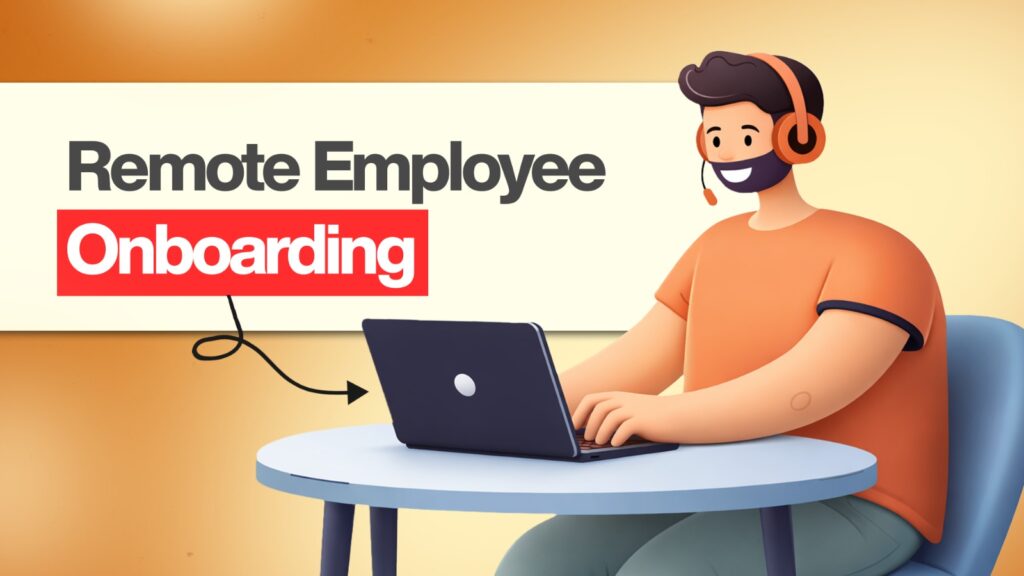
Remote employee onboarding is the process of welcoming, equipping and integrating new hires who work outside a central office. It combines traditional HR onboarding with operational readiness, especially IT onboarding.
A complete remote onboarding program includes:
- Culture and communication alignment. Helping new hires understand company values, norms and how teams interact virtually.
- Role-based training and collaboration setup. Ensuring employees can access the tools, documents and peers they need to begin their work.
- Secure device and access provisioning. Making sure equipment and system access are available from Day 1 with minimal friction and strong security.
Unlike in-office onboarding, where IT and HR can coordinate in person, remote onboarding requires excellent orchestration between systems, people and processes.
Why Remote Employee Onboarding Matters
Effective remote onboarding delivers measurable business value:
Better productivity
New hires who have their tools and access ready from Day 1 reach full productivity faster.
Higher engagement
Connected, confident employees are more likely to stay engaged and contribute.
Lower attrition
Turnover in early months drops when onboarding feels organised, supportive and efficient.
Faster time-to-value
Teams see returns sooner when employees can start work without delays.
Stronger brand impression
Remote onboarding is often a new hire’s first real experience with your organisation’s structure and support, so get this right and your employer brand grows stronger.
Major Steps in Remote Onboarding
Effective remote onboarding organisations structure their process into three core pillars covering the entire journey from pre-boarding to ongoing success.
Pillar A: Pre-boarding: HR + IT
Pre-boarding begins as soon as a candidate accepts the offer. It focuses on completing essential tasks before Day 1.
HR tasks:
- Welcome email + orientation packet
- Digital paperwork (tax forms, policies)
- Introductory culture documents
IT tasks:
- Order and configure hardware
- Assign software access and licenses
- Schedule delivery and communication
The goal of pre-boarding is to eliminate administrative and access barriers so Day 1 feels efficient.
Pillar B: Day-1 Enablement: IT
Day 1 enablement ensures that technical readiness and human connection start immediately.
- Laptop and peripherals arrive preconfigured and secure
- Corporate email and access credentials set up
- First-day meeting with manager and team
- Introduction to communication channels (Slack, Teams, etc.)
IT’s primary objective on Day 1 is to ensure the employee can log in, open required tools and begin working without friction.
Pillar C: Ongoing Success: HR + Managers
Onboarding does not end after the first day or week. Ongoing success includes:
- Role-specific training and collaboration with peers
- A structured 30-60-90 day roadmap
- Regular check-ins and feedback loops
- Culture-building activities and community engagement
This pillar keeps momentum and accelerates long-term integration.
Challenges Companies Face in Remote Onboarding
Remote onboarding is harder than it sounds. These challenges often leave new hires feeling disconnected or blocked from productivity.
Onboarding feels isolated or disconnected
Without intentional structure, remote hires may feel alone and unsure who to ask for help.
RemoAsset helps by integrating IT readiness with HR onboarding, reducing friction and creating a smoother first week.
Communication delays lead to confusion
Slow responses on tools, accounts and permissions create frustration.
RemoAsset helps by automating provisioning and notifying stakeholders so common bottlenecks are eliminated.
Lack of structured 30-60-90 day plan
Without clear expectations, new hires lack direction in their first weeks.
RemoAsset complements this by ensuring tools needed to execute those plans are ready on time.
Device and access delays block productivity
The most frequent operational reason a remote hire cannot start work is delayed equipment or access.
RemoAsset solves this by automating device ordering, zero-touch provisioning and delivery confirmation so equipment readiness matches role timelines.
Compliance and data security risk during onboarding
Manual onboarding increases the risk of mis-configured accounts or unsecured devices.
RemoAsset ensures devices are pre-configured with security policies such as encryption, endpoint protection and identity access management from the first use.
Best Practices for Effective Remote Onboarding
Remote onboarding success requires coordination of both HR and IT practices.
HR Best Practices
- Clear welcome communication. Send a welcome email with expectations and first actions before Day 1.
- Assigned onboarding buddy. Pair new hires with an experienced team member to guide them socially and operationally.
- Regular culture touchpoints. Encourage leadership check-ins and team inclusion.
- Comprehensive documentation. Centralise policies, org charts and role expectations so new hires can self-serve information.
- Establish regular communication. Set expectations for check-ins, meetings and feedback loops.
IT Best Practices
- Laptop arrives pre-configured. Devices should have the corporate build, security controls and access set up before arrival.
- Secure identity and access enablement. Ensure accounts, SSO and MFA are set up before Day 1.
- Real-time support availability. Have a support channel ready for new hires to get help quickly.
- Right tools pre-assigned. All collaboration apps, productivity tools and license-based services should be accessible upon first sign-in.
- Standardised hardware kits. Role-based presets eliminate confusion and ensure consistency.
RemoAsset advantage: Zero-touch hardware provisioning and automated delivery improve the employee experience by ensuring devices are ready, secure and trackable without manual intervention, reducing IT backlog and onboarding bottlenecks.
The Role of IT in Remote Employee Onboarding
IT readiness is one of the most influential factors in a new hire’s remote productivity.
Device provisioning impacts first-week productivity
If a new employee’s laptop or access is delayed, everything else slows down. Meetings are missed, tools cannot be accessed and confidence erodes.
Downtime costs stack quickly
A day or two of delay may seem small, but across dozens of hires each quarter, the impact on productivity, engagement and project velocity adds up.
Device and access readiness = foundational engagement
When IT is synced with HR and hiring timelines, productivity starts on Day 1 and employees feel supported by their organisation.
Manual vs Automated IT Onboarding
| Aspect | Manual Onboarding | RemoAsset Automated |
|---|---|---|
| Laptop delivery | Often delayed | Arrives work-ready on Day 1 |
| HR/IT coordination | Chaotic and reactive | HRIS-triggered workflows |
| Security enforcement | Weak and inconsistent | MDM & policy enforced |
| Tracking visibility | None | Real-time device status |
| Offboarding readiness | Missed or forgotten | Automatic recovery workflows |
Automation is not optional. It is a differentiator in employee experience, loss prevention and compliance.
Make Remote Employee Onboarding Seamless with RemoAsset
Remote onboarding success depends on synchronising people, process and technology. While HR teams focus on culture, engagement and role readiness, IT teams must ensure tools and access are ready without manual headaches.
RemoAsset delivers key value across the remote onboarding lifecycle:
- Zero-touch device provisioning. Devices arrive work-ready with security policies applied automatically.
- HRIS-triggered procurement. Device orders and access assignments are automatically triggered when a candidate accepts an offer.
- Fast global delivery. Regional sourcing and logistics ensure on-time arrival regardless of location.
- Automated compliance and security. Devices are configured with encryption, endpoint protection and identity access controls before arrival.
- Reduced IT workload. Automation eliminates manual imaging, ticket churn and tracking spreadsheets.
By eliminating common IT bottlenecks, RemoAsset helps your organisation deliver a remote onboarding experience that’s predictable, secure and delightful for new hires.
Book a demo with Remoasset to streamline your remote employee onboarding, eliminate delays and ensure every hire is productive from Day 1.